Correction (13 July 2026): an earlier version of this article credited the HDFC Millennia with a 2.5% rate on general online spend. That tier does not exist in HDFC's current terms — off-list online spend earns 1%. We have corrected the rate, the worked scenarios, and the verdict, and removed a chart that plotted the incorrect rate. The change materially strengthens the case for the SBI Cashback.
The headline 5% rate is identical on both cards. The fees are within ₹1 of each other. The eligibility floor is the same ₹3,00,000 income. What separates them is where the 5% applies, and where each card stops paying.
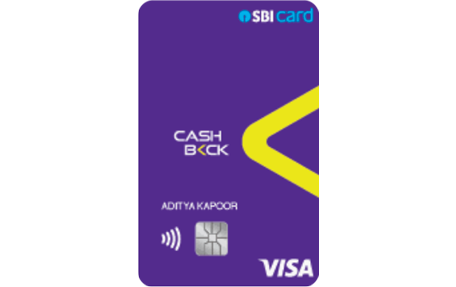
The HDFC Millennia pays 5% on ten named merchants only, capped at 1,000 CashPoints a month — and 1% on everything else, including all other online spend. The SBI Cashback pays 5% on all eligible online spend, capped at ₹2,000 a statement cycle.
That is the whole comparison: a narrow 5% with a lounge attached, versus a broad 5% with a higher ceiling.
Want the full SBI card range before deciding? The SBI credit cards list covers all 6 active SBI cards with verified fees and reward rates.
The decisive answer for most readers: if your online spending is concentrated on Amazon, Flipkart, Myntra, Swiggy or Zomato, take the Millennia — its 5% covers exactly those, and the lounge access is a real extra. If your online spending is spread across the wider web — Tata CLiQ, BookMyShow, MakeMyTrip, Ajio, direct brand sites, anything off HDFC's list — take the SBI Cashback, because on the Millennia all of that earns just 1%.
The numbers, side by side
| Metric | HDFC Millennia | SBI Cashback |
|---|---|---|
| Joining fee | ₹1,000 | ₹999 |
| Annual fee | ₹1,000 | ₹999 |
| Annual fee waiver | ₹1,00,000 spend | ₹2,00,000 spend |
| Headline 5% on | 10 named merchants | All online (with exclusions) |
| Other online rate | 1% | 5% (all online) |
| Default rate | 1% (tap-and-pay) | 1% (offline) |
| Cap on the 5% | 1,000 CashPoints/calendar month | ₹2,000/statement cycle |
| Domestic lounges | 8 per year | 0 |
| Min income | ₹3,00,000 | ₹3,00,000 |
Identical 5% rate, narrower-than-it-used-to-be ceiling gap. That is the real comparison after April 2026.
Why the cap still dominates — just less than before
A cashback cap is the maximum the bank will pay regardless of how much you spend. The HDFC Millennia caps its 5% category at 1,000 CashPoints a calendar month (it has a second, separate 1,000-point cap on the 1% bucket). The SBI Cashback caps online at ₹2,000 a statement cycle, offline at ₹2,000, and ₹4,000 combined.
To max out the Millennia's 5%, you spend ₹20,000 a month across its ten merchants. Above that, further spend on those merchants earns nothing in that bucket. To max out SBI's online side, you spend ₹40,000 a month.
What happens above the cap is where the old version of this article got it wrong. The Millennia does not pay a "smooth 2.5%" on overflow — that tier does not exist on the current card. Overflow earns 1%, the same as offline. So SBI has both the higher ceiling and no worse an overflow rate. The Millennia's advantage is not its cap behaviour; it is the lounge access and the fact that its 5% list happens to contain the merchants most people actually use.
The offline sub-cap is effectively dormant for retail users — it takes ₹2,00,000 a month of offline spend to bind, which no normal cardholder reaches.
The crossover: where the answer flips
Both cards pay 5%. Both charge ~₹1,000. So the question is not "which rate is higher" — it is what fraction of your online spending falls outside HDFC's ten merchants.
Call that your off-list share. On the Millennia, off-list online spend earns 1%. On SBI, it earns 5%. That is a 4-point gap on every rupee of it.
Now price the fee. The Millennia's fee is waived at ₹1,00,000 of annual spend; SBI's is waived at ₹2,00,000. So between ₹1 lakh and ₹2 lakh of annual spend, the Millennia is free and SBI is not — SBI starts the year ₹999 down. To claw that back on its 4-point edge over off-list spend:
₹999 ÷ 4% = ₹25,000 of off-list online spend a year — roughly ₹2,100 a month.
That is the crossover. If you spend under ₹2 lakh a year and more than about ₹2,100 a month online outside Amazon/Flipkart/Myntra/Swiggy/Zomato and HDFC's other five, SBI wins despite paying a fee. Below it, the Millennia's waiver alone decides it.
Above ₹2 lakh of annual spend both fees are waived, the ₹999 handicap vanishes, and SBI wins on any off-list spending at all.
Two things that override the maths:
- The lounge. The Millennia's 8 domestic visits (milestone-gated at ₹1 lakh a quarter) are worth roughly ₹2,000 a year if you actually use them. SBI has none. If you fly and you clear the gate, that swamps a ₹25,000 off-list crossover.
- The ceilings. The Millennia stops paying 5% after ₹20,000/month across its ten merchants; SBI after ₹40,000/month across all online. Heavy online spenders should read that as SBI having double the runway.
Category strengths
Where the HDFC Millennia pulls ahead
Tighter category list, better merchant guarantee. HDFC names ten specific merchants — Amazon, BookMyShow, Cult.fit, Flipkart, Myntra, Sony LIV, Swiggy, Tata CLiQ, Uber and Zomato — so there is little classification ambiguity. If you bought it on Amazon, you earned 5%. SBI's broader "all online" definition has more grey area, where gateway routing can drop a transaction from 5% to 1%.
Lounge access. 8 domestic lounge visits a year is a real benefit if you fly even occasionally. The SBI Cashback offers no lounge access. At ₹500 a visit walk-in cost at most lounges, this benefit is worth roughly ₹2,000 to ₹4,000 a year if you use it.
Lower spend gate for the fee waiver. ₹1,00,000 in a year is achievable for almost any active cardholder. SBI's ₹2,00,000 gate is double that — and that ₹999 difference is the Millennia's most reliable edge.
A better map of where people actually spend. The ten-merchant list is unusually well chosen: Amazon, Flipkart, Swiggy, Zomato and Uber between them cover most Indian households' discretionary online spending. You do not need a broad 5% if the narrow 5% already contains your life.
Where the SBI Cashback pulls ahead
Higher cap, and a far better off-list rate. SBI's ₹2,000 online ceiling is double the Millennia's ₹1,000. More importantly, SBI pays 5% on online merchants HDFC does not name, where the Millennia pays 1%. That 4-point gap — not the cap — is the SBI card's real structural advantage, and an earlier version of this article missed it entirely by crediting the Millennia with a 2.5% tier it does not have.
Broader 5% definition where it applies. When SBI's 5% applies, it covers a wider list of online merchants than HDFC's four named brands. The asterisk is large: the exclusion list now covers wallet loads, rent, utilities, insurance, jewellery, school fees, gaming, tolls, and government transactions.
Slightly lower joining fee. ₹999 vs ₹1,000. Difference is symbolic.
Three households, three answers
Run on the cards' current terms — the Millennia's ten-merchant 5% (capped at 1,000 CashPoints a month) and 1% on everything else, against SBI's 5% on all online (capped ₹2,000 a cycle).
Scenario 1: ₹15,000 a month online, mostly Amazon and Flipkart. Millennia: 5% × ₹15,000 = ₹750/mo, comfortably under its cap → ₹9,000/yr. SBI: 5% × ₹15,000 = ₹750/mo, under its cap → ₹9,000/yr. A dead tie on cashback. The Millennia wins on the fee waiver (₹1 lakh vs ₹2 lakh — at ₹15,000/mo you clear HDFC's gate and miss SBI's, so SBI costs you ₹999). Note you will not clear the lounge gate at this spend.
Scenario 2: ₹40,000 a month online, half on HDFC's list, half off it. Millennia: ₹20,000 on-list at 5% = ₹1,000 (exactly at cap) + ₹20,000 off-list at 1% = ₹200 → ₹1,200/mo = ₹14,400/yr. SBI: 5% × ₹40,000 = ₹2,000/mo, exactly at cap → ₹24,000/yr. SBI wins by ₹9,600 a year. Both fees are waived at this spend. The lounges do not close a gap that size.
Scenario 3: ₹20,000 a month online, off HDFC's list (MakeMyTrip, Reliance Digital, Ajio, direct brand sites). Millennia: 1% × ₹20,000 = ₹200/mo = ₹2,400/yr. SBI: 5% × ₹20,000 = ₹1,000/mo = ₹12,000/yr. SBI wins by ₹9,600 a year — a 5x difference. This is the SBI card's home ground, and it is far stronger ground than we previously described.
Is It Worth It
For most professional households, the HDFC Millennia is now the better daily driver — but not for the reason we previously gave.
Pick the HDFC Millennia if your online spending lives inside its ten merchants (Amazon, Flipkart, Myntra, Swiggy, Zomato, Uber, BookMyShow, Tata CLiQ, Sony LIV, Cult.fit), and especially if your annual spend sits between ₹1 lakh and ₹2 lakh — in that band its fee is waived and SBI's is not, which is worth ₹999 before a single rupee of cashback is counted.
Pick the SBI Cashback if a meaningful share of your online spend falls outside that list. The Millennia pays 1% there. SBI pays 5%. That gap is large, it compounds, and it beats the lounge access for anyone who is not clearing ₹1 lakh a quarter to unlock the lounges in the first place.
The honest answer for the median reader: it is a genuine coin-flip that turns entirely on your merchant mix, not on the caps. A previous version of this article declared the Millennia the default on the strength of a 2.5% "safety net" rate that does not exist in HDFC's terms. Removing that fiction moves a lot of readers to SBI.
Run your own numbers
Put the HDFC Millennia and SBI Cashback side by side for the full fee, cap, and rate table.
Still deciding? Two adjacent comparisons: Axis Flipkart vs HDFC Millennia if most of your spend is on Flipkart and Myntra, and Kiwi vs Jupiter Edge+ if you want a lifetime-free card with no annual fee to waive at all.
Sources

Card devaluations, reward maths, and rate changes the day they land.
Follow on X
Reader comments
No comments yet. Share your experience with this card below — the first useful comment helps every reader after you.
Comments are moderated before they appear. Share your real experience with a card — what worked, what didn't, what the bank told you. We don't publish promotional content, referral links, or personal financial details. Keep it useful for other readers.