Cashback sounds simple. Spend money, get a small slice back. The catch is that almost every cashback card in India works a little differently, and the headline rate is rarely the rate you actually earn. We wrote this guide to clear up the small print so the next time a banker says "five percent cashback", you know exactly what they mean.
The two big families: cashback and reward points
Indian credit cards broadly split into two camps. Cashback cards return a percentage of your spend as money, usually credited to your statement, your card balance, or a bank wallet. Reward point cards give you points that you redeem later, often for vouchers or statement credit.
Both can be valuable, but they are not interchangeable. A 5% cashback card returns ₹5 for every ₹100 you spend, full stop. A 10X reward card on the same ₹100 might give you 40 points, and if those points are worth ₹0.25 each, that is ₹10. Sounds better, until you realise the points might only be redeemable for vouchers in catalogues you would not normally use.
For pure simplicity, cashback wins. For travel and lifestyle perks, points programmes usually win because banks subsidise those redemptions.
What the headline rate actually pays
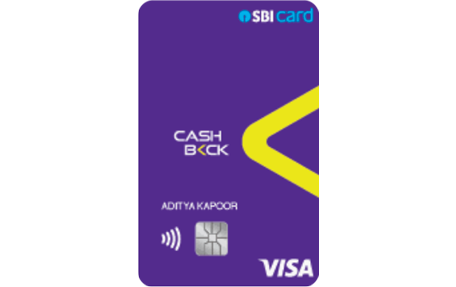
Take the SBI Cashback card. The marketing says 5% on online and 1% on offline. The actual structure, after the April 1, 2026 devaluation, is:
- 5% on eligible online spends, capped at ₹2,000 cashback per statement cycle (binds at ₹40,000 of online spend)
- 1% on offline spends, capped at ₹2,000 cashback per cycle (binds at ₹2,00,000 of offline spend — effectively dormant for retail users)
- Aggregate cashback ceiling of ₹4,000 per statement cycle
- Excludes merchant payments via Mobikwik or PhonePe, utility bills, rent, fuel, education, insurance, jewellery, gift, railways, quasi-cash, digital gaming, tolls, and government-related transactions
So your "5% cashback" card is not 5% on your phone bill, your housing.com rent payment, your electricity, or your child's school fees. Banks define online narrowly and exclude high-value categories that would blow up their margins.
The HDFC Millennia is the same idea with different numbers. 5% on ten named merchants (Amazon, BookMyShow, Cult.fit, Flipkart, Myntra, Sony LIV, Swiggy, Tata CLiQ, Uber, Zomato) and 1% on everything else — there is no middle tier. Annual fee ₹1,000, waived at ₹1,00,000 of spend. The 5% is capped at 1,000 CashPoints a calendar month.
Notice the gap. SBI caps cashback at ₹2,000 a month on online spend (with a separate ₹2,000 offline sub-cap and an aggregate ₹4,000 ceiling, after the April 2026 restructure). HDFC caps it at ₹1,000. Same headline 5%, different real ceilings — closer than they used to be, but still meaningfully apart for heavy online spenders.
Caps decide everything
A monthly cap is the maximum cashback your card will pay in a calendar month, regardless of how much you spend. Once you hit it, additional spend earns either nothing in that category, or drops to the default rate of around 1%.
Run the math on the HDFC Millennia. To max out the 1,000-CashPoint monthly cap at 5% on Amazon, you need to spend ₹20,000 on Amazon in a month. Spend ₹40,000 and your effective rate halves to 2.5%. Spend ₹80,000 and it falls to 1.25%. This is the cap doing the work — not a lower published rate.
The SBI Cashback's higher ₹2,000 online sub-cap means you can pump up to ₹40,000 of online spend a month before the rate falls off, twice the Millennia's ₹20,000 breakeven. For households with one big monthly spend on Amazon, BigBasket, or Flipkart, this still matters, though less than it did before the April 2026 cut.
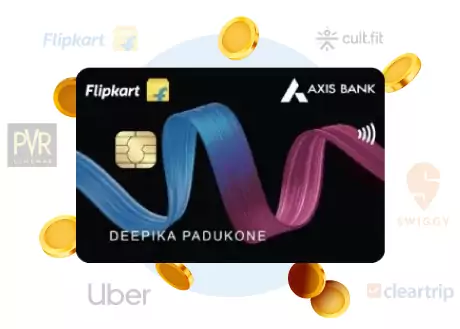
When a card says "unlimited" cashback, read it twice. Some Axis Flipkart cardholders earn 5% on Flipkart with no stated cap, but the bank reserves the right to cap retroactively if usage looks abusive. Other cards put a cap only on accelerated categories and not on the default 1%.
A useful habit: divide your typical monthly online spend by the cap, not the headline rate. If your monthly online spend is ₹35,000 and the cap is ₹1,000 at 5%, the cashback ceiling is locked at ₹1,000 no matter what the brochure says. Your effective rate is ₹1,000 divided by ₹35,000, which is closer to 2.85% than 5%. That number is what you compare across cards, not the marketing line.
How the same card pays differently for different merchants
A card's category logic is set by Merchant Category Codes, the four-digit codes that Visa and Mastercard assign to every business. Your favourite restaurant might have an MCC for fine dining, fast food, or bar, depending on how the payment processor classified it. That code, not the menu, decides whether you earn the dining rate.
This is why one Swiggy order earns 4% on the Axis Flipkart and another order earns 1.5%. Swiggy bundles some merchants under its own gateway with a different MCC. Quick commerce apps like Zepto and BlinkIt are coded as grocery on some networks and as retail on others. Even within the same brand, small operational shifts can move your transaction from a 5% bucket to a 1% bucket.
The lesson is that you cannot rely solely on what the brand calls itself. The bank app will tell you the actual category booked for each transaction. Check it occasionally for big spends.
Where the money lands
Three common payout mechanisms exist in India:
- Statement credit. Cashback is netted off the next bill. SBI Cashback and HDFC Millennia both work this way.
- Reward points convertible to credit. You earn points first and have to manually redeem them, sometimes with a minimum threshold like 500 points before redemption is allowed.
- Bank wallet or third-party account. A handful of cards push cashback into a separate bank wallet that you spend from later.
Statement credit is the cleanest. It reduces your outstanding balance directly, which means it reduces interest if you are revolving. Points-based redemption introduces friction that some banks rely on, since unredeemed points are pure profit for them.
A simple framework before you apply
Three questions cover most of the decision:
- What is the monthly cap on the headline rate, and is it realistic for your spend?
- Are your top three merchants in the bonus category, or are they excluded?
- How does the cashback get to you, and how soon?
If the cap is too low for your spending, the card will quietly underperform. If your largest merchants are on the exclusion list, you will earn the default 1% on most spend. If redemption is friction-heavy, you will probably forget to claim what you earned.
We add cards to PickMyCard only after we have confirmed the actual fee, the actual cap, and the actual exclusions. The numbers above all come from current public terms, but banks revise schedules every few months, so always cross-check the terms PDF on the issuer's site before applying. The headline rate is the start of the conversation, not the end of it.
Sources
Frequently asked
What is the difference between cashback and reward points?
Cashback returns a percentage of spend as money, usually credited to the statement, the card balance, or a bank wallet. Reward points are earned per transaction and redeemed later, often for vouchers or statement credit. Cashback is simpler; points programmes can be more valuable for travel and lifestyle redemptions.
Why is the cashback I earn lower than the headline rate suggests?
Two reasons. The monthly cap restricts how much accelerated cashback the card pays in any single month, regardless of spend. And the exclusion list strips out high-value categories like rent, utilities, fuel, education, and aggregator-routed merchant payments from the accelerated rate.
How is a 'merchant' category decided on a credit card?
Merchant Category Codes (MCCs) are four-digit codes assigned by Visa or Mastercard to every business. The MCC, not the brand or the menu, decides which cashback bucket a transaction lands in. The bank app shows the actual category booked for each transaction, which is worth checking after a large spend.
How does cashback typically reach the cardholder?
There are a few common pathways. Statement credit nets the cashback off the next bill and is the cleanest route, since it reduces interest if you are revolving. Some cards convert cashback into reward points first, requiring manual redemption against a minimum threshold. A smaller set push the cashback into a separate bank wallet that you spend from later.
Card devaluations, reward maths, and rate changes the day they land.
Follow on X
Reader comments
No comments yet. Share your experience with this card below — the first useful comment helps every reader after you.
Comments are moderated before they appear. Share your real experience with a card — what worked, what didn't, what the bank told you. We don't publish promotional content, referral links, or personal financial details. Keep it useful for other readers.