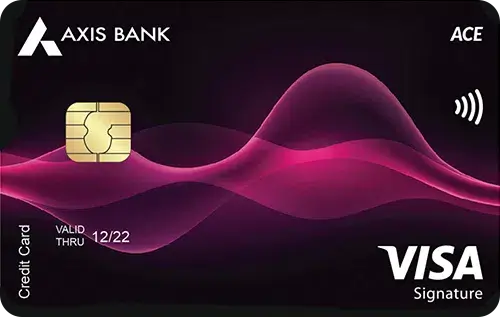
Who this card is for
The Axis ACE in its current shape suits a salaried or self-employed applicant earning Rs 3 lakh or more who runs utility bills through Google Pay every month. Picture a Bengaluru or Pune professional paying electricity, gas, broadband, and DTH on GPay, ordering Swiggy or Zomato two or three times a week, and using Ola occasionally. That keeps a user inside the Rs 500 monthly cap on the accelerated tiers without feeling shortchanged. A reader whose online life sits on Amazon, Flipkart, or BigBasket will not see the headline rates and should look at SBI Cashback or HDFC Millennia. The ACE today is a focused utility-and-food card, not a primary wallet pick.
What you earn
The headline rates are easy to remember. Google Pay bill payments earn 5%. Spends at Swiggy, Zomato, and Ola earn 4%. Everything else qualifies for a base 1.5%. The structure looked generous in 2020, but a quiet revision in 2024 trimmed the base from 2% and clamped a Rs 500 monthly ceiling on the combined 5% and 4% tiers.
That cap is the rate's real story. A cardholder paying Rs 6,000 of GPay utilities and Rs 4,000 of food delivery in a month maxes out the accelerated cashback at Rs 500. Stretch the same spending up to Rs 25,000 on bills and food and the effective rate collapses to roughly 2% on those categories, since every rupee past the cap converts to nothing extra. Heavy spenders are better served by cards with category caps measured in thousands rather than hundreds.
The base 1.5% is uncapped, which is the only quiet positive in the new structure. Run Rs 50,000 a month of general spend through the card and Rs 750 of cashback lands every month with no friction. That keeps the ACE useful as a default tap-and-pay card for users who have already maxed their online cashback elsewhere. Against the SBI Cashback Card's Rs 5,000 monthly ceiling and HDFC Millennia's Rs 1,000 cap, the ACE's Rs 500 limit is the strictest in the category.
Watch the carve-outs. Utility bills paid directly to a biller, rather than through Google Pay, earn the base 1.5% and not the 5% headline. Rent, fuel, wallet loads, EMI conversions, and government payments are excluded entirely. Cashback posts as direct statement credit in the next billing cycle, which is one piece of the experience that has stayed clean.
| Category | Rate | Detail |
|---|---|---|
| Bill payments via Google Pay | 5% | |
| Swiggy, Zomato, Ola | 4% | |
| Default cashback rate | 1.5% | All other eligible spends |
| Monthly cashback cap: ₹500 | ||
Getting the most out of the ₹500 monthly cap
The ₹500 monthly cashback cap means your benefit from this card maxes out once you spend ₹10,000 in the accelerated category each month. At 5% cashback on Bill payments via Google Pay, that is the breakeven point where every additional rupee earns less.
In practice, if you push more than ₹10,000 of Bill payments via Google Pay spend through this card in a calendar month, the rupees above the cap drop to the default cashback rate of 1.5%. The card is at its strongest when your Bill payments via Google Pay spending lines up close to the cap rather than blowing past it. If your monthly spend in this category is consistently double the breakeven, a second card with a separate cap is usually the better setup.
The cost breakdown
Joining and annual fees both sit at Rs 499 plus GST. The joining fee reverses on a single transaction of Rs 10,000 or more within 45 days of card setup, which most cardholders clear with a routine bill payment. Annual renewal is waived on Rs 2 lakh of spend in the prior membership year, equivalent to roughly Rs 16,700 a month.
Lounge access carries its own gate that catches a lot of cardholders by surprise. The four complimentary domestic visits a year are released only after Rs 50,000 of spend in the previous three calendar months. A lighter user who relies on the ACE as a secondary card will rarely clear that threshold and walks into a lounge expecting access that the card refuses. We would treat the lounge benefit as a bonus for active users, not a baseline feature. Cardholders who only use the ACE for occasional bills and a Swiggy order will almost never see the inside of a lounge as a result.
Foreign currency transactions attract a 3.5% markup, which is high enough to disqualify the card for international travel. Pair the ACE with a no-forex card or a travel-positioned product before any overseas trip.
At sticker price the card is close to free for a target user who clears the Rs 2 lakh annual gate. The maths only stops working once the cap on accelerated cashback is factored in, which is what shifts the verdict below.
| Joining fee | ₹499Waived on spending ₹10,000 within 45 days of card set-up |
| Annual fee | ₹499Waived on annual spend of ₹2 lakh in the preceding card anniversary year |
Lounge access
Where it wins and where it loses
What works
- 5% cashback on Google Pay bill payments still beats most utility-payment options when used inside the Rs 500 monthly cap
- Annual fee of Rs 499 waives easily at Rs 2 lakh of spend, which most target users clear by mid-year
- Uncapped 1.5% base rate keeps the card mildly useful as a tap-and-pay default once online cashback is maxed elsewhere
What it costs you
- Rs 500 monthly cap on the 5% and 4% tiers is the strictest in the cashback category
- Base rate dropped from 2% to 1.5% in 2024, removing the card's original flat-rate appeal
- Four domestic lounge visits trigger only after Rs 50,000 of spend in the previous three months
- Forex markup of 3.5% rules the card out for international travel
- Excludes rent, fuel, wallet loads, EMI conversions, and government payments from cashback entirely