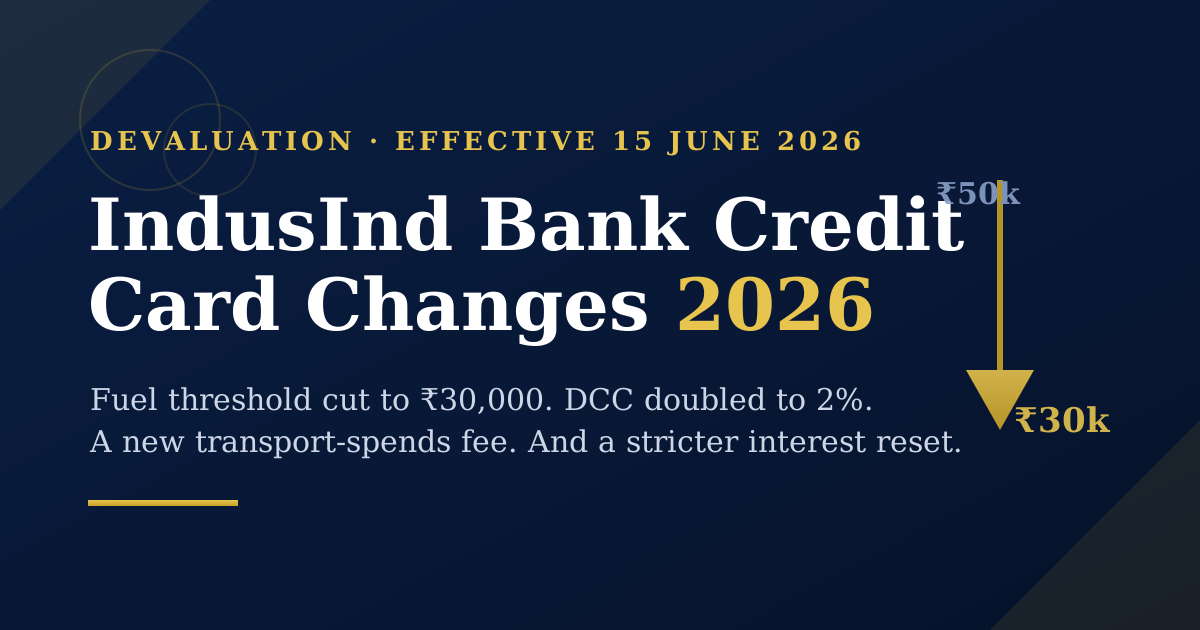
Three fee triggers, no fanfare. That is how IndusInd Bank reworked its credit card charges from 15 June 2026: a lower fuel surcharge threshold on standard cards, a doubled currency conversion fee on the same cards, and a transport charge that did not exist a month earlier. None of this touches the headline reward rates. All of it touches the fine print that decides what a statement actually costs.
The fuel surcharge threshold just got tighter
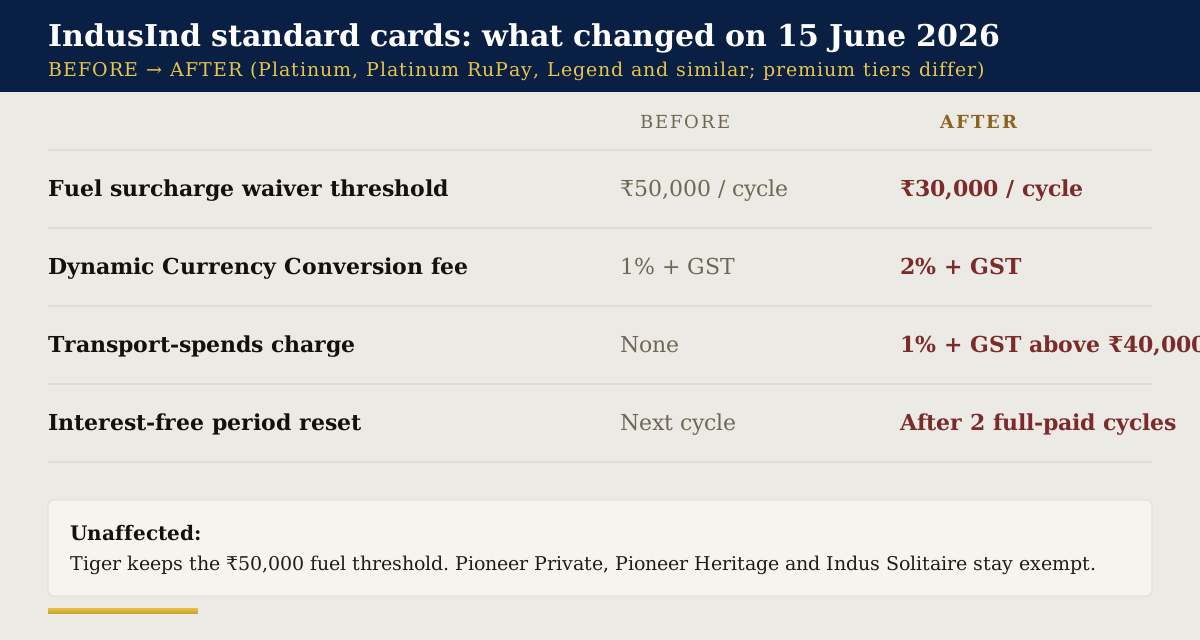
Fuel transactions on an IndusInd card have long carried a 1% plus GST fee once cumulative spends cross a cycle limit. What moved is the limit itself, and only for some cards. Standard and mass-market variants, including the Platinum RuPay, Platinum and Legend cards, now hit that fee at ₹30,000 in fuel spends a cycle, down from the earlier ₹50,000 ceiling. Premium cards such as the Tiger Credit Card keep the ₹50,000 threshold, and the bank's top tier, Pioneer Private, Pioneer Heritage and Indus Solitaire, stays exempt from the fuel fee entirely.
For a household that fills up two vehicles a month, ₹30,000 in fuel is not an edge case. It is closer to ordinary spending in a city with a car and a commute, which means the fee now applies to spending that used to sit comfortably under the old ceiling.
DCC and transport charges add two more triggers
Dynamic Currency Conversion, the option that bills an international transaction in rupees instead of the local currency, doubles in cost for the same standard cards: 2% plus GST, up from 1%. Premium and top-tier cards keep the lower 1% plus GST rate. The fix is simple and has always been the same advice: decline DCC at the terminal and let the transaction settle in the local currency, where the network's own conversion rate is almost always cheaper.
Transport spending gets a charge of its own for the first time: 1% plus GST on cumulative transport transactions above ₹40,000 a cycle, covering cabs, rail, buses and toll payments under specific merchant category codes. Air travel is carved out and stays free of this fee.
The quieter change is in how interest resets
The more consequential shift is buried in the interest calculation, not the fee schedule. Previously, paying a bill in full after a partial payment restored the interest-free period on the following cycle. Now, the interest-free period only comes back after two consecutive billing cycles are paid in full and on time. Miss that discipline once, even briefly, and interest keeps accruing on the outstanding balance and new purchases for longer than it used to. For anyone who occasionally pays the minimum due rather than the full statement, this is the change that costs the most.
Which of the cards we track this actually touches
Among the IndusInd cards on PMC, the Legend, Platinum and Platinum RuPay fall into the standard tier: the ₹30,000 fuel threshold and the 2% DCC fee both apply. The Tiger Credit Card sits in the premium bracket and keeps the older ₹50,000 fuel threshold and 1% DCC fee. IndusInd's published list does not explicitly confirm where the EazyDiner and Platinum Aura Edge variants land, so cardholders on those two should check the latest Most Important Terms and Conditions on IndusInd's site rather than assume either bracket.
What actually changes on your next statement
None of this is a reason to close an IndusInd card outright. It is a reason to watch three numbers that used to be background noise: cumulative fuel spend against ₹30,000, cumulative transport spend against ₹40,000, and whether last cycle's bill was paid in full. Decline DCC on every international swipe, and if a partial payment is unavoidable one month, plan for two clean cycles afterward before assuming the interest-free period is back.
Sources



Frequently asked
What changed with IndusInd Bank credit card charges from 15 June 2026?
IndusInd Bank lowered the fuel surcharge threshold to ₹30,000 a statement cycle for most standard cards (down from ₹50,000 earlier), doubled the Dynamic Currency Conversion fee on those same cards from 1% to 2% plus GST, added a new 1% plus GST charge on transport spending above ₹40,000 a cycle, and changed how the interest-free period resets after a partial payment.
Which IndusInd Bank credit cards does the lower fuel surcharge threshold affect?
Standard and mass-market variants including the Platinum RuPay, Platinum, Legend and similar cards now trigger the 1% plus GST fuel fee once cumulative fuel spends cross ₹30,000 in a statement cycle. Premium cards such as the Tiger Credit Card keep the older ₹50,000 threshold, and top-tier cards including Pioneer Private, Pioneer Heritage and Indus Solitaire stay fully exempt.
How does the new interest-free period reset rule work?
Earlier, clearing a bill in full after a partial payment restored the interest-free period on the very next cycle. Under the revised rule, the interest-free period only comes back after two consecutive billing cycles are paid in full and on time. A single partial payment now has a longer tail of interest charges than before.
Card devaluations, reward maths, and rate changes the day they land.
Follow on X
Reader comments
No comments yet. Share your experience with this card below — the first useful comment helps every reader after you.
Comments are moderated before they appear. Share your real experience with a card — what worked, what didn't, what the bank told you. We don't publish promotional content, referral links, or personal financial details. Keep it useful for other readers.