Correction (13 July 2026): an earlier version of this article credited the HDFC Millennia with a 2.5% rate on general online spend (it pays 1%) and described Tata CLiQ and BookMyShow as non-Millennia merchants (they are on its 5% list). The comparison against the SBI Cashback has been corrected accordingly; it strengthens the SBI card's case for off-list spending.
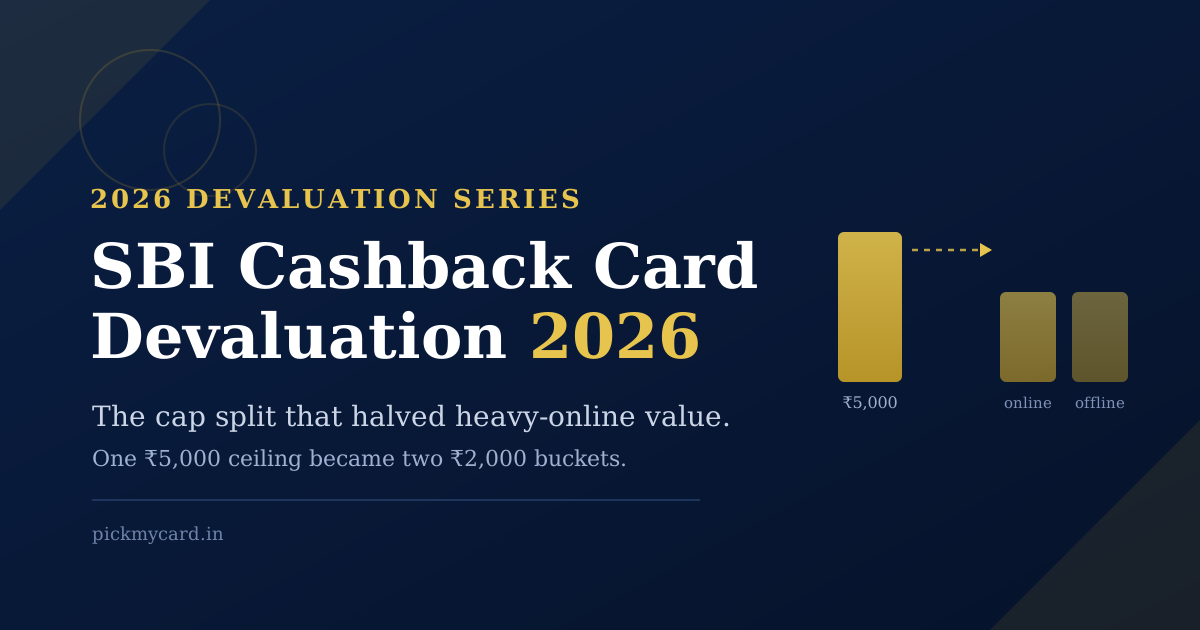
Is the SBI Cashback card still the default online-spends card after April 2026? For a shrinking slice of households, yes. For most, no longer. SBI left the 5% headline rate that built the card's reputation untouched. It restructured the cap that pays that rate and added three exclusion categories, and together those two changes cut the realistic ceiling on the card by roughly half for the heavy-online users who valued it most.
Evaluating this card against SBI's full range? The SBI credit cards list covers all 6 active SBI cards with verified joining fee, annual fee, and best reward rate side by side.
What changed on 1 April 2026
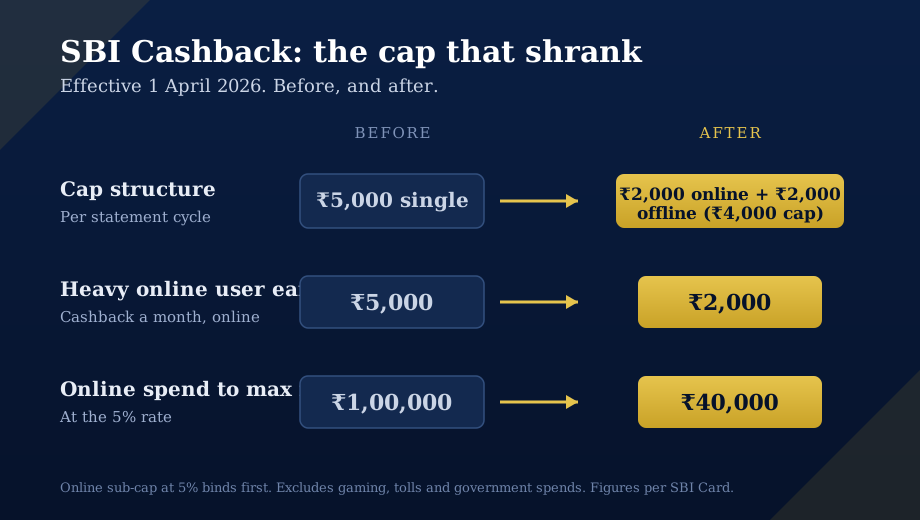
The cap. The single ₹5,000 monthly ceiling is gone. In its place: ₹2,000 of cashback per statement cycle on online spend at 5%, ₹2,000 on offline spend at 1%, and a hard ₹4,000 aggregate. Cross either sub-cap and further spend in that channel earns nothing for the rest of the cycle, even if the aggregate is nowhere near ₹4,000.
The exclusions. Cashback no longer accrues on digital gaming, tolls, or government transactions. These join the existing exclusions: fuel, wallet loading, rent, utilities, insurance, jewellery, education, railways, quasi-cash and the rest. The practical effect is that a statement can show a healthy online-spend total and a thin cashback line, because more of that spend now falls outside the eligible 5% bucket than before.
What held. The 5% online rate, the 1% offline rate, the ₹999 joining and annual fee, the ₹2,00,000 annual-fee waiver, and the fuel-surcharge waiver are all unchanged.
The online sub-cap is the number that decides it
A 5% rate against a ₹2,000 sub-cap maxes out at ₹40,000 of eligible online spend a month. Below that the cap never bites, and every eligible rupee earns 5%. At ₹40,000 you collect the full ₹2,000, or ₹24,000 a year. Above it, additional online transactions earn nothing. A household that used to route ₹70,000 a month through the card to capture ₹3,500 of monthly cashback now stops at ₹2,000, and the ₹18,000 a year difference is the real cost of this devaluation for heavy-online spenders. The offline sub-cap, ₹2,000 at 1%, maps to ₹2,00,000 of offline spend a cycle and stays dormant for any normal cardholder.
The redemption rule that does not apply here
From the same date SBI capped statement-credit reward-point redemption at 60,000 points a month, in multiples of 4,000, and much of the coverage folded that into the Cashback card story. It does not belong there. The Cashback card credits cashback straight to the statement and never converts it into redeemable reward points, so the points-redemption cap governs SBI's points-earning cards, not this one. For a Cashback cardholder, the cap restructure above is the only change that moves the numbers.
What we would do
Total your last three cycles of eligible online spend. Under ₹40,000 a month and the new cap never touches you; the exclusion list is the thing to watch, so compare your statement's online-spend total against cashback earned and confirm the implied rate has not slipped below 4%. If it has, the exclusions are quietly costing you more than the cap ever will, and a flat-rate card may pay better with none of the category guesswork. On merchants outside the Millennia's ten-name list — MakeMyTrip, Reliance Digital, Ajio, direct brand sites — the SBI card wins decisively, because the Millennia pays just 1% there, not the 2.5% widely (and wrongly) attributed to it. Note that Tata CLiQ and BookMyShow are on the Millennia's list, so they are not the SBI card's home ground. For households whose online spending sits squarely on Amazon, Flipkart, Myntra, Swiggy and Zomato — and who fly enough to clear the Millennia's ₹1-lakh-a-quarter lounge gate — the Millennia is the better daily driver at the same fee. For everyone whose spending strays off that list, SBI is. Our HDFC Millennia vs SBI Cashback comparison carries the post-devaluation math.
The card is not dead. It is narrower, and the segment where it clearly wins is smaller than it was. It is also one of several 2026 cuts; the full 2026 devaluation list covers the rest. Decide whether your spending still fits the narrower box before paying the next ₹999.
Sources


Frequently asked
Is the SBI Cashback card still worth it after the April 2026 cap cut?
For households whose eligible online spend stays under ₹40,000 a month, yes, the new sub-cap never bites and the 5% rate holds. Above that the card tops out at ₹2,000 of cashback a cycle, and the ₹999 annual fee gets harder to justify against a no-fee or lounge-bearing alternative.
What is the new SBI Cashback cap structure in 2026?
From 1 April 2026 the single ₹5,000 monthly cap is replaced by ₹2,000 of cashback per cycle on online spend at 5%, ₹2,000 on offline spend at 1%, and a ₹4,000 aggregate. Crossing either sub-cap means further spend in that channel earns no cashback for the rest of the cycle.
Does the SBI 60,000-point redemption rule affect the Cashback card?
No. The Cashback card credits cashback straight to your statement and never converts it into redeemable reward points. SBI's separate cap of 60,000 statement-credit points a month, in multiples of 4,000, applies to its points-earning cards, not to how this card's cashback reaches you.
What does the SBI Cashback card no longer give cashback on?
From April 2026 it added digital gaming, tolls and government transactions to the exclusion list. These join earlier exclusions including fuel, wallet loading, rent, utilities, insurance, jewellery, education, and railways. The 5% rate only applies to eligible online spend outside those categories.
Card devaluations, reward maths, and rate changes the day they land.
Follow on X
Reader comments
No comments yet. Share your experience with this card below — the first useful comment helps every reader after you.
Comments are moderated before they appear. Share your real experience with a card — what worked, what didn't, what the bank told you. We don't publish promotional content, referral links, or personal financial details. Keep it useful for other readers.