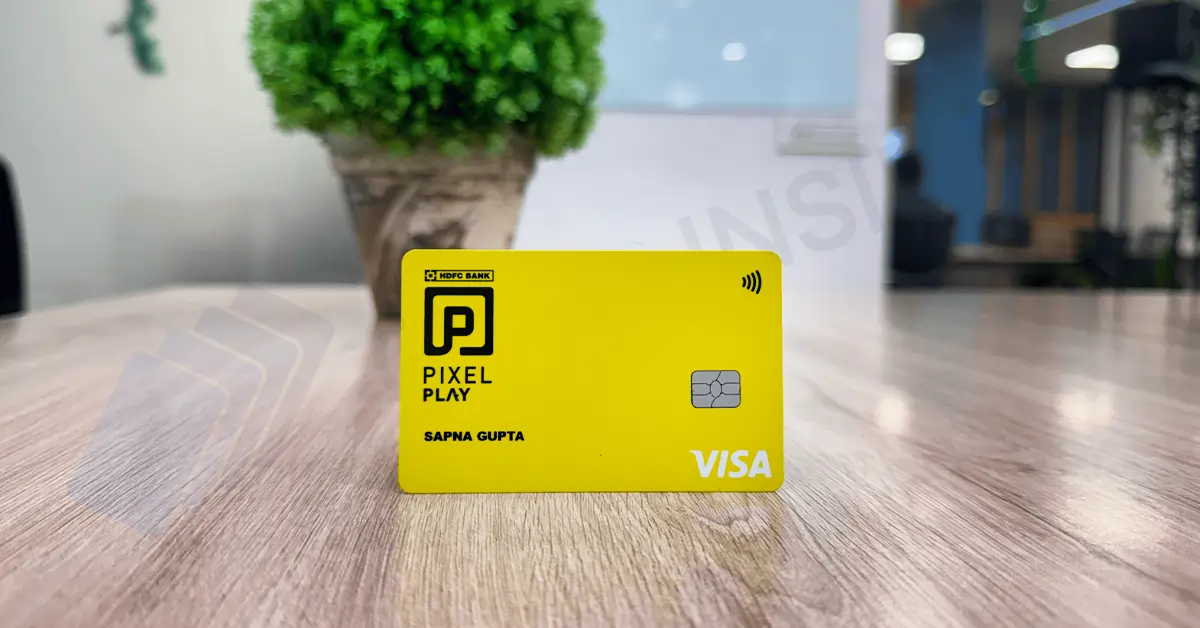
Who this card is for
We'd pitch Pixel Play at digital-first users who live inside the PayZapp app and want a primary cashback card with a clearable fee floor. It suits young professionals in metros who already route bills, Swiggy orders, and Amazon purchases through UPI and app payments. Salaried first-jobbers qualify at the ₹3L income bar, and self-employed applicants are welcome too. The card's real appeal is picking two cashback categories (e.g., Amazon and Swiggy) and earning 5% on those, which matches or beats dedicated co-brand cards for most users. Heavy offline-cash spenders who can't clear ₹1L of annual spend should look elsewhere, as should lounge-hungry travellers and anyone uncomfortable with PayZapp.
What you earn
Cashback structure is tiered and capped. The headline is 5% back on the cardholder's two chosen categories from a menu that includes Amazon, Flipkart, Swiggy, Zomato, Uber, and a few others, subject to a ₹2,000 monthly cashback cap. That translates to a maximum ₹40,000 per month of qualifying spend before the cap bites. Beyond that, PayZapp and HDFC Smartbuy transactions earn 3% back, and all other spends earn a flat 1%. Cashback is posted as CashPoints, HDFC's wallet-credit currency, which convert 1:1 to statement credit or can be spent inside Smartbuy. Unlike a direct cashback model, CashPoints need manual redemption, and conversions to statement credit usually trigger a ₹99 handling fee below certain thresholds, so batching redemptions helps. A household that runs ₹15,000 a month through their two chosen 5% categories earns ₹750 in direct cashback, hitting ₹9,000 annually. That easily beats most paid cashback cards. Does the category choice lock-in create friction? Yes. Switching categories requires a cooldown period and a fresh PayZapp request, so initial picks matter. A smart user will watch their three prior months of spend before locking in. Categories that clearly suit a metro resident might be Swiggy (for food delivery) and Amazon (for everything else online), while a Bengaluru-based commuter might prefer Uber and Swiggy. Notable exclusions: rent payments, EMI conversions, fuel, wallet loads, and gift card purchases are all ineligible for the 5% rate and most of them also miss the 1% base rate. That narrows the real coverage of the card. UPI spends on the card earn at base 1%, which feels underwhelming given how UPI-heavy Indian wallets now run. Education fees and insurance premiums earn only 1% too. On the positive side, HDFC has been consistent about category-refresh requests once a user's cooldown completes, and the PayZapp app does show running cap utilisation in real time, which helps plan the month.
| Category | Rate | Detail |
|---|---|---|
| choice | 5% | 5% cashback on choice of 2 categories (Amazon, Flipkart, Swiggy, Uber, etc.) |
| e commerce | 3% | 3% cashback on PayZapp and Smartbuy |
| others | 1% | 1% cashback on all other spends |
| Default cashback rate | 1% | All other eligible spends |
The cost breakdown
There is a ₹500 + GST joining fee charged when the card is issued. From the second year, the annual fee is also ₹500 + GST, but HDFC waives it for cardholders who spend at least ₹1,00,000 in the previous membership year. That's roughly ₹8,400 a month of qualifying spend, a bar most active users will clear without thinking. The effective ₹590 cost (₹500 + 18% GST) is recovered by under a month of 500 CashPoints per accelerated category per month cap on the 5% tier. Anyone who can't sustain the ₹8,400 monthly threshold should think twice before applying, since the second-year charge will hit. The card is issued via the PayZapp app, typically appearing as a virtual card within minutes of approval. Physical card delivery is optional. CashPoints redemption to statement credit may attract a ₹99 handling charge below certain thresholds, so batching redemptions quarterly helps. Finance charges on revolving balances follow standard HDFC rates around 3.6% per month, and we'd strongly suggest paying the full balance monthly. Fuel surcharge is waived at 1% on transactions between ₹400 and ₹5,000. Forex markup of 3.5% is standard, so this isn't a card to use abroad. There's no lounge access to factor into the benefits maths. Customer complaints on Reddit and similar communities cite PayZapp-related bugs more often than card-side issues, which is worth weighing in.
| Joining fee | ₹500Waived on ₹1L annual spend |
| Annual fee | ₹500Waived on ₹1L annual spend |
Where it wins and where it loses
What works
- ₹500 fee waived on a reachable ₹1L annual spend threshold
- 5% cashback on two user-chosen categories, effectively custom-built
- 3% on PayZapp and Smartbuy adds a second usable tier
- Instantly issued digital card via PayZapp
- 1% fuel surcharge waiver on a wide ₹400-₹5,000 bracket
What it costs you
- ₹500 + GST annual fee kicks in if yearly spend falls below ₹1L
- 500 CashPoints per accelerated category monthly on 5% tier limits heavy spenders
- CashPoints redemption has a ₹99 handling fee below certain thresholds
- No lounge access
- Locks the user into the PayZapp app ecosystem