
Apple Pay now has a reported launch month for India, a reported launch bank, and a reported answer on UPI. Reuters, citing three people familiar with the plans, reported on 18 September 2026 that Apple will launch the wallet in India next month, starting with Axis Bank credit cards. An earlier Business Standard report in August said the launch would cover Visa and Mastercard credit cards only, with no UPI support. Apple and HDFC Bank did not respond to Reuters, and Axis Bank and ICICI Bank said they had no comment, so none of this is official. It is, however, a far more specific picture than the "five banks in talks, late 2026 or early 2027" reporting this page carried when it was first published in July, and it changes the practical answer to the question in the title.
A five-year payments standoff, quietly over
The backstory matters because it explains the delay. In 2021 the RBI barred merchants and payment platforms from storing customer card numbers, requiring encrypted tokens held within the card networks instead. Google Pay and Samsung Wallet rebuilt around the rule and carried on. Apple did not, and instead pulled card payments from the App Store and iCloud in India entirely, leaving UPI and net banking as the only ways to pay for a subscription or an iPhone backup plan.
That standoff ended in July 2026. Apple now processes Indian card payments through network tokenisation, and according to reporting by Moneycontrol it will not back up Indian tokenised payment data on its own servers, a concession it has not needed to make in the US, EU or China. A company that spent five years refusing to adapt its payments stack to Indian rules did exactly that, and two months later the launch reporting arrived.

What the September reporting says, and how much to trust it
Two separately sourced reports carry everything below, so it is worth stating exactly what each claims and what neither does.
- Timing: launch next month, meaning October 2026, per Reuters. That is a month, not a date, and it comes from unnamed sources.
- Launch partner: Axis Bank, per Reuters, which had 16.26 million active credit cards in July 2026 according to RBI data, making it India's fourth-largest issuer. Credit cards only in the first phase; debit cards are not mentioned.
- Networks: Visa and Mastercard, per the August Business Standard report; the Reuters report does not name networks.
- UPI: not supported at launch, per Business Standard's August report, which said UPI would need NPCI clearance and a sponsor-bank partner, and Apple has neither in place.
- Other banks: talks with HDFC Bank and ICICI Bank are under way, per Reuters, but commercial terms are not settled with either. Apple's pattern elsewhere is to add banks one agreement at a time, and the report says India will follow it.
What neither report contains is a statement from Apple, Axis Bank, the RBI or the NPCI. Most of the coverage since mid-September is pickup of the Reuters report, which is a sourced report and not a confirmation. Two separately sourced reports now point the same way, but neither is a statement from Apple, so hold the date loosely until Apple says it.
The January 2026 reporting of a UPI-compliant Apple Pay by year-end, which this page originally leaned on, is now contradicted on the UPI point and superseded on the timing. We have left it in the timeline because it is part of how the story developed, not because it still describes the plan.
Which credit cards would actually work on day one
If the report holds, day one is an Axis Bank Visa or Mastercard credit card. That is a much narrower answer than July's "one of five banks", and it is one we can read straight off our own catalogue by network.
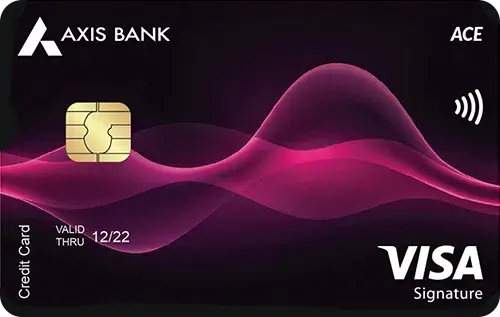
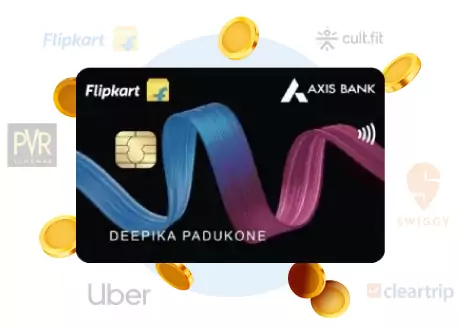
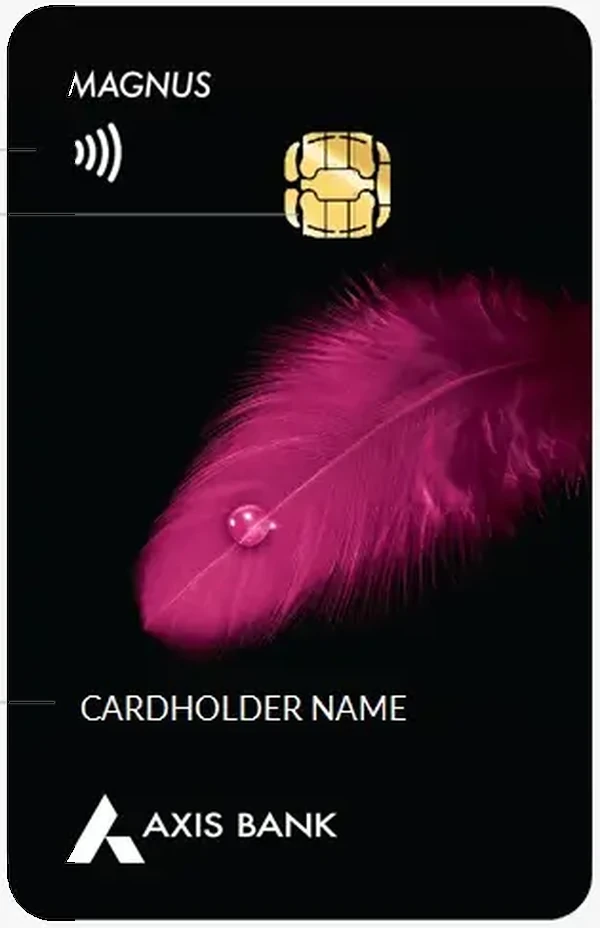
From the Axis line-up we track, the Visa cards would all qualify if the reported network scope holds: the Axis ACE Credit Card, the Axis Flipkart Credit Card, the Axis Bank Magnus Credit Card, the Axis Horizon Credit Card, the Axis Cashback, the Axis Rewards, the Axis Privilege Visa, the Axis Samsung Signature, the LIC Platinum and Signature pair, the IndianOil Axis Visa, and both IndiGo Axis cards. That covers the bulk of what Axis issues and most of what people ask us about.
The Axis cards that would sit outside a Visa and Mastercard launch are the RuPay variants, the Axis Neo RuPay, the Axis MyZone RuPay, the IndianOil Axis RuPay and the Airtel Axis Bank card, and the Axis Privilege American Express (its Visa twin is covered). RuPay tokenisation runs on NPCI rails, which is the same body Apple has not yet reached agreement with for UPI, so we would not expect RuPay support in the first wave. American Express supports Apple Pay in most markets where the wallet operates, but Amex India has not featured in any of the launch reporting.
Cards from HDFC Bank, ICICI Bank, SBI Card, Kotak and everyone else wait for their bank to sign. The July version of this page pointed at the HDFC Millennia and the SBI Cashback as safe bets; on the current reporting they are second-wave candidates at best, and SBI Card and Kotak are not named in it at all.
Rewards should carry over untouched. Apple Pay is a presentation layer over the same card rails, so a tokenised transaction earns whatever the underlying card earns. Nothing in the reporting suggests issuers plan to treat wallet spends differently, though category exclusions that already apply to a card would apply through the wallet too.
What changes at the till, and what does not
For anyone holding a supported card, the practical change is tap-to-pay with an iPhone or Apple Watch at any NFC terminal, authenticated by Face ID or Touch ID, with the merchant never seeing the real card number. Indian contactless terminals are already widespread because Google Pay and Samsung Wallet seeded them years ago, so acceptance should not be the bottleneck it was when those wallets launched.
What does not change is the economics of choosing a card. A wallet makes a card easier to use; it does not make a mediocre card better. The fee math, milestone structures and exclusion lists that decide whether a card earns its keep are unaffected by how the card is presented at the terminal, and the same discipline we apply to bank-side rule changes, like the recent RBI directions on mis-selling and faster credit reporting, applies here.
Nor does a Visa and Mastercard launch change the case for a RuPay credit card. RuPay cards earn their place through UPI linking, which Apple Pay does not touch, and a reader who chose a RuPay card for that reason loses nothing on the day Apple Pay arrives.
What to watch
What moves this from reported to real is an announcement from Apple or Axis Bank, which would also settle the date; then the first cards appearing in Apple Wallet, which will confirm the network scope in practice rather than on paper; and finally a second signed bank, most likely HDFC or ICICI, which is the point at which Apple Pay support becomes a question for most cardholders rather than for Axis customers alone.
We would not open an Axis card today to be first in line. If an Axis Visa card already suits your spending, Apple Pay arrives as a bonus in October; if it does not, a wallet does not change that arithmetic, and the Axis ACE or the Axis Flipkart should be judged on their cashback terms, not on which phone they sit in.
Sources
- Is Apple Pay ready for tap-to-pay India debut next month? (The Week, 22 September 2026, reporting the Reuters exclusive)
- Dropping this Oct: Apple Pay services set for India launch, no UPI yet (Business Standard, 9 August 2026)
- Apple Pay India launch: after 90+ markets, is India finally next? (Business Today, 24 September 2026)
- Will Apple Pay get its India launch soon? (The Week, 6 July 2026)
- UPI-compliant Apple Pay to launch in India by this year-end (Deccan Herald, 22 January 2026)
Changelog
- 2026-09-28: Reuters reported an October 2026 launch with Axis Bank credit cards first; an August Business Standard report had already said Visa and Mastercard only, with no UPI at launch. Rewrote the lede, the reporting section, the card list (now Axis by network rather than five banks by guess), the FAQ answers on timing, banks and UPI, and the timeline and banner graphics. Added an FAQ on which Axis cards qualify. Related cards changed from a cross-bank guess to Axis Visa cards. Apple has still not made an announcement.

Frequently asked
Is Apple Pay available in India in 2026?
Not yet, but it is close. Reuters reported in September 2026 that Apple Pay will launch in India in October 2026, starting with Axis Bank credit cards. Apple has not confirmed a date, so treat October as the reported window rather than a fixed one.
Which bank will support Apple Pay in India first?
Axis Bank, according to the Reuters report. Axis is the reported launch partner and the only issuer named for day one. HDFC Bank and ICICI Bank are in talks but have not settled terms, so their cards would join in a later wave, bank by bank, if those talks close.
Why did Apple stop accepting cards in India in 2021?
The RBI mandated that merchants and payment platforms cannot store customer card details, requiring encrypted tokens held within card networks instead. Google Pay and Samsung Wallet complied, but Apple chose to switch off card payments on the App Store and iCloud rather than change how it stored card data. It resumed card payments in July 2026 after adopting tokenisation.
Will Apple Pay in India support UPI?
No, not at launch. Business Standard reported in August 2026 that the India launch covers Visa and Mastercard credit cards only, because UPI needs NPCI clearance and a sponsor-bank partner that Apple has not secured. The September Reuters report does not address UPI, and nothing further has been announced.
Which Axis Bank credit cards will work with Apple Pay?
If the reports hold, Axis Bank credit cards on Visa or Mastercard are the ones in scope, which would include the Axis ACE, Axis Flipkart, Axis Magnus and Axis Horizon. Axis RuPay cards and the Axis Privilege American Express would sit outside a Visa and Mastercard launch. Axis has not published an eligible-card list.
Card devaluations, reward maths, and rate changes the day they land.
Follow on X
Reader comments
No comments yet. Share your experience with this card below — the first useful comment helps every reader after you.
Comments are moderated before they appear. Share your real experience with a card — what worked, what didn't, what the bank told you. We don't publish promotional content, referral links, or personal financial details. Keep it useful for other readers.