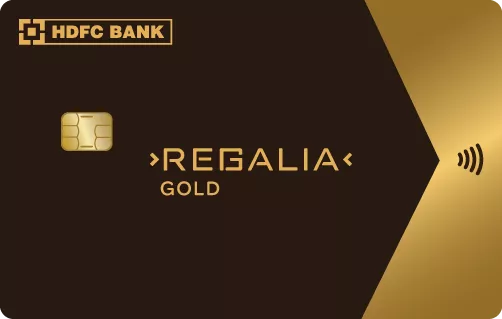
If you searched for "Regalia vs Regalia Gold" expecting a normal two-card comparison, the framing is slightly off. HDFC stopped sourcing the original Regalia for new applicants; it does not appear as an active product on HDFC's own card pages anymore. Regalia Gold is what the bank issues in that slot today. So this is not a question of which card to apply for. It is a question every existing Regalia holder eventually gets asked by a retention agent or a NetBanking prompt: take the upgrade to Gold, or keep what you have.
We answer that question here using both cards' actual documented terms, not the "newer card is better" assumption that upgrade offers lean on.
The base rate difference is nearly a wash
The original Regalia earns 4 reward points per ₹150 spent, an effective 2.67 points per ₹100. Regalia Gold earns 5 points per ₹200, effective 2.5 per ₹100, after HDFC trimmed the Gold rate on 15 May 2026. That gap is small enough that it should not be the deciding factor either way. Someone spending ₹5 lakh a year picks up roughly 850 fewer reward points on Gold purely from this difference, worth somewhere around ₹425 at typical SmartBuy redemption values. It matters less than most upgrade pitches imply, and it should not be the reason you say yes or no.
Lounge access moved to a friendlier gate, with more visits
This is where the comparison gets interesting, because the two cards' lounge structures work on different math entirely. The base Regalia offers 8 domestic lounge visits a year, spend-gated at 2 visits per quarter contingent on ₹1 lakh spent in that quarter. Regalia Gold offers 12 domestic visits a year, gated from July 2026 at 3 visits per quarter on ₹60,000 of quarterly spend.
Run the comparison directly: Gold asks for 40 percent less quarterly spend and pays out 50 percent more visits. For a cardholder who already clears ₹60,000 of card spend most quarters, an unremarkable bar for anyone using a premium card as their primary spend vehicle, Gold's lounge economics are a genuine improvement, not a lateral move dressed up as one. International access is close to identical: both cards offer 6 Priority Pass visits a year, with Gold requiring a minimum of 4 retail transactions to keep the benefit active.
What Gold adds that the original Regalia's documented terms do not
Two features separate Gold from a same-fee-tier reissue of the original card. The Boarding Edge programme lets Gold holders pick two of a spa session, hotel buffet, room upgrade, or airport transfer after any flight, uploaded via boarding pass within six days of landing. Nothing comparable exists in the original Regalia's terms.
Gold also earns reward points on insurance premium payments, capped at 2,000 points a month, a category most premium lifestyle cards in India exclude entirely. If you route annual insurance premiums through your card, this alone can add several hundred to over a thousand points a year that the base Regalia's documented benefit structure does not provide.
One area we cannot compare cleanly: Gold's best redemption path, transferring points to Accor's ALL programme at 2 Gold points per 1 ALL point for roughly ₹0.85 to ₹0.90 per point, is well documented in HDFC's current partnership terms. The original Regalia's transfer-partner terms are not something we can independently verify from currently available issuer sources, since HDFC no longer maintains a live product page for the card. If a strong transfer redemption is central to your decision, confirm your specific card's current transfer terms directly with HDFC before assuming either direction.
The fee waiver threshold moves, not the fee itself
Both cards carry the same ₹2,500 joining and ₹2,500 annual fee on paper, so the fee line itself is not what changes with an upgrade. What changes is how easily you clear the waiver. The original Regalia waives its annual fee at ₹3 lakh of yearly spend, and HDFC has historically waived the joining fee "on request" for holders who ask. Regalia Gold sets its annual waiver a lakh higher, at ₹4 lakh, but offsets the joining fee outright with a ₹2,500 gift voucher credited on activation, making the first year close to a wash regardless of spend.
For a cardholder comfortably clearing ₹4 lakh a year already, the higher threshold on Gold changes nothing in practice. For someone whose spend sits between ₹3 lakh and ₹4 lakh, the upgrade would move them from an automatic waiver to a fee they now have to actively cross a higher bar to avoid, a real cost that the lounge and Boarding Edge upside needs to outweigh.
Where staying put still makes sense
None of this means upgrading is automatically correct. If your annual card spend sits well under ₹1 lakh a quarter, Gold's friendlier lounge gate is a benefit you are unlikely to unlock either, and you would be trading a marginally better base rate and a lower fee-waiver bar (₹3 lakh versus Gold's ₹4 lakh) for perks you may not use. The upgrade earns its case for cardholders who already travel enough to value lounge access, who route insurance or SmartBuy spend through their card as a matter of habit, and who would clear Gold's ₹4 lakh waiver threshold without changing their spending pattern to do it.
Before accepting an upgrade offer, ask the retention desk two things directly: whether your account tenure and credit limit carry over, and whether the new card's joining fee is waived as part of the offer. Neither is guaranteed by HDFC's public terms, and cardholders report the answer varies by offer and by agent. Get it in writing where you can, and only then decide whether the lounge math and the extra earning categories are worth the move for how you actually spend.
Frequently asked
Can I still apply for the HDFC Regalia (the original, non-Gold card) in 2026?
No. HDFC has stopped sourcing the base Regalia for new applicants; it is no longer listed as an active product on HDFC's own card pages. Existing holders keep their card and continue earning under its original terms. Regalia Gold is the card HDFC now issues in that slot.
Is HDFC Regalia Gold better than the original HDFC Regalia?
It depends on how you use lounges. Gold's domestic lounge visits are gated at ₹60,000 quarterly spend for 3 visits a quarter, against the base Regalia's ₹1 lakh quarterly spend for 2 visits, so Gold is the easier threshold for more visits. The base reward rate is essentially a wash, 2.67 vs 2.5 points per ₹100. Gold adds the Boarding Edge programme and reward points on insurance premiums, which the base Regalia's documented terms do not offer.
How do I upgrade from HDFC Regalia to Regalia Gold?
There is no self-serve upgrade button on HDFC's site. Cardholders report success by calling customer care or raising a request through NetBanking and asking to be moved to Regalia Gold, sometimes as part of a loyalty or retention offer that waives the joining fee on the new card. Confirm the terms of any specific offer directly with HDFC before accepting, since retention-desk offers vary by cardholder and are not standardized.
Does upgrading from Regalia to Regalia Gold reset my card tenure or credit limit?
Cardholders who have gone through the upgrade generally report that HDFC preserves account tenure and credit limit history rather than treating it as a fresh application, but this is not something HDFC documents publicly as a guarantee. Ask the retention agent to confirm in writing what happens to your tenure and limit before accepting an upgrade offer.
What do I lose by staying on the original HDFC Regalia instead of upgrading?
You keep a marginally higher base reward rate and a fee-waiver threshold set at ₹3 lakh instead of Gold's ₹4 lakh. You give up the Boarding Edge programme, reward points on insurance premiums, and the higher domestic lounge count Gold offers at its lower quarterly spend gate. For most travel-focused holders, those three gaps outweigh the small rate difference.
Card devaluations, reward maths, and rate changes the day they land.
Follow on X
Reader comments
No comments yet. Share your experience with this card below — the first useful comment helps every reader after you.
Comments are moderated before they appear. Share your real experience with a card — what worked, what didn't, what the bank told you. We don't publish promotional content, referral links, or personal financial details. Keep it useful for other readers.