Every mainstream credit card application in India runs through the same two filters: a bureau file and an income proof. Fail either one, as students, homemakers, freelancers with irregular income, and anyone recovering from an old default routinely do, and the rejection itself gets recorded, making the next application slightly harder. Secured cards break that loop by replacing both filters with a fixed deposit. The bank holds the FD as collateral, the deposit becomes the credit limit, and the question of trust never reaches the bureau.
The PickMyCard catalogue currently lists three cards that are structurally FD-backed, all now collected on the /cards/category/secured landing page. This guide is the editorial layer on top: what each card actually pays, what the deposit terms look like, and which profile each one fits. A card that merely offers an optional FD variant next to its regular underwriting (the IndiGo IDFC FIRST Dual is one example) does not count as secured for this list.
What "secured" buys you, and what it costs
The mechanics are the same across all three cards. Open a fixed deposit with the issuing bank, and the bank issues a credit card against it with no income documents and no bureau check. The deposit keeps earning its contracted interest for the full card tenure. The trade-offs are equally consistent: the FD is under lien, so it cannot be broken while the card is open, and the credit limit is capped by the deposit rather than by income.
The quiet payoff is bureau reporting. All three issuers report repayment history to CIBIL and the other bureaus in exactly the format a regular card produces, and the record carries no secured flag. For someone with no file, this is the cheapest way to create one. For someone with a damaged file, it is the only card-shaped way back in, since no unsecured issuer will look past a recent default.
The three cards at a glance
| Card | Bank | Joining / annual fee | Min. deposit | Headline earn | Standout |
|---|---|---|---|---|---|
| Stable Money Suryoday | Suryoday SFB | ₹0 / ₹0 | Per current FD terms | 0.5% cashback on all eligible spends (cap ₹3,000/cycle) | FD earns up to 8.10% p.a.; instant virtual RuPay card |
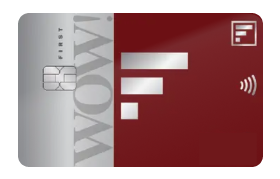
| IDFC FIRST WOW! | IDFC FIRST Bank | ₹0 / ₹0 | ₹20,000 | 4X reward points on retail spends | Zero forex markup; 100% of FD as limit |
| AU NoMo | AU SFB | ₹199 + taxes / ₹0 | Per current FD terms | 2 RP per ₹100 on retail | 0.99% forex; 8 railway lounge visits a year |
Stable Money Suryoday: the simplest on-ramp
The Suryoday card, distributed through the Stable Money app, is the most beginner-shaped of the three. It is lifetime free, issues an instant virtual RuPay card the moment the FD is booked, and pays a flat 0.5% cashback on all eligible UPI and non-UPI spends, capped at ₹3,000 per billing cycle. RuPay matters here: it makes the card usable for UPI payments, which is where most first-card spending actually happens. The deposit earns up to 8.10% p.a. during the card tenure, the highest FD rate in this group, and the bank states plainly that applicants with a low or missing CIBIL score are eligible. The limit is linked to the FD value and can be expanded later by adding more deposits. The 0.5% rate will not excite anyone, but the card's job is bureau history and UPI access, and it does both at zero fee.
IDFC FIRST WOW!: the strongest card that happens to be secured
The WOW! is the pick for anyone who wants the secured card to behave like a real rewards card. Against a minimum ₹20,000 deposit it gives 100% of the FD as credit limit, earns 4X reward points on retail spends online and offline, and, unusually for any Indian card at any price, applies zero forex markup on international transactions. A student headed abroad can pair the card with a parent-funded FD and skip the 2 to 3.5% currency penalty most travel cards charge. Utility, railway, FASTag, and insurance payments earn a reduced 1X, there is a 1% fuel surcharge waiver up to ₹200 a month, and even cash withdrawals get a 45-day interest-free window. Zero joining fee, zero annual fee. The Visa network means no UPI linkage, which is the one genuine gap next to the Suryoday card.
AU NoMo: the only one with lounge access
The NoMo is the outlier: it charges a one-time ₹199 joining fee (plus taxes, with no annual fee from the second year) and in exchange behaves like a mid-tier lifestyle card. It earns 2 reward points per ₹100 on retail spends and 1 per ₹100 on utilities and insurance, with points worth an indicative ₹0.25 each in the AU Rewardz catalogue, a 500-point welcome bonus on the first transaction inside 30 days, and quarterly milestone points at ₹25,000 and ₹50,000 of spend. The forex markup is 0.99%, among the lowest in the market. The headline, though, is lounge access, which no other secured card in the catalogue offers at all: 8 domestic airport visits a year gated on ₹50,000 of spend in the preceding quarter, plus 8 railway lounge visits a year with no spend condition attached. Approval is based on the deposit; no credit score or income proof enters the decision.
Who should pick which
The Suryoday card fits the first-timer whose spending runs through UPI and who wants the FD itself to work hardest, since 8.10% on the deposit outweighs small differences in cashback at low spend levels. The WOW! fits two profiles: the credit-builder who spends mostly on retail (where 4X beats everything else here) and the student or traveller going international, where zero forex markup is worth more than any reward rate. The NoMo fits someone slightly further along, willing to pay ₹199 once for railway lounge access and a points programme with milestones, and comfortable pushing ₹50,000 a quarter through the card to open the airport lounge gate.
A simple framework before you apply
Size the deposit to the limit needed, not the minimum allowed, because utilisation above roughly 30% of the limit slows the score-building the card exists to do; a ₹50,000 FD carrying ₹10,000 of monthly spend reads better to the bureau than a ₹20,000 FD carrying the same amount. Put one recurring bill and one everyday spend category on the card, pay in full on or before the due date, and leave the rest alone. After six to twelve clean months, the bureau file exists, and the wallet conversation changes: at that point the lifetime free shortlist is the natural next read, and our CIBIL-building guide covers the habits that move the score fastest.
Sources
- Suryoday Small Finance Bank secured credit card product page
- Suryoday Key Fact Statement (PDF)
- IDFC FIRST Bank WOW! credit card product page
- IDFC FIRST Bank rewards points terms
- AU Small Finance Bank NoMo credit card product page
All fee, reward, and deposit figures verified against the bank product pages above and our card catalogue as of 10 July 2026. Card terms change; confirm on the issuer's page before applying.


Frequently asked
Can I get a credit card in India without a CIBIL score?
Yes. FD-backed secured cards are issued against a fixed deposit with the bank instead of a credit check. All three cards in this guide accept applicants with no credit history, and Stable Money Suryoday explicitly accepts applicants with a low CIBIL score. Repayments are then reported to the bureaus, which is how a first score gets built.
How much fixed deposit do I need for a secured credit card?
IDFC FIRST WOW! requires a deposit of at least ₹20,000 and gives 100% of the deposit as credit limit. Suryoday (via Stable Money) and AU Small Finance Bank set their own FD minimums, which track their current deposit products. In every case the limit scales with the deposit, so a larger FD means a larger usable limit.
Does the fixed deposit keep earning interest while the card is active?
Yes. The FD stays in your name and continues to earn its contracted rate; Suryoday pays up to 8.10% p.a. on the linked deposit. The bank holds a lien on it, meaning it can recover unpaid card dues from the deposit, and the FD cannot be broken while the card is open.
Will a secured credit card improve my CIBIL score?
It reports to the bureaus exactly like a regular card, and the bureau record does not flag it as secured. Six to twelve months of on-time, full payments is the standard path to a first score or to repairing a damaged one. Keeping utilisation below roughly 30% of the limit speeds this up.
Card devaluations, reward maths, and rate changes the day they land.
Follow on X
Reader comments
No comments yet. Share your experience with this card below — the first useful comment helps every reader after you.
Comments are moderated before they appear. Share your real experience with a card — what worked, what didn't, what the bank told you. We don't publish promotional content, referral links, or personal financial details. Keep it useful for other readers.