A 720 CIBIL score and a 780 CIBIL score look almost identical to anyone glancing at a credit report. To a home loan underwriter at HDFC or SBI, they translate into rate slabs that compound into lakhs of rupees over a twenty-year loan. The gap is real, the cost of being on the wrong side of it is real, and closing it does not require five credit cards, a credit-builder app, or any of the paid services that promise faster score-building.
One card, used the right way for roughly two years, is enough. The playbook below is the one we would hand a 22-year-old first-jobber, a 35-year-old whose score plateaued at 720 after a missed EMI in 2022, or anyone who has a card already and wants to stop guessing about what actually moves the number.
What a 780 actually buys
Lenders in India use the CIBIL score, which runs from 300 to 900, as the first filter in any unsecured loan or premium credit card application. Anything above 750 lands in the "excellent" band on most banks' internal underwriting grids. A 780 is comfortably inside that band, far enough above the 750 threshold to absorb the small score wobble that comes with a fresh hard enquiry or a high-utilisation statement.
Practical things that change at 780+:
- Home loan rates drop into the lowest slab the bank publishes, typically a meaningful margin below the next slab on a twenty-year tenure
- Personal loans get approved at first application, often with paperwork-light pre-approved offers
- Premium credit cards (Magnus, Diners Club Black, Amex Platinum Reserve) become viable to apply for without serious turndown risk
- Credit limit enhancement requests get approved without a fresh income proof
780 is, in short, the number at which lenders stop pricing in a risk premium.
Why one card is enough, and why two can hurt
The most common piece of bad advice on this topic is to open more cards to build the score faster. It is the opposite of what helps. Every new card application is a hard enquiry, and a fresh credit account drags the average age of accounts downward.
A single, structurally lifetime free card held for two years does four things that matter:
- Generates twenty-four months of clean payment history on the file
- Anchors the average account age, which keeps climbing every month
- Sets a stable credit limit that the score uses as the denominator for utilisation
- Creates zero recent-enquiry pressure because no fresh applications are being made
A second card, added after the first crosses 750, accelerates further compounding. But the first eighteen to twenty-four months are best run with one card and nothing else on the file.
The four habits that move the score
CIBIL does not publish the exact weightage formula it uses, but the ordering of what matters is consistent across every published explanation. Payment history dominates. Credit utilisation comes second. Length of credit history matters next. Credit mix and recent enquiries round out the rest.
In practice that ordering collapses into four habits.
Pay the full amount, on the day the statement arrives. Not the minimum due, and not on the due date itself. Setting full-amount autopay from a salary account on the statement-arrival day eliminates the only reliable way to wreck a CIBIL score, which is a missed or late payment. Even one thirty-day-late on a single statement can pull the score down by sixty to ninety points and stay on the file for two full years.
Keep utilisation under 30 percent of the credit limit, ideally under 10 percent. Utilisation is computed by the bank on the statement date, not the due date. A cardholder with a ₹1 lakh limit who runs ₹40,000 of monthly spend shows as 40 percent utilisation on the file, even if the bill is paid in full a week later. The fix is to either spend less on the card or to pre-pay the card mid-cycle so the statement-date balance lands below the threshold.
Let the card age. Closing a card after upgrading is the single most expensive mistake a credit-conscious wallet can make, because it amputates the longest-running account on the file and shortens the average account age. A lifetime free first card is meant to stay open indefinitely, even after a premium card joins the wallet.
Avoid new applications for at least six months at a time. Three or four hard enquiries inside twelve months read as credit-hungry behaviour. Spacing applications out, ideally one every nine to twelve months once the score is established, keeps the enquiry count low.
The lifetime-free shortlist for a first card
The right first card is one with no joining fee, no annual fee, and no fee-waiver gate that creates pressure to overspend. Four cards in our catalogue clear that bar today.
ICICI Amazon Pay is the simplest entry point for someone who already shops on Amazon. Lifetime free with no waiver condition, rewards routed straight into Amazon Pay balance, and a ₹3 lakh income bar (ages 21 to 65).
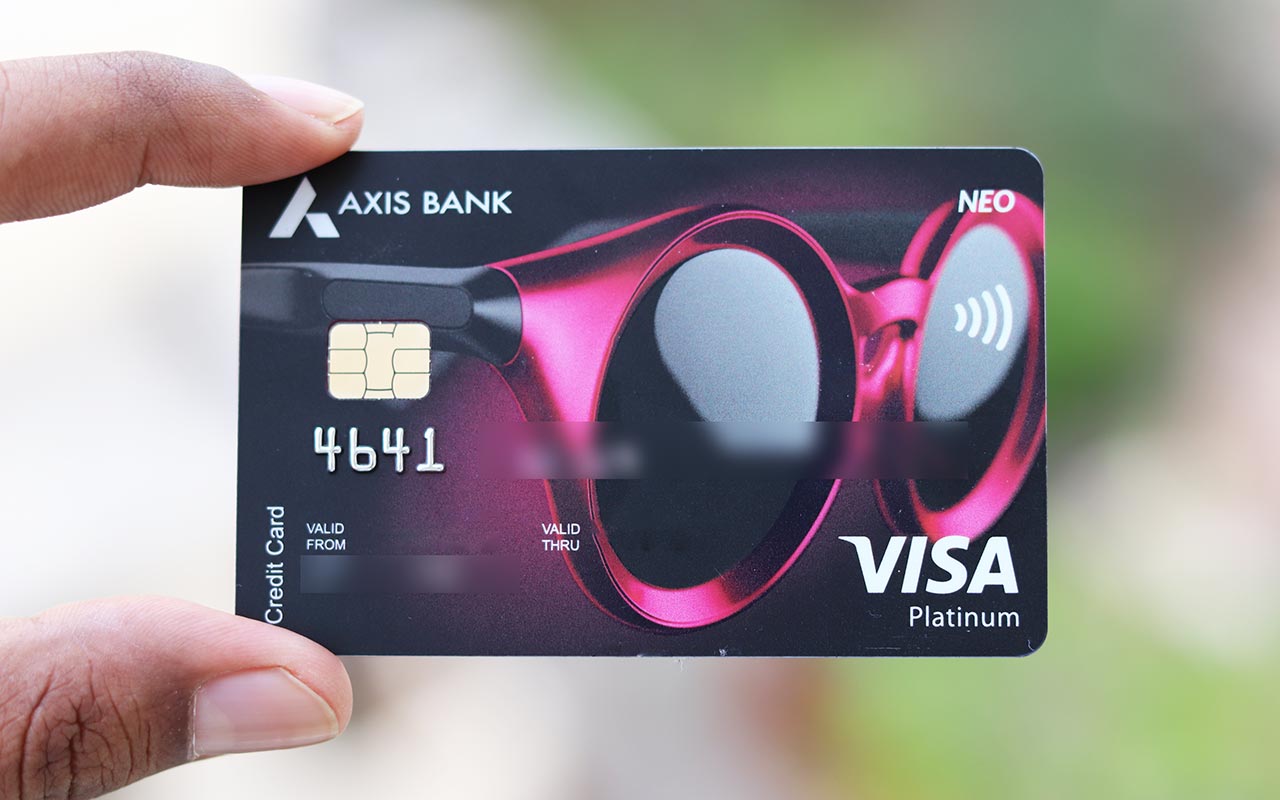
Axis Neo RuPay has the lowest income bar in this set at ₹2.5 lakh, useful for college graduates and early first-jobbers. Its accelerated 10 percent rate on Blinkit, BookMyShow, and Myntra is capped at ₹500 a month, plenty for someone using the card lightly to build score. UPI scan-and-pay routes through the card on the RuPay rail at the base 1 percent rate, so QR-coded daily spend still contributes to payment history.
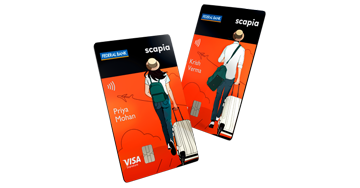
For someone who travels even occasionally, Federal Bank Scapia is the choice. Lifetime free, zero forex markup on international transactions, and domestic lounge access activated at ₹20,000 of monthly spend. A ₹3 lakh income bar covers most salaried applicants aged 21 to 60.
Kiwi RuPay sits in a niche that matters: UPI scan-and-pay at vendors who refuse direct credit cards. 1.5 percent earn rate on qualifying UPI spend, lifetime free, with rewards redeemed straight to the linked bank account in rupees.
Any one of these does the job. The right pick is the one whose accelerated category matches where the cardholder already spends, so the card earns cashback while it builds the score, instead of being run as a CIBIL-only instrument.
What changed in 2025 that helps you
Until 2025, banks reported credit data to CIBIL once a month. A payment cleared on the 5th could take until the 30th to reflect on the file. The Reserve Bank of India shortened the reporting cycle to fortnightly, every fifteen days, effective 1 January 2025 under circular RBI/2024-25/60.
Two practical consequences for a first-time score builder. Positive actions like an on-time full payment show up on the file within fifteen days instead of thirty. And a wrongly-reported delay can be challenged and corrected on a tighter cycle. Both compound in favour of someone holding the card responsibly: upward score movement that earlier took six to nine months to register can now register in four to six.
A simple framework before you apply
The two-year timeline assumes nothing fancy. By month six the file has six clean cycles, and a fresh CIBIL pull usually shows a score in the high 600s on a thin file or low 700s if there was any history to begin with. By month twelve, twelve clean cycles plus low utilisation lifts most files into the 720 to 750 band. Month eighteen to twenty-four is where the score crosses into the 760 to 790 range, assuming no missed payments and no fresh credit applications.
Anything that hurries the timeline beyond that, including credit-builder products, secured cards from fintechs, or a flurry of card applications, usually costs more than it earns. The score is a slow signal that rewards consistency. One card, four habits, two years.
Sources

Frequently asked
Is one credit card really enough to reach a 780+ CIBIL score?
Yes, provided the card is held for at least eighteen to twenty-four months, the bill is paid in full every cycle, and statement-date utilisation stays under 30 percent. A single account that has aged well outperforms three accounts opened in a hurry, because the score weighs payment history and account age more heavily than the count of cards on the file.
How long does it take a fresh CIBIL file to reach 780?
A typical timeline is twelve to eighteen months to cross 750 and another six to nine months on top of that to settle around 780, assuming no late payments and no fresh credit applications. Files with prior history (a closed loan, an old credit card) can reach 780 faster; thin files with no prior accounts take the full two years.
Will pre-paying the credit card mid-cycle help the score?
Yes, if statement-date utilisation has been the bottleneck. Banks report the balance as on the statement date, not the due date. A mid-cycle payment that lands before the statement is generated brings the reported utilisation down, and that lower number is what CIBIL receives in its fortnightly file.
Does using UPI on a credit card help build CIBIL?
It does, on the cards that route UPI spends through the credit account. Cards on the RuPay network (the Axis Neo RuPay and Kiwi are two structurally lifetime free options) post UPI spends to the statement the same way a card swipe would, which means the spend counts toward payment history and utilisation when the bill is cleared. Direct UPI from a bank account does not affect the CIBIL score.
Should the first credit card be closed once a better card is approved?
No. Closing the first card shortens the average account age on the file and reduces the total credit limit, both of which pull the score down. A lifetime free first card has zero ongoing cost, so the right call is to keep it open indefinitely and run a small recurring spend through it to keep the account active.
Card devaluations, reward maths, and rate changes the day they land.
Follow on X
Reader comments
No comments yet. Share your experience with this card below — the first useful comment helps every reader after you.
Comments are moderated before they appear. Share your real experience with a card — what worked, what didn't, what the bank told you. We don't publish promotional content, referral links, or personal financial details. Keep it useful for other readers.