A ₹20-lakh earner with five years of on-time EMIs can get almost any credit card in India for the asking. Someone with no credit history at all, until this week, mostly could not, short of a co-applicant or a wait for a bureau file to build itself out of thin air. SBM Bank India and Paisabazaar think a fixed deposit should be enough, and on 25 June 2026 they launched a card built on exactly that premise.
What SBM and Paisabazaar Are Offering
The SBM Paisabazaar Paisa+ Credit Card is a secured card: instead of underwriting on income or a CIBIL score, the bank issues a credit limit against a fixed deposit you open with SBM Bank India. Paisabazaar, India's largest financial marketplace by its own account, is fronting distribution; SBM Bank India, the first foreign bank to hold a universal banking licence from the RBI under the wholly-owned-subsidiary model, is the issuer.
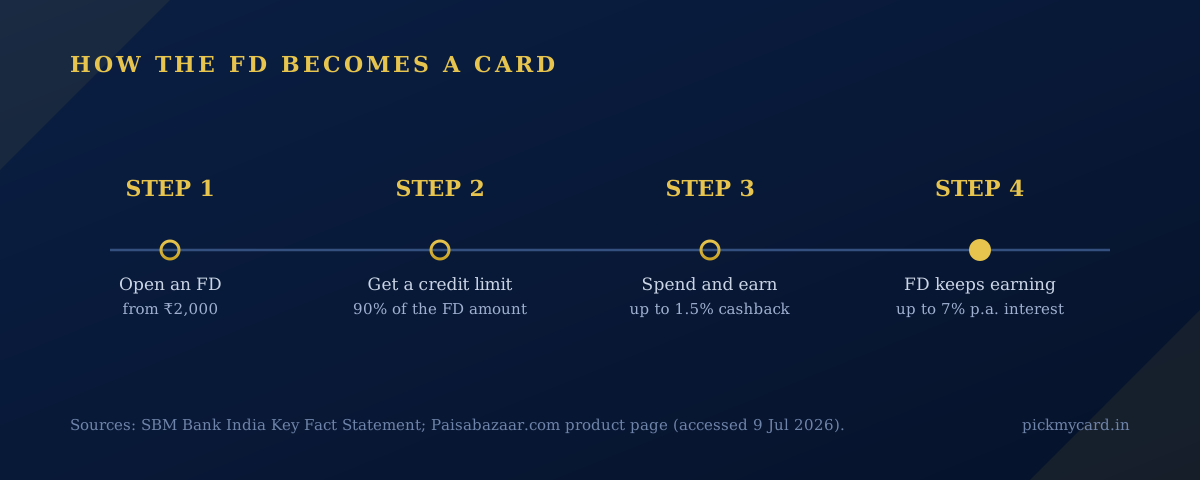
The entry point starts low. The minimum qualifying FD is Rs. 2,000, and the credit limit is fixed at 90% of whatever you deposit, so that starter FD buys a credit line of roughly Rs. 1,800. There is no income document and no credit-score floor to clear; approval rides on the deposit, not the applicant's file. Paisabazaar markets this as effectively guaranteed approval, which is consistent with how secured cards typically underwrite, though "guaranteed" is a marketing framing worth reading as "very high approval odds for a funded FD" rather than a literal promise.
The Numbers Behind the Card
Fees are close to nominal. Joining is free, and the annual fee is Rs. 499 plus GST, waived entirely if the card is used to spend Rs. 50,000 or more in a year, according to SBM Bank's published Key Fact Statement. Close the card inside six months and there is a Rs. 499-plus-GST cancellation charge, a fairly standard guard against people opening secured cards purely to test the product.
Rewards scale with the deposit. An FD above Rs. 10,000 earns 1.5% cashback on online spends; an FD between Rs. 2,000 and Rs. 10,000 earns 1%. Offline purchases and UPI transactions above Rs. 2,000 earn a flat 1% no matter how large the FD is. Cashback lands as Cash Points, worth Re. 1 each, capped at 500 points a day and 3,000 a month, which puts a practical ceiling on how much a heavy spender can actually extract. Meanwhile the FD itself keeps working: the launch announcement quotes FD interest of up to 7% p.a., though SBM and Paisabazaar's own live product page currently advertises a marginally richer up to 7.25%, a gap that likely reflects the bank's prevailing FD rate moving since launch day rather than two different products. The FD runs on a 390-day tenure with automatic renewal, and it settles back to you, interest included, once the card is closed and any outstanding balance is cleared.
The one number worth flagging before anyone applies: the revolving interest rate if a balance is carried past the due date is 3.5% a month, which compounds to 42% a year per the official fee schedule. That is a steep, if fairly ordinary, rate for a secured card, and it makes the discipline of paying in full every cycle non-negotiable, doubly so for a card whose whole point is repairing or building a credit file. A late or partial payment here does the opposite of what the card is for.
Where Paisa+ Sits Next to Suryoday's FD Card
Paisa+ is not the first FD-backed card in this market. Suryoday Small Finance Bank's Stable Money card, which we've covered before, takes a comparable minimum FD of Rs. 1,000 and charges nothing at all, ever: zero joining fee, zero annual fee, no spend threshold to protect the waiver. Its cashback sits at a flat 0.5%, well behind Paisa+'s 1% to 1.5%, but its FD pays up to 8.10% p.a. for general depositors, noticeably ahead of Paisa+'s stated rate. Suryoday's card also runs on RuPay outright; Paisabazaar brands Paisa+'s offers panel "Powered by RuPay" too, which points the same way, though SBM's own fee disclosure stops short of naming the network directly.
Neither card is the obvious winner across the board. Someone who wants the purest zero-cost route to a bureau file, and is comfortable parking capital at Suryoday specifically, gets a better FD rate and no fee anywhere. Someone who plans to actually spend on the card each month, and can clear Rs. 50,000 a year to waive Paisa+'s fee, comes out ahead on cashback with SBM and Paisabazaar instead. For context on why the bureau-file side of this matters as much as the cashback side, our guide to building a strong CIBIL score off a single card walks through the mechanics in more depth.
Who Should Actually Consider This
The card is aimed squarely at people the mainstream unsecured market turns away: first-time applicants with no bureau file, students and early-career earners without documented income history, self-employed people whose income is real but hard to paper-prove, and anyone rebuilding after a default or a thin, damaged file. For all of these, the FD-backed model does something a rejection letter cannot: it converts money you already have sitting in a deposit into a live credit line and a repayment history, without asking a bank to take a bet on you first.
It is a weaker fit for anyone who already holds an unsecured card in good standing. There is no version of this product that beats a strong existing card on rewards, and locking capital in an FD to get 1 to 1.5% cashback is not a trade an established cardholder needs to make.
What This Means for You
If you or someone you know has been turned down for a credit card, or has never applied because the bureau file is empty, Paisa+ offers a concrete, low-capital way in: fund an FD from Rs. 2,000, get a card, use it for small recurring spends, and pay it off in full every month. Twelve to twenty-four months of that behaviour is usually enough to open the door to an unsecured card with a stronger reward rate, at which point the FD-backed card has done its job and can be graduated away from. The choice between the two comes down to what matters more: a marginally better deposit rate, or a meaningfully better cashback rate.
Sources
- Build Credit, Earn Cashback: Paisabazaar and SBM Bank India Launch Paisa+ Secured Credit Card (PTI/NewsVoir via The Wire, 25 June 2026)
- SBM Paisabazaar Paisa+ Credit Card: Features, Fees & Benefits (Paisabazaar.com, product page)
- SBM Bank India: Key Fact Statement, Paisa+ Credit Card (official fee disclosure PDF)

Frequently asked
What is the SBM Paisabazaar Paisa+ Credit Card?
It is a secured credit card jointly launched by SBM Bank India and Paisabazaar on 25 June 2026. The card is backed by a fixed deposit rather than income or a credit score, and it targets people who are new to credit or rebuilding a damaged credit history.
How much fixed deposit do I need to get this card?
The minimum FD is Rs. 2,000, according to both the launch press release and Paisabazaar's own product page. The credit limit is set at 90% of the FD amount, so a Rs. 2,000 FD gets a credit limit of roughly Rs. 1,800.
What does the SBM Paisabazaar Paisa+ Credit Card cost?
Joining is free. The annual fee is Rs. 499 plus GST, waived if you spend Rs. 50,000 or more in a card year, per SBM Bank's official Key Fact Statement. Cancelling the card within six months of issuance costs Rs. 499 plus GST.
How much cashback does the card pay?
1.5% on online spends if the backing FD is above Rs. 10,000, or 1% if the FD is between Rs. 2,000 and Rs. 10,000. Offline spends and UPI transactions above Rs. 2,000 earn 1% regardless of FD size. Cashback is credited as Cash Points (1 point = Re. 1), capped at 500 points a day and 3,000 a month.
Is Paisa+ better than other FD-backed cards like Suryoday's Stable Money card?
It depends what you're optimising for. Paisa+ pays a meaningfully higher cashback rate (up to 1.5% versus 0.5%) but charges a waivable Rs. 499 annual fee and offers a lower stated FD return (up to 7% p.a. versus up to 8.10% p.a. on Suryoday's card, which is also genuinely fee-free for life). Neither is wrong; they optimise for different things.
Card devaluations, reward maths, and rate changes the day they land.
Follow on X
Reader comments
No comments yet. Share your experience with this card below — the first useful comment helps every reader after you.
Comments are moderated before they appear. Share your real experience with a card — what worked, what didn't, what the bank told you. We don't publish promotional content, referral links, or personal financial details. Keep it useful for other readers.