Paying two lakh rupees of income tax on a rewards credit card can hand you back roughly eight hundred rupees, or it can quietly cost you close to two thousand, and the difference has nothing to do with the tax and everything to do with which card is in your wallet. The Income Tax Department's own payment gateway takes a cut before any reward touches your statement, and most of the cashback cards Indians reach for by habit are contractually excluded from earning anything on the transaction at all.
What the e-Pay Tax Gateway Actually Charges
The e-filing portal at incometax.gov.in settles direct tax payments through five channels: net banking, a debit card from an authorised bank, pay at bank counter, RTGS/NEFT, and a payment gateway that in turn offers credit card, debit card, UPI, and net banking. Only the gateway route accepts a credit card, and it is not free.
As of April 2026, several banks operate that gateway on the portal, each publishing its own credit card fee, and the spread is wide. HDFC Bank charges 0.72% for its own cardholders and 0.80% for any other bank's card. Kotak Mahindra matches that 0.80% on domestic Visa, Mastercard, and RuPay cards, though its rate for international cards jumps to 2.75%. Federal Bank and Canara Bank sit at 0.85% and 0.90%, applied the same regardless of issuer. Bank of Maharashtra lists the highest rate among the gateways at 1% above ₹2,000. Every one of those figures carries 18% GST on top, so the real cost lands between roughly 0.85% and 1.18% of the tax amount once GST is added. SBI's own gateway option does not support credit cards at all, only debit card, net banking, and UPI.
UPI, RuPay debit cards, and net banking through an authorised bank all settle at zero fee. That baseline is what any credit card has to beat before a reward is worth chasing.
The Cashback Cards You'd Reach For First, Don't Pay
The instinct is to route a large, unavoidable payment through whichever card carries the best headline cashback rate, and for most Indian cardholders that instinct points at HDFC Millennia, SBI Cashback, or Axis ACE. All three explicitly carve government payments out of their reward structure.
HDFC Millennia's terms state its base 1% CashPoints rate "excludes fuel, EMI, wallet, rent and government transactions," with no separate allowance for tax payments written anywhere else in the fee schedule. SBI Cashback added government transactions to its exclusion list alongside gaming and tolls from 1 April 2026, the same revision that halved the card's cashback ceiling. Axis ACE excludes government payments from its cashback entirely, on top of the ₹500 monthly cap that already limits the card's accelerated tiers. Run a two-lakh-rupee challan through any of the three and the reward line on your statement reads zero, while the gateway fee still applies in full.
Where the Rewards Actually Land
Cards built around a flat, uncapped base reward rate, rather than a capped cashback promotion, are the ones without a documented government exclusion in our data. Three general-purpose picks are worth naming.
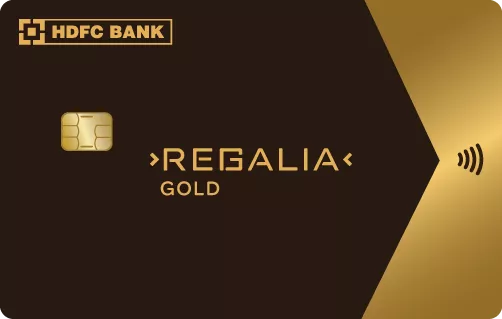
HDFC Regalia Gold earns 2.5 reward points per ₹100 at the base rate, worth ₹0.50 each when redeemed against SmartBuy flights or hotels, a 1.25% floor with no listed carve-out for government or tax spends. Annual fee is ₹2,500, waived on ₹4 lakh of yearly spend, and a ₹2,500 joining gift voucher offsets the first year's cost. It asks for a minimum income of ₹10 lakh, which puts it in reach of exactly the cardholders most likely to be writing a large advance-tax cheque.
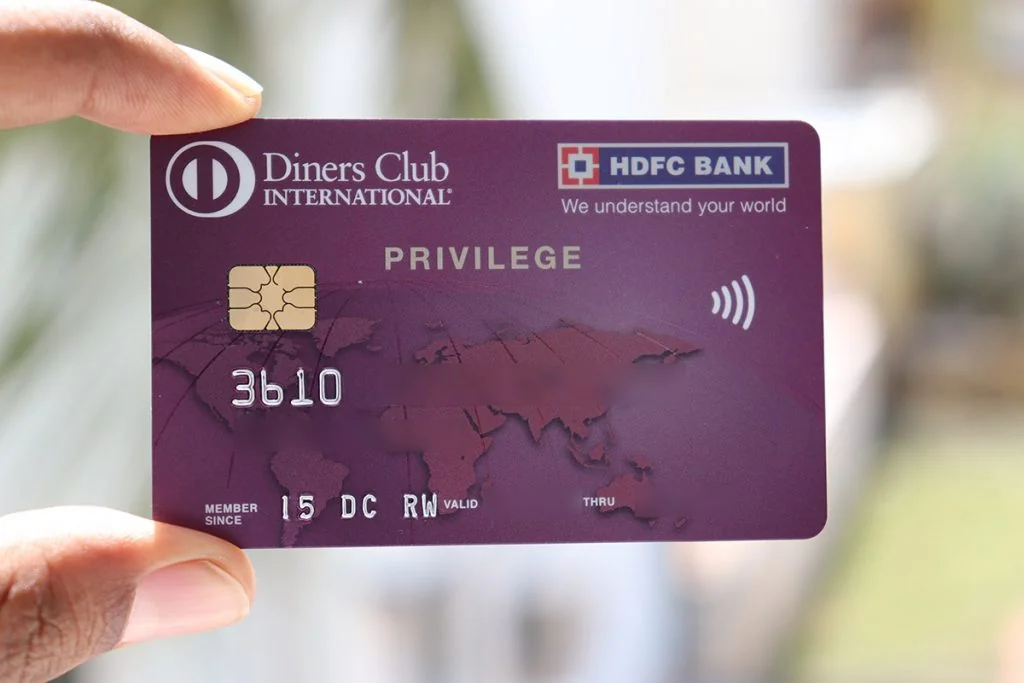
HDFC Diners Club Privilege earns 2 points per ₹100, also worth up to ₹0.50 through SmartBuy, a 1% ceiling that drops to roughly 0.4% if you redeem for plain statement credit instead of travel. Annual fee is ₹1,000, waived on ₹3 lakh of spend.
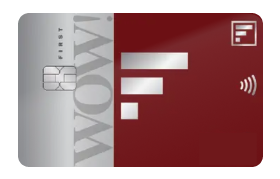
IDFC FIRST WOW! earns a flatter 0.67% (4 points per ₹150, at ₹0.25 a point), with zero joining or annual fee, though it requires locking ₹20,000 in a fixed deposit as a secured card. None of the three lists government or tax payments among their excluded categories, which is a genuine and useful gap, not a guarantee. Card terms change, and we would call the issuer's support line before routing six or seven figures through a single transaction on the strength of an absence in our data.
The Real Math, Worked Out
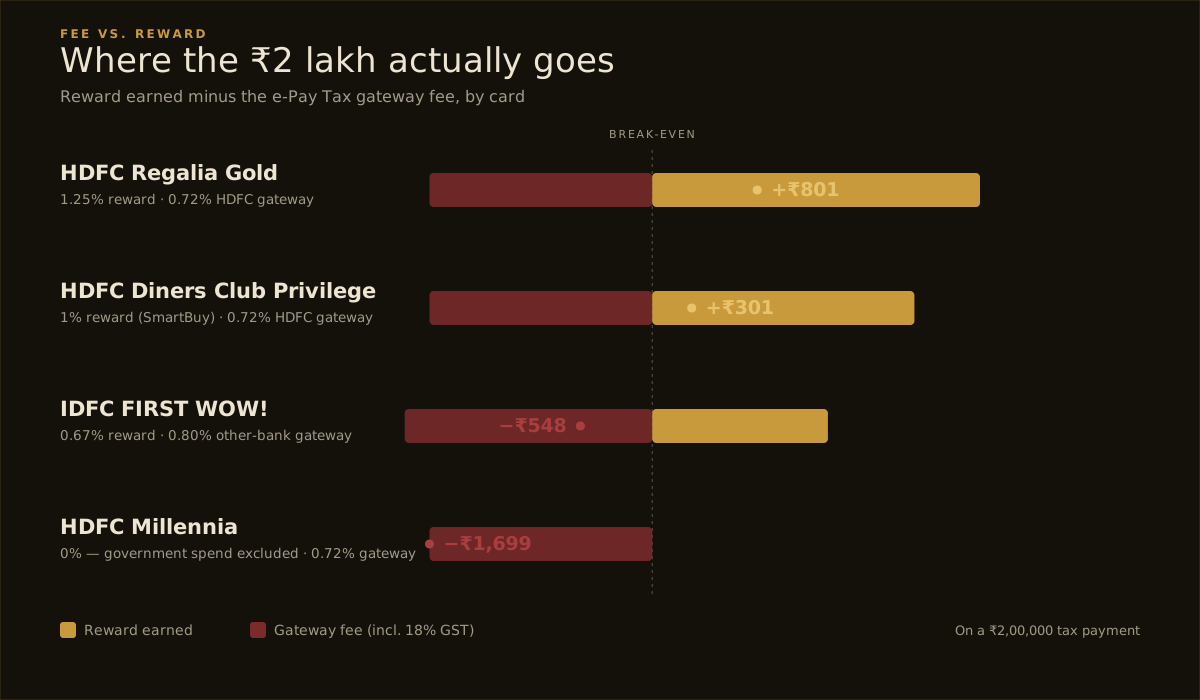
Take a ₹2,00,000 advance-tax payment through HDFC's own gateway, which charges the cheapest listed rate. On the HDFC Regalia Gold, the reward comes to ₹2,500 (1.25%). The gateway fee is ₹1,699 after GST (0.72% plus 18%). Net gain: about ₹801, plus roughly six weeks of interest-free float before the statement is due.
HDFC Diners Club Privilege nets a thinner ₹301 on the same payment if you redeem through SmartBuy for the full 1%; redeem for statement credit instead and the reward drops to ₹800, which loses ₹899 once the same fee is subtracted. IDFC FIRST WOW! loses ₹548 on the transaction itself, routed through the cheapest other-bank gateway rate of 0.80% (0.944% after GST), because its 0.67% reward does not clear even the lowest fee on offer. Its appeal is the zero annual fee and the float, not the cashback. HDFC Millennia, on the same HDFC gateway as Regalia Gold, loses the entire ₹1,699 fee with nothing to offset it, because the reward line is contractually zero.
None of this changes if your own card sits outside this list. Multiply the gap by whichever fee and reward rate actually apply to you, and decide whether the number is worth the effort.
A Simple Framework Before You Apply
Start with UPI or an authorised bank's debit card. Both are free, and for most taxpayers that ends the decision.
A credit card earns its place only in specific situations:
- Your card's reward rate on this payment clears the gateway fee for the amount you owe
- You need the interest-free window because the payment lands awkwardly against your cash flow that month
- A large one-time spend would clear a milestone bonus your card already tracks
Check your own card's fee schedule for a government or tax exclusion before assuming the reward applies, the way HDFC Millennia and SBI Cashback cardholders would have been wrong to assume. If none of the three situations apply, the free channel is not a compromise. It is the better math, and it is worth pairing with a fresh look at whether your card's annual fee waiver is realistic in the first place, since the same qualifying-spend habits decide both questions.
Frequently asked
Can I pay income tax with a credit card in India?
Yes. The e-Pay Tax service on the Income Tax Department's e-filing portal accepts credit cards through its Payment Gateway mode, alongside net banking, debit cards, and UPI. The gateway redirects to a partner bank's page where the credit card sits next to the fee-free options.
What fee does the e-Pay Tax portal charge for credit card payments?
Between 0.72% and 1% of the tax amount, plus 18% GST on that fee, depending on which bank's gateway you pick, as of April 2026. HDFC Bank and Kotak Mahindra Bank charge the least for other-bank cards, at 0.80% before GST.
Do reward points on cashback cards apply to income tax payments?
Often not. HDFC Millennia's published terms exclude government transactions from its base CashPoints rate, SBI Cashback added government spends to its exclusion list on 1 April 2026, and Axis ACE excludes government payments entirely. Check your card's fee schedule before assuming a reward applies.
Is it better to pay income tax via UPI or a credit card?
UPI and RuPay debit settle at zero fee, which makes them the default for anyone not chasing rewards. A credit card only makes sense when its reward rate clears the gateway fee, or when the 20 to 45 day interest-free float genuinely helps your cash flow that month.
Which bank's payment gateway is cheapest for credit card tax payments?
HDFC Bank and Kotak Mahindra Bank both charge 0.80% before GST on cards issued by other banks, the lowest listed on the e-filing portal. HDFC's own cardholders pay even less, at 0.72%, by routing through HDFC's own gateway option.
Card devaluations, reward maths, and rate changes the day they land.
Follow on X
Reader comments
No comments yet. Share your experience with this card below — the first useful comment helps every reader after you.
Comments are moderated before they appear. Share your real experience with a card — what worked, what didn't, what the bank told you. We don't publish promotional content, referral links, or personal financial details. Keep it useful for other readers.