The interest-free period a credit card advertises is a ceiling rather than an allowance. Whether the brochure says 45 days, 48 or 62, that figure describes exactly one purchase in the month: the first one made after a statement closes. Everything bought later in the cycle gets less, on a sliding scale, and the last purchase before the statement date gets a fraction of the headline.
It is conditional as well as variable. The whole concession rests on the previous bill having been cleared in full, and several ordinary events switch it off with no notification a cardholder would recognise as one.

Two dates run the account, and the famous one is the lesser
Every card account has a statement date and a payment due date, and they do different jobs.
The statement date is the day the billing cycle closes. Purchases made before it are billed in that cycle. Purchases made after it, even by hours, roll into the next bill and wait an extra month before they are asked for.
The payment due date falls a fixed number of days later. That gap, and only that gap, is the grace period in its strict sense: the window between being told what is owed and having to pay it.
Advertised interest-free ceilings are those two added together: cycle length plus grace gap. That is why they differ by issuer rather than by any national standard. The Roarbank Credit Card states up to 62 days, the AU Bank InstaPay states up to 48, and HSBC Live+ states up to 45. Comparing those three means comparing cycle lengths and grace gaps, not generosity.
One cycle, four purchases, four different prices for the same credit
Set out an illustrative cycle: 30 days long, with a due date 20 days after the statement closes. The figures below are arithmetic from those two assumptions, not values attributed to any specific card.
A purchase on day 1 waits 30 days to be billed, then 20 more to be paid. Fifty free days. Day 10 gets 41. Day 20 gets 31. A purchase on day 29, the evening before the statement generates, gets 22, on a bill that arrives almost immediately.
Two things follow. Timing a large discretionary purchase to land just after a statement date is the cheapest optimisation available on a credit card, and it costs nothing to do. And the advertised ceiling is a poor planning number, because the average purchase in a cycle lands nearer the midpoint of that range than the top.
Moving the statement date, and when the effort repays itself
Most issuers will change a billing cycle date on request, through the app, netbanking or the helpline, typically once inside a defined window and only on an account carrying no unpaid balance. A few settle it at the front instead: the Equitas Selfe Credit Card offers a choice of billing cycle date at application.
What a change does not do is add days. The total is fixed by cycle length plus grace gap, and both of those survive the move. What it changes is where the window sits against the rest of a household's calendar, which is a different and occasionally more valuable thing.
It repays the effort in a narrow set of cases:
- The due date falls a few days before salary lands, forcing a monthly choice between paying from savings and revolving a balance
- A predictable annual charge, an insurance premium or a school fee, consistently lands late in the cycle and is billed almost immediately
- Two cards are on nearly identical cycles, so a heavy month puts both bills in the same week
It is not worth the effort as a hunt for extra free days, and the changeover produces one irregular cycle, longer or shorter than usual, that needs watching. A request made while a balance is outstanding is usually refused until the account is clear.
The switches that turn the free period off
None of the above matters if the concession has already lapsed, and it lapses more easily than the marketing suggests.
The largest switch is a revolved balance. The interest-free period is conditional on the total amount due being paid in full by the due date, so paying only the minimum ends it on the entire statement balance and not merely on the unpaid part. Once the account is revolving, new purchases in the following cycle start accruing from their own transaction dates. The sliding scale in the graphic above stops applying altogether; every bar goes to zero.
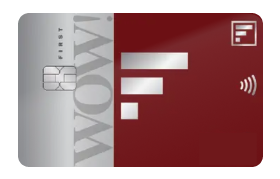
A cash withdrawal is the second, and it works differently again. A cash advance attracts interest from the withdrawal date itself, alongside a separate transaction fee, and clearing the statement in full does not refund the days already charged. The concession was never extended to it. A few Indian cards carve out an explicit exception rather than the usual silence: the IDFC FIRST WOW! Credit Card states a 45-day interest-free period on cash withdrawals, and the IDFC FIRST Mayura states 45 days on withdrawals in India and abroad. Read those in the card's own terms; they are exceptions, not a rule to assume.
Restoration is the third and least visible. Clearing a revolved balance does not always return the concession the same month. IndusInd Bank, for one, now restores the interest-free period only after two consecutive billing cycles are paid in full and on time. A single short payment there costs more than one month of free credit.
Autopay on the minimum forfeits it quietly
An autopay mandate is where much of this goes wrong without anyone deciding it should.
Registering autopay for the minimum amount due rather than the total amount due looks prudent from inside the banking app. It caps the debit, it protects the account from a late payment charge and a past-due entry on the credit file, and it rarely bounces for insufficient funds.
It also fails the condition the interest-free period runs on, silently, in every cycle. A cardholder with that mandate never sees a missed payment and never sees a free credit period either, because the account revolves by design. The statement shows a payment made on time and interest charged anyway, which is the combination that produces a call to the helpline.
Registering the mandate for the total amount due keeps the concession intact. The trade is a variable debit that has to be funded, and a failed mandate in an unusually heavy month, which is why the funding account matters as much as the amount.
Setting the cycle up so the days actually arrive
Read the statement date off the last bill rather than estimating it, then set a calendar reminder for the day after it. Large planned spending moved to the far side of that reminder buys close to the full advertised window; the same purchase two days earlier buys the minimum.
Set autopay to the total amount due, and fund it from the account salary lands in. If the due date sits awkwardly against that credit, move the statement date once and leave it alone afterwards.
Then read one paragraph in the card's Most Important Terms and Conditions: the clause defining the interest-free period, and the sentence stating what restores it after a revolving cycle. That sentence differs by issuer, it is where the two-cycle restoration rules live, and it is the only place to learn what a specific card does before learning it the expensive way.


Frequently asked
How many interest-free days does a credit card actually give?
It varies by purchase, not by card. The advertised figure is the length of the billing cycle plus the gap between the statement date and the payment due date, and only a purchase made on the first day after a statement closes receives all of it. A purchase made shortly before the next statement date receives roughly the grace gap alone. Advertised ceilings differ by issuer: the Roarbank Credit Card states up to 62 days, AU Bank InstaPay up to 48, and HSBC Live+ up to 45.
What is the difference between the statement date and the payment due date?
The statement date is the day the billing cycle closes and the bill is generated; every purchase before it is billed in that cycle, every purchase after it rolls to the next one. The payment due date is the deadline for paying that bill, and falls a fixed number of days later. The statement date decides how many interest-free days a purchase gets. The due date only decides when the clock stops.
Do cash withdrawals on a credit card get an interest-free period?
As a rule, no. A cash advance attracts interest from the withdrawal date itself and carries a separate transaction fee, and paying the statement in full does not undo the interest already accrued. A small number of Indian cards carve out an exception: the IDFC FIRST WOW! Credit Card states a 45-day interest-free period on cash withdrawals, and the IDFC FIRST Mayura states 45 days on cash withdrawals in India and abroad.
Can I change my credit card statement date?
Most issuers allow a billing cycle date change on request through the app, netbanking or the helpline, usually once in a defined window and often only on an account with no unpaid balance. A few set it at the start instead: the Equitas Selfe Credit Card offers a choice of billing cycle date at application. Changing the date does not add interest-free days, because the total is fixed by the cycle length plus the grace gap. It moves where those days sit relative to your salary credit.
Does autopay set to the minimum amount due keep the interest-free period?
No. An autopay mandate registered for the minimum amount due protects the account from the late payment charge and from adverse credit bureau reporting, but it fails the condition the interest-free period depends on, which is payment of the total amount due in full by the due date. The account revolves, and interest runs from each purchase's own transaction date.
Card devaluations, reward maths, and rate changes the day they land.
Follow on X
Reader comments
No comments yet. Share your experience with this card below — the first useful comment helps every reader after you.
Comments are moderated before they appear. Share your real experience with a card — what worked, what didn't, what the bank told you. We don't publish promotional content, referral links, or personal financial details. Keep it useful for other readers.