HDFC's cheapest credit card asks for ₹250 a year. Its priciest asks ₹3,000, and a card sits at almost every rung in between. That spread is the real problem with picking an HDFC card: the bank runs one of the widest lineups in India, and most of its cards are very good at one thing and ordinary at the rest. The useful question is never which HDFC card is best overall, but which one matches the way your money already moves.
A quick note before the picks. HDFC spent the first half of 2026 trimming several of these cards, gating lounge access behind quarterly spend and splitting the Swiggy card in two. We covered the full HDFC credit card devaluation separately; this guide is the other side of that story: given the lineup as it stands in mid-2026, which card is worth its fee, and for whom.
If you want to browse the full HDFC range with fees and reward rates in a single table rather than use-case picks, the HDFC Bank cards page lists all 14 active cards side by side.
The everyday cashback pick: HDFC Millennia
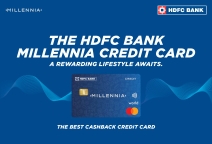
Millennia is the card most people mean when they say "an HDFC cashback card." It returns 5% cashback on ten named merchants — Amazon, BookMyShow, Cult.fit, Flipkart, Myntra, Sony LIV, Swiggy, Tata CLiQ, Uber and Zomato — and 1% on everything else. There is no middle "other online" rate, despite what most write-ups (including an earlier version of this one) say. The 5% is capped at 1,000 CashPoints a month, so it rewards a steady stream of online orders rather than one large purchase. Its fee is ₹1,000, waived once you cross ₹1 lakh of annual spend, a threshold a regular online shopper clears easily. You also get eight domestic lounge visits a year, two a quarter after ₹1 lakh of spend in the previous quarter, plus the usual 1% fuel surcharge waiver on transactions between ₹400 and ₹5,000.
Pick it if your card mostly pays for online shopping and you would rather have the reward as cashback in rupees than as points you have to remember to redeem.
Check this card in detail and apply now
Cheaper cashback, less fee drag: Pixel Play and Pixel Go
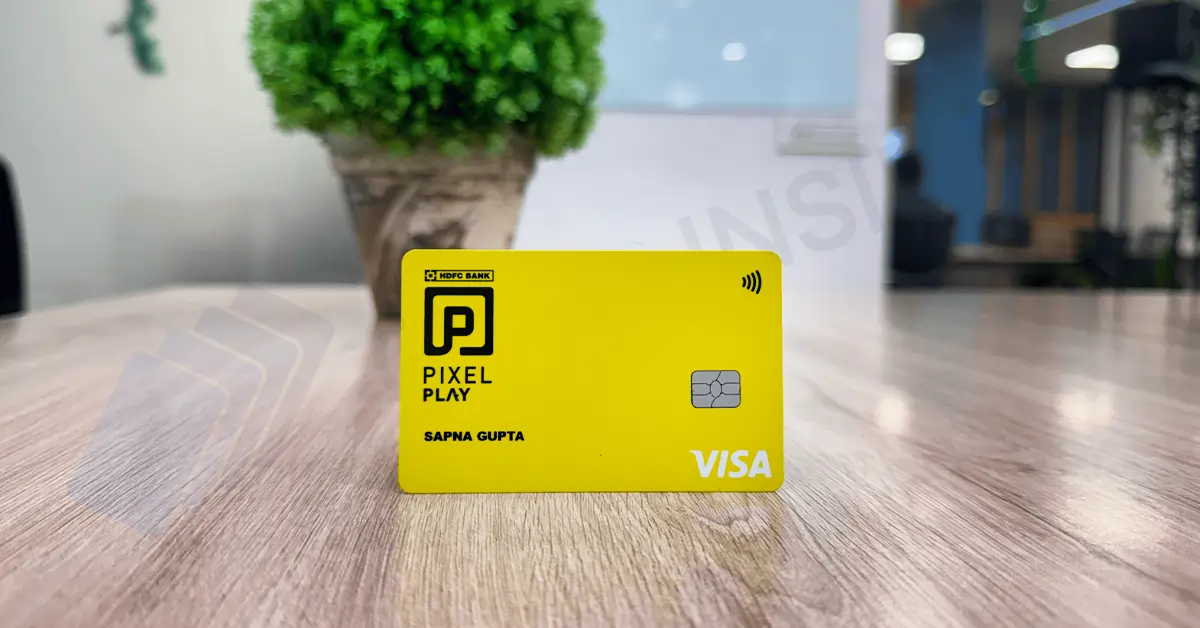
If ₹1,000 feels steep for a cashback card, HDFC's Pixel pair does most of the same work for less. Pixel Play costs ₹500, waived at ₹1 lakh of annual spend, and lets you choose the two categories where you earn 5%, on top of 3% on PayZapp and SmartBuy. The category choice is the trick worth using: a commuter can point it at fuel and groceries, a frequent diner at food and travel. As with Millennia, the 5% is capped monthly, so treat it as a reward for routine spending, not big-ticket buys.
Check this card in detail and apply now
Pixel Go is the floor of the range at ₹250, waived at ₹50,000 of spend. It drops the category game for a flat 1% cashback on everything with no cap to track, and 5% on HDFC SmartBuy. For a first card, or a clean second card you barely think about, uncapped 1% with nothing to monitor is a fair deal.
Check this card in detail and apply now
One more low-cost option: HDFC frequently issues the MoneyBack+ card lifetime free on pre-approved offers to existing customers. It pays 10X CashPoints, roughly 3.33% back, on Amazon, Flipkart, BigBasket, Swiggy and Reliance Smart, and a thin 0.33% elsewhere. If a lifetime-free MoneyBack+ appears in your pre-approved list, it is a sensible no-cost way to hold an HDFC cashback card.
Check this card in detail and apply now
Best for the Tata ecosystem: Tata Neu Infinity
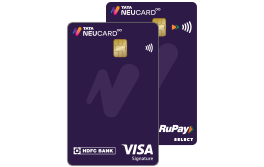
If a real share of your spending runs through BigBasket, Croma, Tata CLiQ, 1mg, Westside or the Tata Neu app, the Tata Neu Infinity is the highest-rated card HDFC builds for that life. It earns 10% back in NeuCoins on Tata Neu app spends, 5% across the Tata partner brands, and 1.5% on everything else including UPI, which very few rewards cards do. The fee is ₹1,499, waived at ₹3 lakh of annual spend, and it carries eight domestic and four international lounge visits a year. NeuCoins spend like cash across the Tata world, so the rewards do not gather dust if you already shop there.
Check this card in detail and apply now
The lighter sibling, Tata Neu Plus, costs ₹499 waived at ₹1 lakh and earns NeuCoins at a lower rate. It is the right call when your Tata spending is occasional and you mainly want a low-fee way into the ecosystem.
Check this card in detail and apply now
Best for food delivery: Swiggy ORNGE and BLCK
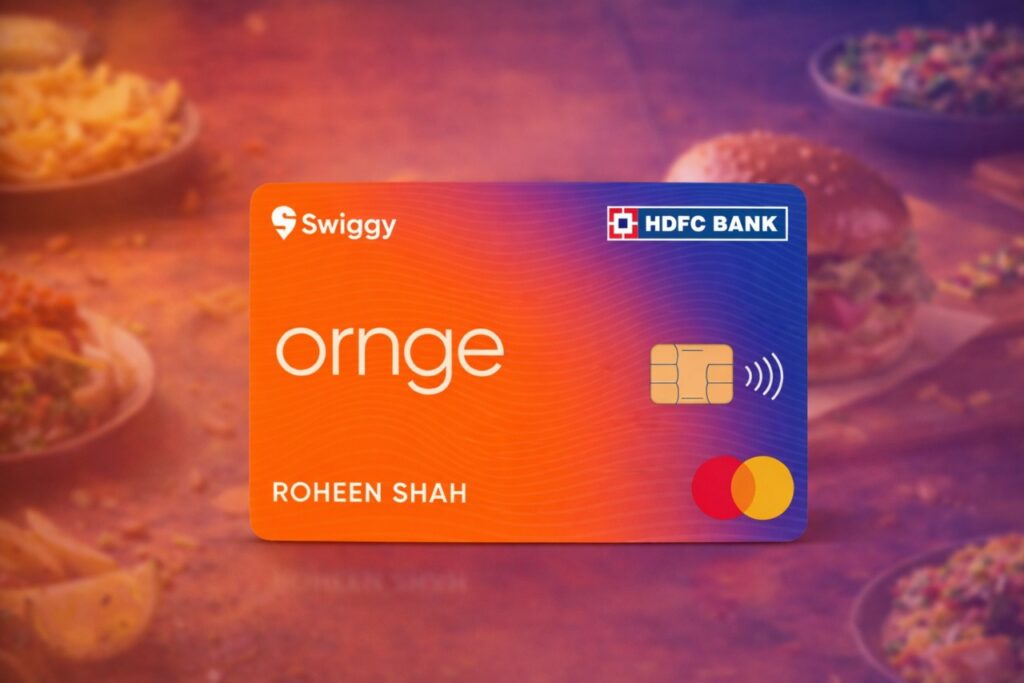
For anyone whose biggest monthly line item is dinner that arrives at the door, the Swiggy pair is worth a look — but pick the right one, because the two variants do not pay the same rate. The entry-level Swiggy ORNGE returns 5% cashback on Swiggy app spends, across food, Instamart and Dineout, up to ₹1,500 a month, then 5% on a set of online categories up to another ₹1,500, and 1% on everything else. At ₹500, waived on ₹1.5 lakh of annual spend, it earns its fee back quickly if you order even a few times a week. The premium Swiggy BLCK costs ₹1,000, with the joining fee waived on ₹75,000 of spend in the first 90 days and the annual fee on ₹2 lakh, and doubles the Swiggy tier to 10% on the same ₹1,500 cap — worth up to ₹750 a month, which recovers the ₹500 difference at roughly ₹10,000 of annual Swiggy spend. It also layers on golf and Mastercard World perks. ORNGE for light and moderate Swiggy users; BLCK once the platform is where a real share of the food budget goes.
Check the Swiggy ORNGE or the Swiggy BLCK in detail and apply now.
Premium and travel: Regalia Gold
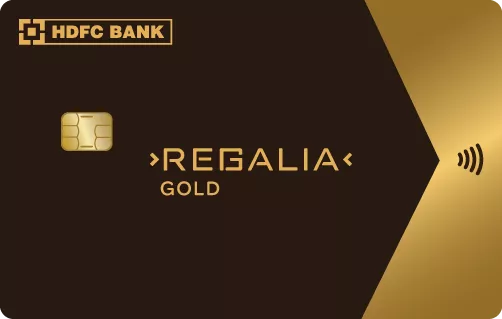
The Regalia Gold is HDFC's premium workhorse, built around HDFC SmartBuy. Book flights and hotels through SmartBuy and you earn up to 10X reward points on hotels and 5X on flights, capped at 4,000 bonus points a month, on top of a base of about 2.5 points per ₹200 elsewhere. Its ₹2,500 fee is offset by a ₹2,500 joining voucher and waived outright at ₹4 lakh of annual spend, and the card has long been a lounge favourite, with twelve domestic and six international visits.
One change is worth flagging before you apply. From July 2026, the domestic lounge access turns spend-gated. You will need ₹60,000 of spend in the previous quarter to qualify for three visits the next quarter. If lounge access was your main reason to want Regalia Gold, weigh that in.
Check this card in detail and apply now
The invite-only apex: Infinia and Diners Club Black
Two HDFC cards sit above all of this, and you mostly do not apply for them. The Infinia and the Diners Club Black are largely invite-only, built for high spenders, and in 2026 they are where HDFC has been quietly tightening the screws.
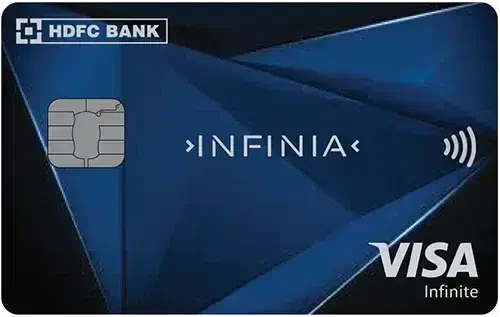
The HDFC Infinia is still the most rewarding card the bank makes: 5 reward points per ₹150 on most spends, roughly 3.3% back through SmartBuy travel, with up to 10X on SmartBuy and unlimited domestic and international lounge access for the cardholder and add-ons, all for a ₹12,500 fee waived at ₹10 lakh of spend. What moved in 2026 is the ceiling on rewards. HDFC's own terms now cap redemptions at 2,00,000 reward points a statement cycle, 1,50,000 a month against flights and hotels, and 50,000 a month as cashback. A threatened cut to the SmartBuy voucher rate was announced in January, then rolled back.
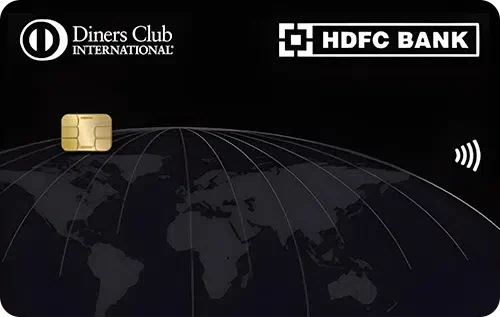
The HDFC Diners Club Black runs the same SmartBuy engine, with up to 33X points on the portal, unlimited domestic lounges, and a ₹10,000 fee waived at ₹5 lakh. It shares Infinia's 2026 catch: HDFC told selected holders of both cards to spend over ₹18 lakh a year, counting add-ons, or hold ₹50 lakh in balances, or risk a downgrade. Hold either only if your spend genuinely clears that bar. Below it the rewards still dazzle, but the renewal maths stops working.
The specialists worth a quick look
A handful of HDFC cards exist for one job and do it well.
- Diners Club Privilege (₹1,000, waived on ₹3 lakh) leans on dining, with 5X points on Swiggy and Zomato and up to 10X through SmartBuy, though its lounge access moves to the spend-gated model in July 2026. Check this card in detail and apply now
- IRCTC (₹500, waived at ₹1.5 lakh) earns 5 reward points per ₹100 on train bookings and suits regular rail travellers. Check this card in detail and apply now
- IndianOil HDFC (₹500, waived at ₹50,000) turns fuel spends into Fuel Points for a daily commuter. Check this card in detail and apply now
- Marriott Bonvoy (₹3,000, no fee waiver) earns 8 Bonvoy points per ₹150 at Marriott properties plus an annual free-night award, worth it only if you stay at Marriott often. Check this card in detail and apply now
How to narrow it to one
Start with where your money already goes, not with the card you would like to own. If most of it is online shopping, the choice is Millennia, or Pixel Play for a lighter fee. If it runs through the Tata world, Tata Neu Infinity. If it is food delivery, Swiggy ORNGE. If it is flights and hotels booked through SmartBuy, Regalia Gold. Once the category is settled, the fee answers itself: every card here waives its annual fee at a spend level a real user of that category will cross anyway. The card that fits is the one you would have spent on regardless.
Still weighing it up? Compare all HDFC cards side by side to see the full lineup in one place.
Where these numbers come from
Every fee, rate and cap above is drawn from our own verified card records, cross-checked against HDFC's official product, fees and Most Important Terms and Conditions documents. These terms change often, so confirm the current numbers before you apply.
Changelog
- 2026-08-15: Corrected the Swiggy ORNGE entry. It stated 10% cashback on Swiggy app spends, a ₹2 lakh fee-waiver threshold, and that BLCK "runs the identical cashback rates" — all three wrong. ORNGE earns 5% on the Swiggy tier against BLCK's 10% on the same ₹1,500 cap, and ORNGE's waiver is ₹1.5 lakh. The paragraph had been recommending the cheaper card to exactly the heavy-delivery reader the more expensive one pays back. Rewritten to give the crossover point rather than a flat pick.
Frequently asked
Which HDFC credit card is best for cashback?
For most people the HDFC Millennia, which pays 5% cashback on ten named merchants including Amazon, Flipkart, Myntra, Swiggy and Zomato, and 1% on everything else, for a ₹1,000 annual fee waived at ₹1 lakh of spend. If you want a lower fee, the Pixel Play at ₹500 lets you pick two 5% categories, and the ₹250 Pixel Go pays an uncapped 1% on everything.
What is the cheapest HDFC credit card?
The HDFC Pixel Go, with a ₹250 fee that is waived once you spend ₹50,000 in a year. It earns an uncapped 1% cashback on every spend and 5% on HDFC SmartBuy. HDFC also frequently issues the MoneyBack+ card lifetime free on pre-approved offers to existing customers.
Which HDFC card is best for the Tata ecosystem?
The Tata Neu Infinity HDFC card. It earns 10% back in NeuCoins on Tata Neu app spends, 5% across Tata brands like BigBasket, Croma and Tata CLiQ, and 1.5% on all other spends including UPI, for a ₹1,499 fee waived at ₹3 lakh of spend. The lighter Tata Neu Plus costs ₹499.
Is the HDFC Regalia Gold still worth it in 2026?
It remains HDFC's strongest mid-premium travel card through SmartBuy, earning up to 10X points on hotels and 5X on flights. From July 2026, though, its domestic lounge access becomes spend-gated, needing ₹60,000 of spend in the previous quarter for three visits, so it suits steady spenders more than light users.
Card devaluations, reward maths, and rate changes the day they land.
Follow on X
Reader comments
No comments yet. Share your experience with this card below — the first useful comment helps every reader after you.
Comments are moderated before they appear. Share your real experience with a card — what worked, what didn't, what the bank told you. We don't publish promotional content, referral links, or personal financial details. Keep it useful for other readers.