₹799 or ₹5,000: how much should an IndiGo co-branded card actually cost?
Three cards sit at very different price points and give very different things back. The answer to which one is right is not about which card looks premium. It is about how often you fly IndiGo, how much you spend monthly, and whether airport lounges are a practical need or a notional extra.
We will name a winner for each spend profile and explain the numbers behind it.
What each card actually rewards
All three cards earn IndiGo BluChips, but the structures are not close to identical.
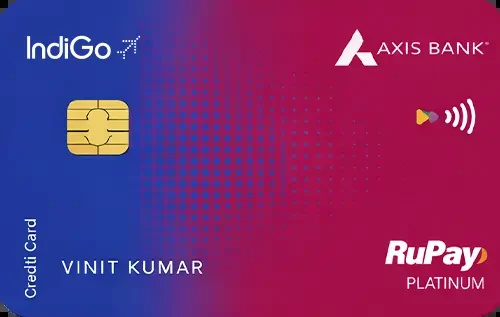
The IndiGo Axis Bank Credit Card at ₹799 joining and annual fee earns 3 BluChips per ₹100 on IndiGo spends, 2 BluChips per ₹100 on grocery and dining, and 1 BluChip per ₹100 on everything else. One BluChip is worth approximately ₹0.50 in IndiGo fare value, making the effective return on IndiGo spend around 1.5%, with general retail at roughly 0.5%.
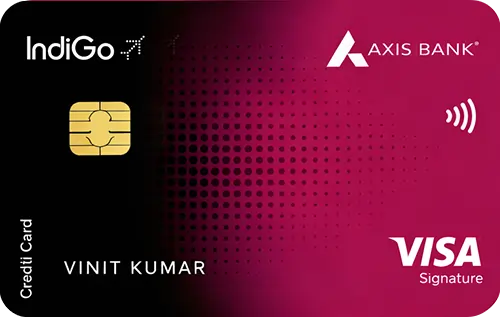
The IndiGo Axis Bank Premium Credit Card at ₹5,000 raises the IndiGo earn rate to 7 BluChips per ₹100 on all IndiGo channels, covering fares booked through the website, app, call centre, and airport counter. Grocery and hotel spends earn 3 BluChips per ₹100, and other eligible spends earn 2 BluChips per ₹100. That 7 BluChip rate translates to roughly 3.5% in fare value on IndiGo bookings, more than double what the standard card returns.
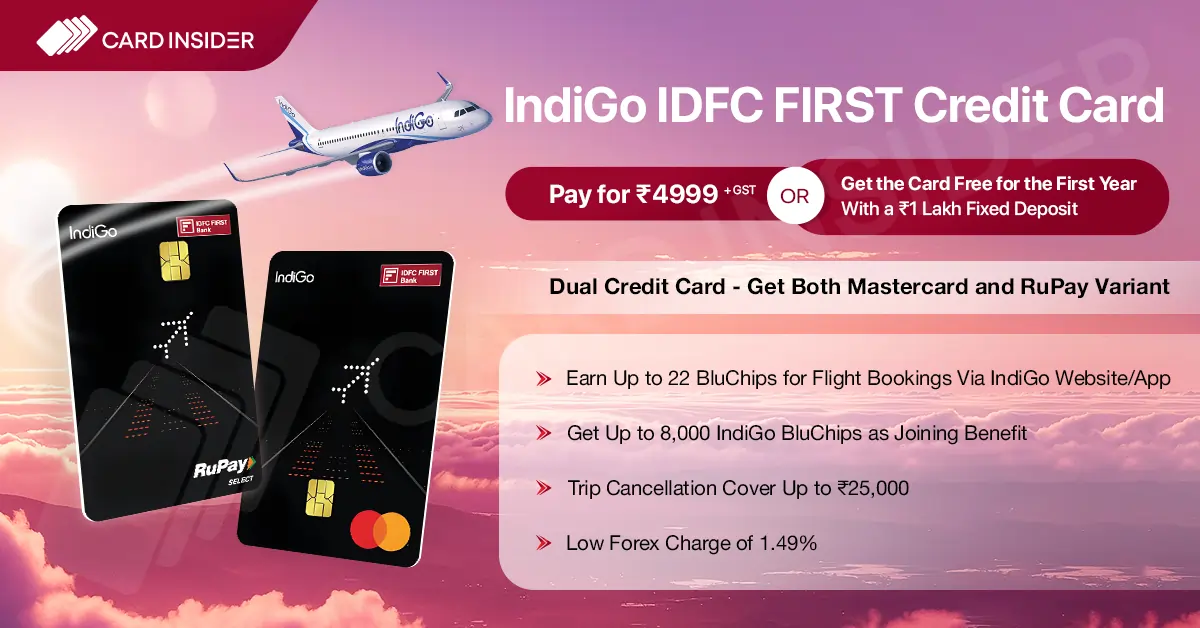
The IndiGo IDFC FIRST Dual Credit Card at ₹4,999, or zero with a ₹1 lakh fixed deposit pledge, earns 6 BluChips per ₹100 on IndiGo bookings, but only when those bookings go through the IndiGo official website or app. Bookings through the call centre or airport counter earn at the general retail rate, not the accelerated IndiGo rate. General eligible spends return 3 BluChips per ₹100, while UPI, utilities, fuel, and wallet loads earn a reduced 0.5 BluChips per ₹100.
The IDFC FIRST card issues two physical cards together: a Mastercard for standard and international payments, and a RuPay card for UPI credit-line payments. Its forex markup of 1.49% is substantially lower than the Premium's 2.5% or the standard card's 3.5%, making it the only card of the three with a genuine international-spend argument.
Fees, milestones, and break-even spending
The standard card's fee logic is transparent: pay ₹799, receive a 1,200 BluChip welcome voucher worth roughly ₹600 in fare value, renewed with each annual fee payment. Net year-one cost sits around ₹200 after the voucher. Two milestone rewards stack on top: 1,200 BluChips at ₹1.5 lakh of annual spend and another 1,200 at ₹3 lakh.
The Premium and the IDFC FIRST Dual both land at approximately ₹5,000 in fees. Both return a 5,000 BluChip renewal voucher worth roughly ₹2,500, leaving an effective net fee of around ₹2,500 before any milestone triggers. Where they differ is the milestone ceiling: the Premium releases 5,000 BluChips at ₹2 lakh, ₹5 lakh, ₹8 lakh, and ₹12 lakh of annual spend, for a ceiling of 20,000 milestone BluChips per year. The IDFC FIRST Dual adds a fifth tier at ₹10 lakh, giving up to 25,000 milestone BluChips annually for the heaviest spenders.
Limited-time offer on the Axis IndiGo Premium, valid through 31 August 2026: Axis Bank has doubled the standard 5,000 BluChip joining bonus to 10,000 BluChips. At ₹0.50 per BluChip, the welcome package alone is worth ₹5,000 in IndiGo flight credit, effectively matching the joining fee on day one before any milestone or per-rupee earn starts. The offer closes on 31 August 2026. Full details and the apply link are at our dedicated offer post.
The calculator below shows the direct return on IndiGo booking spend across all three cards. It does not model the milestone bonuses, which can add ₹2,500 to ₹12,500 per year for the two premium-tier cards at the relevant thresholds.
IndiGo booking spend break-even (milestone bonuses not included)
Drag the slider to set a monthly spend. Net value is annual cashback minus the fee, with the waiver applied automatically when the spend clears the threshold.
- Axis IndiGo Standard
- Rewards
- ₹2,700/yr
- Fee
- ₹799
- Net
- Axis IndiGo Premium
- Rewards
- ₹6,300/yr
- Fee
- ₹5,000
- Net
- IDFC FIRST IndiGo Dual
- Rewards
- ₹5,400/yr
- Fee
- ₹4,999
- Net
Calculations assume the entire monthly spend earns the headline rate up to each card's cashback cap, and the annual fee waiver applies only when annualised spend clears the published threshold. First-year mode adds the joining fee.
At lower monthly IndiGo booking spend, the standard card's ₹799 fee makes it surprisingly competitive on a fee-adjusted basis. The two ₹5,000 cards pull ahead once monthly IndiGo spending is consistently above ₹20,000 per month and the milestone bonuses begin accumulating.
Side by side: the key numbers
| Axis IndiGo Standard | Axis IndiGo Premium | IDFC FIRST IndiGo Dual | |
|---|---|---|---|
| Joining / annual fee | ₹799 | ₹5,000 | ₹4,999 (₹0 with FD) |
| IndiGo earn rate | 3 BluChips/₹100 | 7 BluChips/₹100 (all channels) | 6 BluChips/₹100 (IndiGo app/website only) |
| General earn rate | 1 BluChip/₹100 | 2 BluChips/₹100 | 3 BluChips/₹100 |
| Welcome / renewal bonus | 1,200 BluChips | 5,000 BluChips + 6E Eats (10,000 BluChips until 31 Aug 2026) | 5,000 BluChips + hotel + dining vouchers |
| Annual milestone ceiling | 2,400 BluChips | 20,000 BluChips (4 tiers) | 25,000 BluChips (5 tiers) |
| Domestic lounge | 1 per quarter | 2 per quarter | None |
| International lounge | None | 2 Priority Pass visits/year | None |
| Forex markup | 3.5% | 2.5% | 1.49% |
Lounge access and the extras that matter
The standard Axis card provides one complimentary domestic lounge visit per quarter, but the access is spend-gated: you need to have spent ₹50,000 in the preceding three calendar months. For a cardholder whose monthly total is closer to ₹10,000, this benefit will often go unclaimed.
The Premium doubles the domestic allocation to two visits per quarter under the same ₹50,000 spend gate, and adds two Priority Pass international lounge visits per year. A monthly buy-one-get-one BookMyShow offer and EazyDiner dining discounts round out a package that earns its keep for an urban frequent traveller who actually uses these benefits.
The IDFC FIRST Dual has no lounge access on either card. This is a deliberate product design: value is concentrated into the earn rate, forex advantage, and milestone structure rather than lounge infrastructure. For cardholders who already hold a primary card with lounge access, such as a bank metal card or an Amex, the absence is manageable. For someone whose only card is the IDFC FIRST Dual, the gap is noticeable on busy domestic routes.
The IDFC FIRST card's forex advantage is where it trades blows with the Premium. For a household making one or two international trips annually with combined foreign-currency spend of ₹1 lakh, the difference between 1.49% and 2.5% markup saves roughly ₹1,000 per year. Against nearly identical fee levels, this is a real differentiator for the traveller who splits time across domestic and international flying. The card also adds four complimentary golf rounds and twelve lessons per year, a benefit niche enough to matter to some cardholders and invisible to most.
Who Should Get Which
Occasional IndiGo flyer or someone starting out with a co-branded card: The standard Axis IndiGo card at ₹799 is the straightforward choice. The annual voucher recovers most of the fee, and the card does not demand high annual spend to stay net-positive. For a broader look at which entry cards hold up on fee value, our guide to the best lifetime-free credit cards in India covers the comparison in more depth.
Frequent IndiGo flyer spending ₹2 lakh or more annually on the card: The Axis IndiGo Premium is the stronger pick here. The 7 BluChips per ₹100 on IndiGo bookings outperforms both alternatives on flight-specific spend, and the milestone architecture adds meaningful BluChips above the ₹2 lakh threshold. The two domestic lounge visits per quarter and Priority Pass international access add genuine utility for a traveller logging several IndiGo trips a month. If you are comparing cards before 31 August 2026, the Premium is currently running a double joining bonus: 10,000 BluChips instead of the standard 5,000, worth ₹5,000 in IndiGo flight credit on approval. That is a meaningful first-year advantage that does not exist on either of the other two cards. Details at the offer post.
Heavy IndiGo flyer who books exclusively via the IndiGo app and travels internationally: The IDFC FIRST Dual is the arguable pick for this combination. The 1.49% forex markup is the best of the three, the five-tier milestone structure has a slightly higher ceiling than the Premium at extreme annual spend, and the FD-backed zero-joining-fee variant reduces the year-one entry cost considerably. The lounge gap is the material caveat: if airport lounges on domestic routes are a regular need, this card requires a second card to cover that access.
The tipping point between the Premium and the IDFC FIRST Dual comes down to one practical question: do you need domestic airport lounges on your own card. Yes means the Premium. No, and you also travel internationally on a budget, means the IDFC FIRST Dual.
Changelog
- 2026-08-08: Corrected the Axis IndiGo Premium double-BluChips offer deadline from 30 June 2026 to 31 August 2026 (three prose mentions plus the comparison-table row) to match the card's live
featuredOffer.expiresAtindata/cards.json(issuer-hero-verified, PMC PR #316). The stale date was two Axis Bank extensions behind (8 July, then 3 August 2026). BluChip valuation (₹0.50/chip) left unchanged — that is a separate open question (FU #412).
Frequently asked
Which IndiGo credit card earns the most BluChips on IndiGo bookings?
The Axis IndiGo Premium earns 7 BluChips per ₹100 on all IndiGo channels, including the website, app, call centre, and airport counter. The IDFC FIRST IndiGo Dual earns 6 BluChips per ₹100, but only via the IndiGo website or app. The standard Axis IndiGo card earns 3 BluChips per ₹100 on IndiGo spends.
What is the minimum annual spend to justify the Axis IndiGo Premium Card?
₹2 lakh annually clears the first milestone, releasing 5,000 bonus BluChips worth roughly ₹2,500 in fare value. Combined with the 5,000-BluChip renewal voucher, the card approaches breakeven at that threshold. Below ₹2 lakh, the standard Axis IndiGo card at ₹799 consistently returns better net value.
Does the IDFC FIRST IndiGo Dual Card include airport lounge access?
No. Neither the Mastercard nor the RuPay card issued with the IDFC FIRST IndiGo Dual carries domestic or international airport lounge access. This is the card's most significant structural gap versus both Axis variants. Cardholders who need lounge access will need a separate card or pay per entry at Indian airports.
Which IndiGo credit card is best for international travel?
The IDFC FIRST IndiGo Dual at 1.49% forex markup is the clear choice, followed by the Axis IndiGo Premium at 2.5%. The standard Axis IndiGo card charges 3.5%, making it the weakest of the three for international spending. For a household with ₹1 lakh of annual foreign-currency spend, the difference between 1.49% and 2.5% saves approximately ₹1,000 per year.
Card devaluations, reward maths, and rate changes the day they land.
Follow on X
Reader comments
No comments yet. Share your experience with this card below — the first useful comment helps every reader after you.
Comments are moderated before they appear. Share your real experience with a card — what worked, what didn't, what the bank told you. We don't publish promotional content, referral links, or personal financial details. Keep it useful for other readers.