
A credit card transaction in India runs in four stages. The merchant's acquirer sends a request through the card network to your issuer, which approves or declines it in seconds. Clearing and settlement follow later, when the issuer pays the acquirer and the merchant receives the sale minus MDR. You repay the issuer on your bill.
That is the whole machine. What makes it worth understanding is that the approval you see at the counter is only the first stage, and every rule RBI has written on cards (OTPs, tokens, tap limits, auto-debits) sits on one stage or another. India had 12.53 crore credit cards outstanding in September 2026, according to RBI's Payment System Indicators (provisional data), so these rules touch a lot of wallets.
How does a credit card transaction work in India, step by step?
Seven things happen, in a fixed order. Only the first four take place while you stand at the counter or watch the checkout spinner.
- You pay. You tap, insert or enter the card. Online, a payment gateway or aggregator captures the details, or a token, on the merchant's behalf.
- The acquirer forwards the request. The bank or aggregator that serves the merchant sends an authorisation request into the card network.
- The network routes it. Visa, Mastercard or RuPay carries the request to the issuer that gave you the card.
- The issuer decides. It checks that the account is in good standing with enough available limit, runs its fraud filters, and approves or declines. The reply travels back along the same path, usually within seconds. This is authorisation.
- The merchant submits its sales. Approved transactions stay pending until the merchant sends them in for settlement, typically in a batch.
- Clearing and settlement. Each sale is routed from the acquirer through the network to the issuer, which posts it to your account. Funds then flow from the issuer to the acquirer and into the merchant's bank account, net of MDR.
- You get billed. The purchase appears on your statement, and you repay the issuer by the due date.
Authorisation blocks your limit. It does not move money. Until step 6 completes, the merchant has been promised a payment but has not received one.
Who are the issuer, acquirer, network and payment gateway?
Six parties touch a card payment, and two of them are easy to confuse. The issuer is your side of the chain (the bank or card company that gave you the card). The acquirer is the merchant's side.
| Party | Who it is in India | What it does in a card transaction |
|---|---|---|
| Cardholder | You | Starts the payment and repays the issuer on the statement |
| Merchant | Shop, restaurant, app, airline | Accepts the card through a terminal or website and submits sales for settlement |
| Acquirer | The merchant's bank or card-acquiring institution | Signs up the merchant, passes requests to the network, receives settlement funds, and recovers MDR from the merchant |
| Payment aggregator or gateway | Intermediary on online checkouts | Collects payments for merchants and settles to them (an aggregator); a gateway that only routes messages and never handles funds sits outside RBI's aggregator rules |
| Card network | Visa, Mastercard, RuPay | Sets scheme rules, routes messages between acquirer and issuer, and prescribes the interchange rules |
| Issuer | The bank or card company on your card | Approves or declines, posts the purchase to your account, collects interchange and funds the merchant side |
RBI's Payment Aggregator Directions, 2025 add a safeguard on the online side: a non-bank aggregator must hold merchant money in a separate escrow account with a scheduled commercial bank until it settles.
How long does settlement take, and what if a payment fails?
Authorisation takes seconds. Settlement takes as long as the merchant's contract says, and RBI sets no single window for card sales.
The aggregator Directions leave settlement timing to the agreement between the aggregator and each merchant, but require that agreement to be fair and to "transparently mention the settlement timelines". A batch cycle, a weekend and a bank holiday all stretch the gap. That is a merchant-side question, and it never changes what you owe or when.
Failures are where RBI does set a clock. Its 2019 circular on turnaround time for failed transactions, effective 15 October 2019, requires auto-reversal within T+5 days when a card-present (PoS) payment is debited but fails, with ₹100 per day compensation to the customer for every day beyond that. Here, T is the transaction day. The 2025 credit card Directions for banks (paragraph 78) and for non-bank issuers (paragraph 72) add that the issuer's terms must state the reversal period and the compensation for missing it, but they do not restate the T+5 and ₹100 figures, so the 2019 circular is where those numbers sit.
Who pays MDR, and where does the split happen?
The merchant pays MDR, the merchant discount rate. RBI's August 2022 discussion paper defines it as the charge recovered by the acquirer from the final recipient of the money, usually deducted during settlement. You never see it as a line item.
From that MDR, a portion called interchange is carved out and passed to the issuer. The paper says the interchange quantum is set by the rules of the payment system operator (here, the card network), and that any share between an acquirer and an intermediary is a matter of mutual agreement.
Two caveats before you quote a number to anyone:
- The same paper says RBI has not issued any regulatory mandate or intervened on MDR for credit card transactions, and that credit card MDR runs higher than debit.
- No fixed credit card MDR exists. NPCI's FAQ of 15 September 2026 describes standard credit card MDRs as typically ranging from 1.5% to 2.5%, against debit card MDRs capped at up to 0.90%. Treat that as a typical range, not a rate any merchant is guaranteed to pay.
What it means for you: every swipe on a network card generates revenue for the issuer through interchange. A payment route with no interchange, such as the small-merchant UPI route covered below, removes that line.
Why does an online card payment ask for an OTP?
Because RBI requires at least two distinct authentication factors for digital payments. Paragraph 6 of its Authentication Mechanisms for Digital Payment Transactions Directions, 2025 (RBI/2025-26/79) sets the rule. The Directions were issued on 25 September 2025 and took effect on 1 April 2026.
What changes for a cardholder:
- For any transaction that is not card-present, at least one factor must be dynamic (paragraph 6(b)), meaning created or proven fresh for that transaction.
- SMS OTP is no longer the only route. Accepted factors include PINs, passwords, software tokens and biometrics, and issuers may offer a choice.
- Where a transaction goes through in breach of the Directions, the issuer must compensate the customer for the loss in full without demur (paragraph 9.2).
Cross-border card-not-present payments carried a later date. From 1 October 2026 (paragraph 10), issuers must validate non-recurring cross-border card-not-present transactions where an overseas merchant or acquirer requests authentication, and apply a risk-based mechanism to all such payments.
What is card tokenisation, and why can't merchants save your card number?
Tokenisation replaces your actual card number with a substitute code, and RBI allows only card issuers and card networks to keep the real number. Its card-on-file circular of 28 July 2022 (RBI/2022-2023/95) told every other entity in the payment chain to purge saved card data before 1 October 2022.
The earlier circular of 7 September 2021 (RBI/2021-22/96) sets out how the replacement works:
- Each token is unique to a combination of your card, the token requestor and the merchant.
- Tokenisation needs your explicit consent.
- You can de-register tokens through the merchant, the token requestor or your issuer (mobile app, internet banking, IVR or branch).
- When a card is renewed or replaced, the issuer must get fresh consent before linking it to your existing merchants.
- Merchants may keep only the last four digits of the card number and the issuer's name, for tracking and reconciliation.
A leaked merchant database, then, no longer hands out working card numbers. If the checkout asks you to save a card, a token is what gets stored.
How much can you tap on a credit card without a PIN?
Up to ₹5,000 per contactless transaction without an additional factor, under an RBI circular of 4 December 2020 that took effect on 1 January 2021. It raised the earlier ₹2,000 limit. Cardholders can still choose between contactless and contact modes.
The 2025 Authentication Directions continue to list small-value contactless card payments as exempt from the two-factor rule, and we found no later change to that ₹5,000 figure. Treat it as the ceiling, not a promise. Your issuer's terms say what applies on your card, and a payment above the limit still asks for a PIN.
How do recurring card payments (e-mandates) work?
You authenticate once, and later debits run without an OTP, within limits. RBI's Digital Payments, E-mandate Framework, 2026 (RBI/DPSS/2026-27/396), issued on 21 April 2026, covers recurring payments on cards, prepaid instruments and UPI.
- Registration: the mandate is registered only after additional factor authentication, and the first transaction needs it too.
- Limit without AFA: recurring transactions up to ₹15,000 each.
- Higher limit: insurance premiums, mutual fund subscriptions and credit card bill payments up to ₹1,00,000 each.
- Advance notice: the issuer must notify you at least 24 hours before each debit, stating merchant name, amount, debit date and time, and the e-mandate reference.
- Control: you can modify or withdraw a mandate at any time, and doing so needs AFA.
- Cost: no charge may be levied on you for using the e-mandate facility.
A subscription that bills you above ₹15,000 will therefore ask for fresh authentication each time, except in the three categories above.
Can you pay by UPI with a credit card?
Yes, if it is a RuPay credit card, and only for merchant payments. RBI announced on 8 June 2022 that it proposed to allow linking of credit cards to UPI, saying "to start with Rupay credit cards will be enabled". NPCI's operating circular of 4 October 2022 set the rules.
- Person-to-person and card-to-card payments are not permitted, and neither is cash withdrawal at a merchant.
- The 2022 circular set nil MDR for small offline merchants on transactions of ₹2,000 or less, with no interchange, PSP or app-provider charges.
- Above ₹2,000, the circular gives no MDR figure. It says RuPay interchange under an earlier NPCI circular applies in the initial phase.
NPCI has since amended that operating circular, and we could not confirm which 2022 terms survive. Its FAQ of 15 September 2026 on the new UPI MDR (0.4% on certain merchant payments above ₹2,000, announced for 15 October 2026 and then deferred by NPCI on 13 October to a date still to be notified) says RuPay credit cards linked to UPI follow standard credit card guidelines, not that UPI MDR. Ask the issuer what a UPI-linked card swipe costs the merchant and what it earns you.
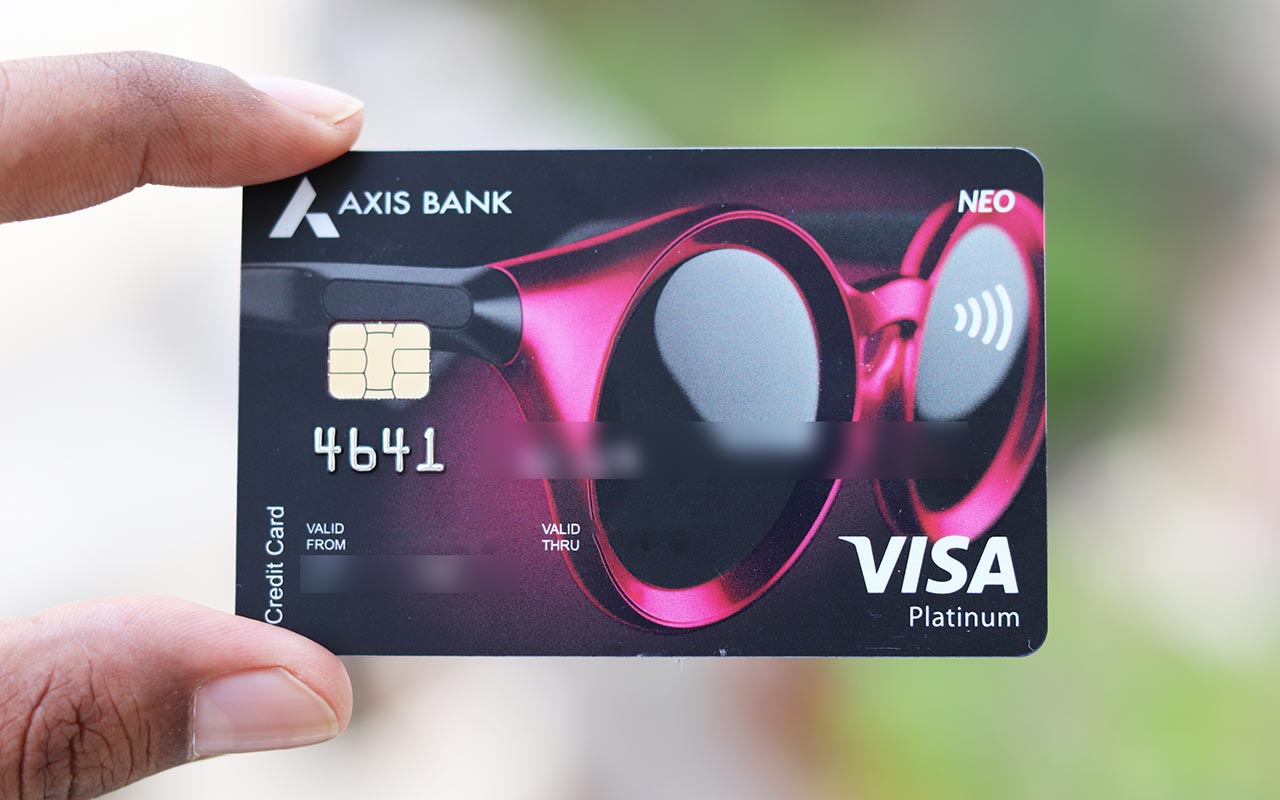
Visa and Mastercard credit cards are not part of this. The Department of Financial Services said in September 2026 that NPCI's circular "does not allow credit transactions on UPI by any other credit card other than the RuPay credit card." The Kiwi RuPay Credit Card and the Axis Neo RuPay Credit Card are RuPay-network cards in our catalogue.
What should you check the next time you tap?
Run this list once, and your own card statement stops being a mystery:
- Find the authorisation on your issuer's app. It blocks your limit before any money moves.
- Check your saved cards on a few apps, and de-register tokens for merchants you no longer use.
- Open your auto-debit list. Anything above ₹15,000 that is not an insurance premium, mutual fund subscription or card bill payment should have asked you for authentication.
- Look up your issuer's contactless limit before you rely on tapping for a large bill.
- Keep the failed-payment clock in mind: a card-present payment that debits and fails must be reversed within T+5 days.
Each of these maps to one stage of the flow above, and knowing which stage a problem sits in tells you who to call: the merchant, the acquirer or aggregator, or your issuer.
Sources
Checked on 22 November 2026.
- Reserve Bank of India, Payment System Indicators, September 2026 (provisional), https://rbi.org.in/scripts/PSIUserView.aspx?Id=64 - supports the 12.53 crore credit cards outstanding figure.
- Reserve Bank of India, Authentication mechanisms for digital payment transactions Directions, 2025, RBI/2025-26/79, 25 September 2025, https://rbi.org.in/scripts/NotificationUser.aspx?Id=12898&Mode=0 - supports the two-factor rule, effective date, dynamic factor, alternatives to SMS OTP, issuer compensation, the contactless and recurring-mandate exemptions, and the cross-border dates.
- Reserve Bank of India, Card transactions in Contactless mode: Relaxation in requirement of Additional Factor of Authentication, RBI/2020-21/71, 4 December 2020, https://www.rbi.org.in/Scripts/BS_ViewMasDirections.aspx?id=11999 - supports the ₹5,000 contactless limit and the earlier ₹2,000 limit.
- Reserve Bank of India, Digital Payments, E-mandate Framework, 2026, RBI/DPSS/2026-27/396, 21 April 2026, https://www.rbi.org.in/scripts/FS_Notification.aspx?Id=13374 - supports the ₹15,000 and ₹1,00,000 thresholds, the 24-hour notice and the modification rules.
- Reserve Bank of India, Tokenisation, Card Transactions: Permitting Card-on-File Tokenisation (CoFT) Services, RBI/2021-22/96, 7 September 2021, https://www.rbi.org.in/scripts/NotificationUser.aspx?Id=12159 - supports token uniqueness, explicit consent, de-registration and renewal consent.
- Reserve Bank of India, Restriction on Storage of Actual Card Data (Card-on-File), RBI/2022-2023/95, 28 July 2022, https://www.rbi.org.in/scripts/NotificationUser.aspx?Id=12363 - supports the 1 October 2022 purge date and the issuer-and-network-only storage rule.
- Reserve Bank of India, Discussion Paper on Charges in Payment Systems, 17 August 2022, https://www.rbi.org.in/Scripts/PublicationsView.aspx?id=21082 - supports the definitions of MDR and interchange, the split rule, and the statement that RBI has not intervened on credit card MDR.
- Reserve Bank of India, Regulation of Payment Aggregators Directions, 2025, 15 September 2025, https://www.rbi.org.in/Scripts/NotificationUser.aspx?Id=12896&Mode=0 - supports the aggregator definition, escrow rule and the transparent settlement-timeline requirement.
- Reserve Bank of India, Harmonisation of Turn Around Time (TAT) and customer compensation for failed transactions, RBI/2019-20/67, 20 September 2019, https://www.rbi.org.in/scripts/FS_Notification.aspx?Id=11693&Mode=0&fn=9 - supports the T+5 reversal and ₹100 per day compensation for card-present failures.
- Reserve Bank of India, Statement on Developmental and Regulatory Policies, 8 June 2022, https://rbi.org.in/scripts/BS_PressReleaseDisplay.aspx?prid=53831 - supports the proposal to link credit cards to UPI, starting with RuPay.
- NPCI, Operating circular for RuPay Credit Cards linked to UPI, NPCI/2022-23/RuPay/019, 4 October 2022, https://www.npci.org.in/PDF/npci/rupay/2022/Operating-circular-for-RuPay-Credit-Cards-linked-to-UPI.pdf - supports the permitted and barred flows and the 2022 nil MDR rule up to ₹2,000. NPCI lists a later amended version (OC019A), which we did not read.
- NPCI, FAQs on Merchant Discount Rate (MDR) on Select UPI (P2M) Transactions, 15 September 2026, https://www.npci.org.in/uploads/FA_Qs_Merchant_Discount_Rate_MDR_on_Select_UPI_P2_M_Transactions_58dba1d39e.pdf - supports the 1.5% to 2.5% typical credit card MDR, the originally announced 15 October 2026 date and the treatment of RuPay credit cards on UPI (Q4, Q36).
- Department of Financial Services, Ministry of Finance, statement on X reported by PTI, 17 September 2026 - supports the statement that only RuPay credit cards are allowed on UPI.
- Reserve Bank of India, Reserve Bank of India (Commercial Banks - Credit Cards and Debit Cards: Issuance and Conduct) Directions, 2025, RBI/DOR/2025-26/155, 28 November 2025 (updated 1 October 2026), https://www.rbi.org.in/Scripts/BS_ViewMasDirections.aspx?id=13155 - paragraph 78 on reversal period and compensation terms; NBFC equivalent is paragraph 72 of RBI/DOR/2025-26/348.
- Not confirmed: a regulator-fixed credit card MDR, interchange rates, the batch timing of merchant submissions, and a regulator-fixed settlement window for card sales were not found in a primary source and are not stated.



Frequently asked
How does a credit card transaction work step by step?
The merchant's acquirer sends an authorisation request through the card network to your issuer, which checks your account and approves or declines it, usually within seconds. Later the merchant submits its sales in a batch, the issuer pays the acquirer (clearing and settlement), and the amount lands on your statement for repayment.
Who pays the MDR on a credit card transaction?
The merchant. MDR is the charge the acquirer recovers from the merchant, usually deducted at settlement. A slice of it, called interchange, is passed to your issuer under the card network's rules, and any share between acquirer and intermediary is settled by agreement. You, the cardholder, do not see it on your statement.
How long does a credit card payment take to reach the merchant?
RBI does not fix one settlement window for card sales. Timing sits in the merchant's agreement with its acquirer or payment aggregator, which RBI requires to state settlement timelines transparently. Authorisation, by contrast, is near-instant. Where a card-present payment fails after a debit, RBI's 2019 circular requires reversal within T+5 days.
Why can't Swiggy or Netflix save my full card number any more?
Under RBI's tokenisation rules, only card issuers and card networks may store actual card data. Merchants and payment aggregators had to purge saved numbers before 1 October 2022. They now hold a token unique to your card, the token requestor and the merchant, created only with your explicit consent.
Can I pay by UPI with a RuPay credit card?
Yes, but only RuPay credit cards, and only for merchant payments. RBI announced the linking in June 2022 starting with RuPay, and NPCI's October 2022 circular bars person-to-person and card-to-card transfers. Visa and Mastercard credit cards cannot be linked: the Finance Ministry said in September 2026 that only RuPay credit cards are allowed on UPI.
Card devaluations, reward maths, and rate changes the day they land.
Follow on X
Reader comments
No comments yet. Share your experience with this card below — the first useful comment helps every reader after you.
Comments are moderated before they appear. Share your real experience with a card — what worked, what didn't, what the bank told you. We don't publish promotional content, referral links, or personal financial details. Keep it useful for other readers.