Closing a credit card does not add a penalty mark to your CIBIL report, but it can still lower your score. The card's limit leaves your total available credit, so the same spending takes up a bigger share of what remains. You can calculate that jump. The effect on credit history is slower and unpublished.

India's credit data now moves faster than most cardholders assume. From 1 July 2026, RBI's reporting rules have banks send credit information to the bureaus on four reference dates a month. A closure you make this week can sit on your report within weeks, which is why timing matters if a loan application is coming.
Does closing a credit card affect your CIBIL score?
Yes, it can, and the route is indirect. TransUnion CIBIL's own checklist on closing a card says that closing a high-limit card reduces available credit and can raise your utilisation ratio. It also says older accounts with a good repayment record help your credit history, and that closing a card may reduce your credit mix.
Utilisation, history and mix are the levers. CIBIL gives no weightage for any of them and no point values. The lever you can measure on your own is utilisation, so start there.
How does closing a card change your credit utilisation ratio?
Utilisation is the balance reported on your cards divided by your total credit limit. Close a card and the limit in the denominator drops, while your spending stays put.
TransUnion CIBIL's consumer blog suggests keeping card spending to about 30% of your limit. Treat that as a guide, since CIBIL does not publish a cut-off.
Here is a worked example. You hold three cards with limits of ₹2,00,000, ₹1,00,000 and ₹50,000, a combined ₹3,50,000. Your issuers report ₹70,000 outstanding across them. These are illustrative figures, not a forecast of any score.
| Scenario | Total limit | Reported balance | Utilisation |
|---|---|---|---|
| All three cards open | ₹3,50,000 | ₹70,000 | 20% |
| Close the ₹50,000 card | ₹3,00,000 | ₹70,000 | 23.3% |
| Close the ₹1,00,000 card | ₹2,50,000 | ₹70,000 | 28% |
| Close the ₹2,00,000 card | ₹1,50,000 | ₹70,000 | 46.7% |
| Close the ₹1,00,000 card, then pay down to ₹40,000 before the statement | ₹2,50,000 | ₹40,000 | 16% |
Spending is the same in the first four rows. The ratio ranges from 20% to 46.7% purely because of which card left, and the last row shows what a paydown does.
One caveat. The figure on your report is the balance your issuer last reported, not what you owe today. Check the "date reported" on each account before you assume a payment has registered.
The utility: the biggest limit is the most expensive card to lose, and the smallest is often nearly free to lose. Rank your cards by limit before you rank them by habit.
Does the age of a closed card disappear from your CIBIL report?
No, the account does not vanish. TransUnion CIBIL's consumer FAQ says closed accounts "reflect in your report as history", and its own checklist says older accounts with good repayment records help your credit history.
What CIBIL does not tell us is how its score treats a closed account's age over time. We cannot confirm a formula, so we will not quote one.
Our reading is an inference, labelled as such. In the near term, the closed card's repayment record stays visible, so the immediate hit to history is likely smaller than people fear. Over the long run, an open card keeps adding months of history and a closed one does not. A card opened in your first job and kept open is quietly doing work for you.
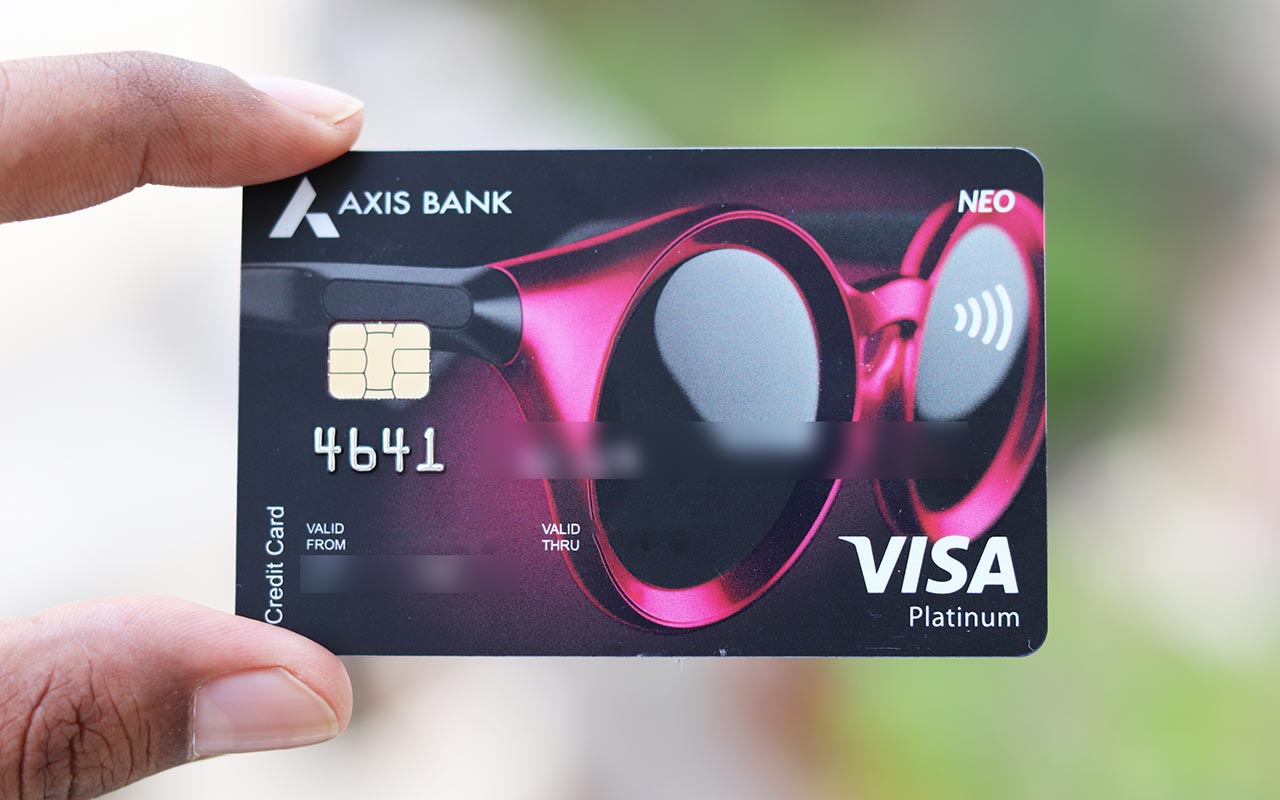
If it is lifetime free, like the Axis Neo RuPay Credit Card at ₹0 joining and ₹0 annual fee, that work costs nothing.
Does closing a card change your credit mix?
It can, if the card is the only unsecured account on your file. TransUnion CIBIL says a balanced mix of secured and unsecured credit is likely to have a positive impact, and a credit card is unsecured credit.
Someone with a home loan and one card who closes the card is left with secured credit only. Someone with four cards, a car loan and a personal loan barely moves the mix by closing one.
The mix effect has no published size either. Count it as the smallest of the three levers unless that card is your only unsecured line.
How long before a closure shows on your CIBIL report?
Usually within a few weeks, though the exact lag depends on your issuer. RBI's Reserve Bank of India (Commercial Banks - Credit Information Reporting) Directions, 2025, as amended with effect from 1 July 2026, have banks submit credit information as on the 9th, 16th, 23rd and last day of each month. Incremental accounts are due within four calendar days of the 9th, 16th and 23rd, and the full month-end file by the 5th of the next month. Paragraph 19 of the card Directions separately requires the issuer to report a closure to the credit information companies.
On the CIBIL side, a report bought within 45 days of closure may not show the update yet. If the "date reported" on the account is over two months old, CIBIL says you can raise a dispute, because it cannot change an entry without the lender's confirmation.
Pull your report about a month after closing and check three things: the account reads closed, the balance reads nil, and nothing reads as overdue. Our guide on closing a credit card in India covers the RBI closure clock itself.
What if the bank closes your unused card for you?
It can, and you do not control which card goes. Under paragraph 20 of RBI's Commercial Banks credit card Directions, a card issued by a commercial bank and unused for more than one year triggers a closure process. The issuer must tell you first and wait 30 days for a reply.
If you stay silent, the account is closed, subject to dues being paid, and the closure is updated with the credit information companies within 30 days.
The practical lesson: a dormant card is not a safe parking spot for credit history. One small, paid-in-full transaction inside each twelve months keeps the decision with you. RBI's explanation to that paragraph also counts cardholder-initiated actions such as generating a statement, changing the PIN or changing transaction controls as use, but not a call to customer care. Cards from small finance banks and NBFCs sit under separate instruments, so check which one governs yours.
When is closing a credit card the right call?
Close a card when it costs more than it gives. A few concrete cases:
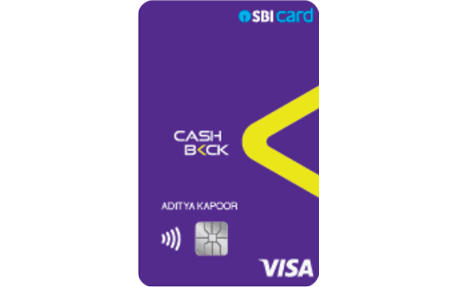
- The annual fee is real and the waiver is out of reach. The SBI Cashback Credit Card charges ₹999 a year, waived at annual spend of ₹2,00,000. At ₹12,000 a month you reach ₹1,44,000, which is ₹56,000 short, so the fee is a certainty.
- The card tempts you to overspend. TransUnion CIBIL's checklist itself flags unplanned spending on a card. A utilisation hit you can absorb beats a balance you cannot clear.
- You hold an add-on you no longer need. An add-on typically shares the primary card's limit and the primary holder is liable for the dues. Closing it usually leaves the limit untouched.
- A free card has gone unused for a year. It will likely be closed for you anyway. Better to choose.
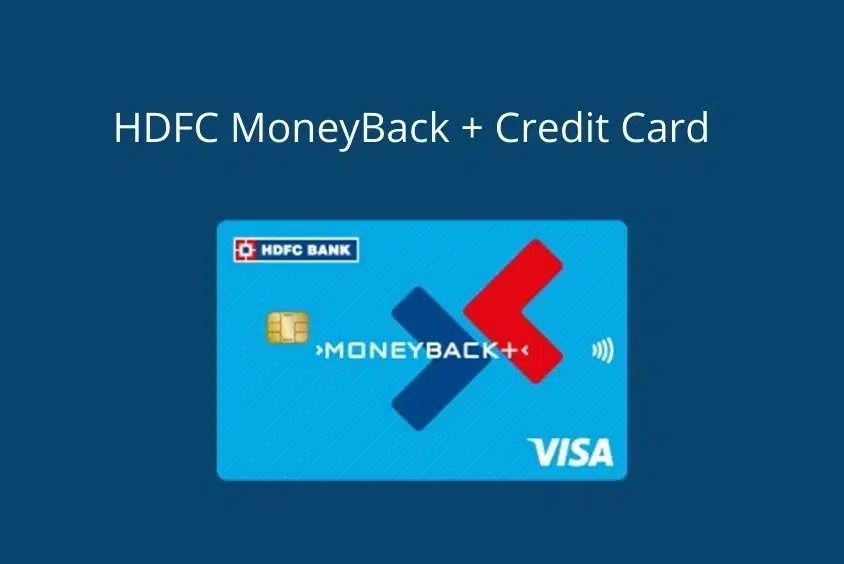
And cases where you should hesitate. The HDFC Bank MoneyBack+ Credit Card carries a ₹500 annual fee, waived at annual spend of ₹50,000, about ₹4,167 a month. If one recurring bill clears that, keeping the card costs nothing.
A secured card such as the IDFC FIRST WOW! Credit Card is different again, because it is backed by a fixed deposit and closing it usually brings the deposit question into play, on the issuer's terms. Think of that as a cash question first and a score question second. Our guide on building a 780 CIBIL score with one card shows why a single aged card does a lot of work.
How do you close a card with the least damage to your score?
Run through this list before you send the request:
- Pay the card to a nil balance first. CIBIL warns that a leftover balance adds interest and can hurt your profile.
- Work out the new ratio. Add up the limits you will keep and divide the balance you usually carry by that total.
- Close the card with the smallest limit, the newest opening date or a real fee. Not the other way round.
- Pay balances down on the cards you keep before the statement date, so the reported figure is lower.
- Avoid closing in the weeks before a home or car loan application, because the new limit and balance may already be on your report.
- Run your report through the CIBIL Score Simulator, which CIBIL offers for testing the effect of closing a card.
- Check the report a month later.
If your remaining limits would push utilisation well above 30%, ask a card you keep about a higher limit. That is the issuer's call, and it is never guaranteed.
Run your own numbers before you close
Ask one question: does this card cost me anything I cannot justify? If it is free and aged, keep it, and spend a small amount on it every few months.
If it costs a fee you will not recover, or it tempts you, close it, and plan for the ratio first. Do the arithmetic from the table above using your own limits. Then verify the result on your report.
Sources
- Reserve Bank of India (Commercial Banks - Credit Cards and Debit Cards: Issuance and Conduct) Directions, 2025, notification RBI/DOR/2025-26/155 (updated as on 1 October 2026), https://www.rbi.org.in/Scripts/NotificationUser.aspx?Id=13155&Mode=0 - source of the closure report to credit information companies (paragraph 19), the one-year non-use trigger, the 30-day cardholder reply window, the 30-day credit information company update and what counts as card use (paragraph 20), and the add-on card definition and principal-cardholder liability (paragraphs 5(1) and 18). Checked 22 November 2026.
- Reserve Bank of India (Commercial Banks - Credit Information Reporting) Directions, 2025, notification RBI/DOR/2025-26/156 dated 28 November 2025 (updated as on 1 July 2026), https://rbi.org.in/scripts/NotificationUser.aspx?Id=13154&Mode=0 - source of the submission reference dates (paragraph 10(2)). Checked 22 November 2026.
- Reserve Bank of India (Commercial Banks - Credit Information Reporting) Amendment Directions, 2025, notification RBI/DOR/2025-26/110 dated 4 December 2025, https://rbi.org.in/Scripts/NotificationUser.aspx?Id=13180&Mode=0 - source of the 9th, 16th, 23rd and last-day reference dates, the four-calendar-day incremental window, the 5th-of-next-month full file and the 1 July 2026 effective date. This regime supersedes the earlier fortnightly reporting instructions. Checked 22 November 2026.
- TransUnion CIBIL, Closing a credit card: here's your dos and don'ts checklist (undated, carries a disclaimer that information may not be up to date), https://www.cibil.com/blog/closing-a-credit-card-heres-your-dos-and-donts-checklist - source of the effect of closing a card on available credit and utilisation, credit history, credit mix, the advice to clear the balance first, the CIBIL Score Simulator and the note on unplanned spending. It gives no percentages or point values. Checked 22 November 2026.
- TransUnion CIBIL, Six ways you can use your credit card for an optimum credit score (undated), https://www.cibil.com/blog/six-ways-you-can-use-credit-card-for-optimum-credit-score - source of the 30% guide for card spending against the limit. Checked 22 November 2026.
- TransUnion CIBIL, All you need to know about your CIBIL score (undated), https://www.cibil.com/blog/all-you-need-to-know-about-cibil-score - source of the 300 to 900 range, the factors listed and the statement on a balanced secured and unsecured mix. It gives no weightages. Checked 22 November 2026.
- TransUnion CIBIL, Consumer awareness FAQ, https://www.cibil.com/faq/consumer-awareness - source of closed accounts reflecting in the report as history. Checked 22 November 2026.
- TransUnion CIBIL, FAQs on loan rejections and disputes, https://www.cibil.com/faq/loan-rejections-disputes - source of the 45-day note on reports bought after closure, the two-month "date reported" dispute trigger and the point that CIBIL cannot change data without the lender's confirmation. Checked 22 November 2026.
- AU Small Finance Bank, What is an add-on credit card, https://www.au.bank.in/blogs/what-is-add-on-credit-card - source of an add-on card typically drawing on the primary card's limit, the optional sub-limit and the primary cardholder's liability for dues. Checked 22 November 2026.
- Worked utilisation figures are illustrative arithmetic on assumed limits and balances, not a score prediction. Not confirmed: how many points a closure costs, how CIBIL weights the age of a closed account, and how many years CIBIL retains a closed account. None are stated in this post.
- Card-level figures (fees, waiver thresholds, secured-card structure) come from this site's catalogue, verified against issuer MITC: SBI Cashback Credit Card verified 2026-07-13, HDFC Bank MoneyBack+ Credit Card verified 2026-07-02, IDFC FIRST WOW! Credit Card verified 2026-07-02, Axis Neo RuPay Credit Card verified 2026-07-02. Checked 22 November 2026.



Frequently asked
Does closing a credit card reduce my CIBIL score?
It can. The closure itself is not a penalty entry, but the card's limit leaves your total available credit, so the same spending becomes a larger share of what remains. Higher utilisation can pull the score down. TransUnion CIBIL does not publish how many points, so the size of the dip depends on your file.
Does a closed credit card stay on my CIBIL report?
Yes. TransUnion CIBIL's consumer FAQ says closed accounts reflect in your report as history. The account is shown as closed along with its payment record. CIBIL does not state on its consumer pages how long a closed account is retained, so we do not quote a number of years.
How long does it take for a closed card to show on my CIBIL report?
Usually within a few weeks, though it varies by issuer. Under RBI's Commercial Banks credit information reporting Directions, banks send data on the 9th, 16th, 23rd and last day of each month, with incremental accounts due within four calendar days. CIBIL says a report bought within 45 days of closure may not yet show it.
Is it better to close an old credit card or keep it open?
Keep it open if it costs nothing, because it holds credit limit and account history at no price. Close it when the annual fee is real and the waiver is out of reach, or when the card tempts you to overspend. Test the effect first with the CIBIL Score Simulator.
Does closing an add-on credit card affect my CIBIL score?
RBI defines an add-on card as a supplementary card issued within the primary cardholder's limits, with liability resting on the primary cardholder. Such a card typically draws on the primary limit, so closing it does not normally remove limit from the primary account. Confirm with your issuer, because some let the primary cardholder set a sub-limit.
Card devaluations, reward maths, and rate changes the day they land.
Follow on X
Reader comments
No comments yet. Share your experience with this card below — the first useful comment helps every reader after you.
Comments are moderated before they appear. Share your real experience with a card — what worked, what didn't, what the bank told you. We don't publish promotional content, referral links, or personal financial details. Keep it useful for other readers.