What does a welcome bonus actually pay?
The advertised figure is never the answer. Every credit card welcome bonus India issuers publish is quoted in one currency and settled in two others. First there is the joining fee, which carries 18% GST on top and is charged before a single point arrives. Second, on a large share of these offers, there is a spend condition with a clock attached.
Forty-nine of the 86 active cards in our catalogue are flagged as carrying a welcome offer. We took twelve of those records that carry a priceable value, converted each bonus into rupees at that card's own recorded rate, and subtracted the joining fee grossed up by GST. Rounding is to the nearest rupee throughout. Seven of the twelve finish above the line and five finish below it, which is a better hit rate than the marketing deserves and a worse one than it implies.
Credit card welcome bonus India: the two hidden prices
Start with the fee, because it is the only number that is certain. A ₹2,999 joining fee is ₹3,539 once GST is applied. A ₹5,999 joining fee is ₹7,079. The American Express Platinum Charge Card's ₹66,000 membership reaches ₹77,880. That gross-up alone is enough to flip several offers that look positive at face value.
A joining fee waiver would remove the problem, and it is rare. Of the 86 active cards in our catalogue, 17 fill in a joining-fee waiver field at all, and only six of those describe a spend-based waiver of the joining fee itself. Plainest of the six is the AU Bank Altura Plus Credit Card, whose ₹499 joining fee goes away on ₹20,000 of retail spend within 90 days of card setup. Everything else in that field is something other than a discount. An IndiGo IDFC FIRST Dual Credit Card applicant can drop the ₹4,999 joining fee by pledging a ₹1,00,000 fixed deposit, and forfeits part of the welcome package in exchange. Kotak issues the Kotak League Platinum Credit Card in both a ₹499 and a nil-joining-fee variant. On the Axis Bank Magnus Credit Card and the HDFC Regalia Gold Credit Card, the "waiver" is the welcome voucher itself being counted against the fee, which is not a waiver at all. Two records, the BOB Eterna Credit Card and the Kotak Air+ Credit Card, use the field only to say that no waiver exists.
Annual fee waivers are common and are a separate question. They arrive a year later, they depend on spend the cardholder has not yet made, and they do nothing for the sum being done at application time.
What survives the joining fee
Below is the arithmetic on twelve offers, spanning the range from strongly positive to deeply negative. Point values are each card's own recorded rate, not a blended assumption. Fees are joining fees grossed up at 18%. Where an issuer publishes an "up to" figure we price it at its ceiling, on the HDFC Marriott Bonvoy row and the American Express row alike, and the prose below says what a lower redemption does to the answer.
| Card | Recorded welcome bonus | Value in rupees | Joining fee with GST | Net |
|---|---|---|---|---|
| HDFC Marriott Bonvoy | 1 Free Night Award up to 15,000 Bonvoy Points, on first ₹500 spend in 90 days | up to ₹10,500 at ₹0.70 per point | ₹3,540 | up to +₹6,960 |
| EazyDiner IndusInd Bank | 2,000 EazyPoints plus ₹7,500 Postcard Hotels voucher on fee payment | ₹7,700 | ₹3,539 | +₹4,161 |
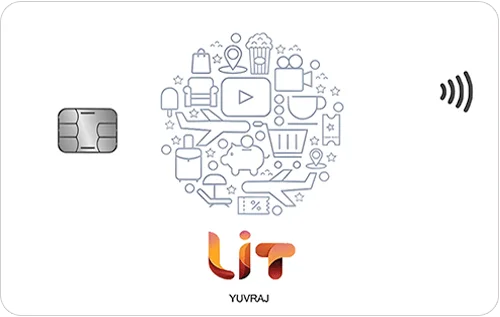
| AU LIT | 10,000 points on ₹1,00,000 spend in 60 days | ₹2,500 at ₹0.25 per point | ₹0 | +₹2,500 |
| Axis Horizon | 5,000 EDGE Miles on first ₹1,000 spend in 30 days | ₹5,000 at ₹1.00 per mile | ₹3,540 | +₹1,460 |
| YES BANK POP-CLUB | 500 POPcoins plus ₹750 Cleartrip voucher | ₹1,250 | ₹0 | +₹1,250 |
| Axis Privilege Visa | 12,500 EDGE points on fee payment and first spend in 30 days | ₹2,500 at ₹0.20 per point | ₹1,770 | +₹730 |
| Shoppers Stop HDFC Bank | ₹500 voucher plus Silver Edge membership worth ₹350 | ₹850 | ₹353 | +₹497 |
| HDFC Regalia Gold | ₹2,500 gift voucher on joining | ₹2,500 | ₹2,950 | -₹450 |
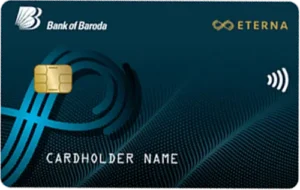
| BOB Eterna | 10,000 points on ₹50,000 spend in 60 days | ₹2,500 at ₹0.25 per point | ₹2,949 | -₹449 |
| SBI Card PRIME | e-Gift voucher worth ₹3,000 | ₹3,000 | ₹3,539 | -₹539 |
| IDFC FIRST Mayura | ₹4,000 cashback across 4 spends of ₹1,000 in 60 days | ₹4,000 | ₹7,079 | -₹3,079 |
| American Express Platinum Charge | vouchers up to ₹35,000 on ₹50,000 net spend in 2 months | ₹35,000 | ₹77,880 | -₹42,880 |
Seven rows end positive, five end negative. Narrow the field to the ten cards that actually charge a joining fee and it splits five to five, because the two ₹0-fee entries have nothing to lose by construction.
Two of the positive entries deserve an asterisk in different directions. The HDFC Marriott Bonvoy Credit Card figure is a ceiling, not a payment: the Free Night Award is valid at properties charging up to 15,000 Marriott Bonvoy Points, and a night booked at 9,000 points is worth ₹6,300 at the same ₹0.70 rate, cutting the net to ₹2,760 and dropping the card below EazyDiner. Anyone redeeming at a modest property should price it that way. The EazyDiner IndusInd Bank Credit Card runs the other way, because its ₹7,700 is almost entirely the Postcard Hotels voucher. Its 2,000 EazyPoints are worth ₹200 at the card's ₹0.10 rate, which is the lowest point value in this entire set.
Notice also how thin the margins are at the bottom. The HDFC Regalia Gold Credit Card misses by ₹450 and the BOB Eterna Credit Card by ₹449. Neither is a disaster. Neither is a reason to apply.
Averaged, the twelve look grim: the nets sum to minus ₹29,839, which is minus ₹2,487 a card. That average is one card wearing a disguise. Remove the American Express Platinum Charge Card and the other eleven average plus ₹1,186. Median is the more honest statistic here, and it sits between the Shoppers Stop ₹497 and the Axis Privilege ₹730, at plus ₹613.50. A typical offer in this set makes a few hundred rupees. One offer in twelve loses forty thousand.
When the bonus lands just for paying the fee
The cleanest offers ask for nothing beyond the fee itself. The BPCL SBI Card Octane credits 6,000 bonus reward points worth ₹1,500 within 30 days of the annual fee being paid, against ₹1,769 all-in. That is a shortfall of ₹269, and it is honest about what it is: a partial rebate on the fee, not a gift.
This pattern repeats with unnerving consistency. The IndiGo Axis Bank Credit Card returns 1,200 BluChips worth ₹600 against a ₹943 fee. A ₹3,000 MakeMyTrip voucher on the RBL Bank World Safari Credit Card sits against ₹3,540. On the BOBCARD Etihad Guest, 2,500 miles worth ₹1,750 are credited on joining fee payment, against ₹2,950. Across those four the bonus lands between 59% and 85% of the all-in fee: 59.3% on the BOBCARD, 63.6% on the IndiGo Axis card, 84.7% on the RBL card and 84.8% on the Octane. Close enough to feel like value, far enough away to be a net cost. Issuers price these offers to land just under the line, and they are consistent enough about it that the pattern is clearly intentional.
Two offers in the priced set both clear the fee and then come back the following year. The EazyDiner card beats its ₹3,539 by ₹4,161 and delivers the same 2,000 EazyPoints and ₹7,500 voucher on every annual renewal rather than only at signup. HDFC Marriott Bonvoy issues a further Free Night Award within six weeks of each anniversary fee being realised. Nothing else in the twelve manages both halves.
A first year free credit card changes the sum completely, because there is no fee to recover. Eight of the 86 active cards in our catalogue pair a ₹0 joining fee with a welcome offer written into the record. A ninth, the Jupiter Edge+ CSB Bank RuPay Credit Card, shows ₹0 only under a limited-period waiver on a ₹999 joining fee, so it stays out of that count. Largest of the eight is the AU LIT Credit Card at ₹2,500. On the Kredit.Pe Yes Bank ACE Credit Card, ₹1,000 lands in the wallet after activation and a first UPI transaction. Smaller again is the IDFC FIRST WOW! Credit Card, paying up to ₹200 across the first four UPI transactions at ₹50 each. None of these can lose money. They can only pay less than hoped.
The spend gate is the expensive part
A welcome benefit spend condition is where the arithmetic stops being simple, because clearing a threshold is a cost and not a win. If the spend was going to happen anyway, the gate is free. If it is manufactured to reach a number, the reader has spent real money to receive a fraction of it back.
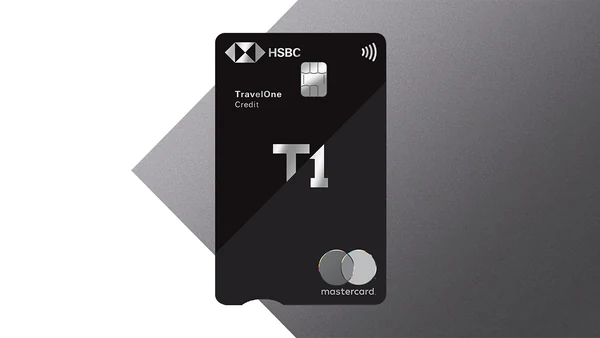
Measured as a return on the gate spend, the ratios are sobering. The AU LIT Credit Card asks ₹1,00,000 inside 60 days and pays ₹2,500, a return of 2.5% on the money pushed through it. A HSBC TravelOne Credit Card holder must spend ₹25,000 inside 30 days for ₹1,000 of cashback, which is 4.0%. On the BOB Eterna Credit Card, ₹50,000 inside 60 days buys 10,000 points worth ₹2,500, which is 5.0%. SBI Card Miles asks ₹30,000 inside 60 days for 1,500 Travel Credits worth ₹1,500, also 5.0%, against a ₹1,769 fee that leaves it ₹269 short.
Windows matter as much as amounts. Thirty days is a single billing cycle, and a ₹25,000 target inside one cycle is a different proposition from ₹1,00,000 across two. The AU Bank Zenith Credit Card runs two clocks at once: ₹1,00,000 within 60 days of activation for 10,000 bonus points, and ₹1,25,000 within 90 days of card setup for the year-one fee waiver on a ₹7,999 card. Miss either and the money is gone with no partial credit.
Some gates are so low they are formalities. The Axis Horizon Credit Card releases 5,000 EDGE Miles worth ₹5,000 after a single transaction of ₹1,000 or more within 30 days. HDFC Marriott Bonvoy asks for a first spend of ₹500 within 90 days. Calling those conditions is generous; they are activation triggers wearing a threshold's clothing, and they are the only gated offers here we would treat as genuinely free.
At the other end, the American Express Platinum Charge Card asks for ₹50,000 of net spend within two months and returns vouchers worth up to ₹35,000, a 70% return on the gate spend and still a ₹42,880 loss once the ₹77,880 membership is counted. The American Express Platinum Reserve Credit Card pays 11,000 Membership Rewards points worth ₹3,850 on ₹30,000 of spend in 90 days, against ₹11,800 all-in, for a net of minus ₹7,950. High-fee cards are bought for their ongoing benefits. The welcome bonus is not the argument for them.
Vouchers with a brand name attached
Another shape of offer pays in a voucher with a retailer printed on it, and those are worth face value only to somebody who was already going to shop there. A ₹3,000 MakeMyTrip voucher on the RBL Bank World Safari Credit Card is ₹3,000 to a frequent traveller and closer to nothing to someone who books direct. The SBI Card PRIME at least offers a choice across seven brands, which raises the odds that one of them is useful.
Face values in this group run from ₹250 to ₹12,500. The SBI Flipkart Credit Card pays a ₹250 Flipkart gift card after the joining fee, against ₹590 all-in, for a net of minus ₹340. Its sibling, the SBI SimplyCLICK Credit Card, pairs 500 activation points worth ₹125 with a ₹500 Amazon voucher for ₹625 total, against ₹589, scraping past by ₹36. Luxury brand vouchers worth ₹5,000 arrive on first transaction with the AU Bank Zenith+ Credit Card, against ₹5,899, a shortfall of ₹899. The Axis Bank Magnus Credit Card offers the largest single voucher at ₹12,500, in a choice of Luxe gift card, Postcard Hotels or Yatra, against a ₹14,750 all-in joining cost, which leaves the holder ₹2,250 down before any spending starts.
Where a voucher genuinely pays is when its brand and the cardholder's habits already overlap. The Shoppers Stop HDFC Bank Credit Card is the clearest case in the set: a ₹299 joining fee, ₹353 with GST, against a ₹500 Shoppers Stop voucher and a Silver Edge membership recorded at ₹350. Anyone who shops there twice a year is ahead by ₹497 on day one. That is the same logic we applied in our earlier look at when a fee waiver actually saves money, and it holds here: a benefit tied to spending that was already happening is worth its face value, and a benefit that requires new spending is worth much less.
The records we could not price
Several offers in our catalogue are written purely as free text with no quantity behind them, and those cannot be converted into rupees at all. The IDFC First Power Plus Credit Card records only "welcome reward points on activation" with no number attached. Four more sit in the same position: the Axis MyZone RuPay Credit Card, whose one-year SonyLIV Premium subscription carries no recorded value; the HDFC Bank Diners Club Privilege Credit Card and its Times Prime and Swiggy One memberships behind a ₹75,000 spend gate; the Equitas Selfe Credit Card and its choice of two streaming memberships; and the IndusInd Bank Platinum Aura Edge Credit Card, whose Vouchagram vouchers vary by fee plan. We would rather say a figure is uncomputable than publish a guess dressed as data.
One record looks uncomputable and is not, and it is worth showing the working. A first flight booking on the Federal Bank Scapia Credit Card credits 1,000 Scapia Coins. Its headline reward value sits at zero, which would ordinarily end the matter, but the same record spells the conversion out three separate times in its own rate descriptions: 5 Scapia Coins to ₹1. At that rate the bonus is ₹200, against a ₹0 joining fee, for a net of plus ₹200. That is the smallest positive figure anywhere in this post, and it exists only because the record contradicts itself. Where a catalogue entry disagrees with itself like that, we take the figure it spells out over the blank field beside it, and we say which one we used.
Who should chase one
Chase a welcome bonus when the card was already the right card. That is the whole rule, and everything else is a consequence of it.
The arithmetic above puts a hard ceiling on how much a bonus can move a decision. Best net result among the fee-charging cards we priced is ₹6,960 on the HDFC Marriott Bonvoy Credit Card, and that number assumes the 15,000-point ceiling its Free Night Award allows; redeem the night at a 9,000-point property and the same card returns ₹2,760, behind the EazyDiner IndusInd Bank Credit Card at ₹4,161. Either way, a one-time swing of a few thousand rupees is settled inside two or three months of ordinary earning on a card whose base rate suits the holder. Picking the wrong card for a ₹2,500 voucher means living with the wrong reward rate for a year.
Weighting the bonus heavily makes sense in a narrow set of conditions, and none of them is about how large the bonus looks. A ₹0 joining fee removes the recovery problem outright, which is why the ₹2,500 on the AU LIT Credit Card counts for more than a ₹3,000 voucher on a card charging ₹3,539 to hand it over. A spend gate sitting below what the household already puts through a card in the same window costs nothing to clear, which is what makes the ₹500 first spend on HDFC Marriott Bonvoy a formality and the ₹1,00,000 on AU LIT a project. A voucher whose brand is somewhere money already goes is worth its printed face value rather than a fraction of it. Fail all of those tests and the bonus is a rebate on a fee, usually an incomplete one.
Anyone building a manufactured spend plan to clear ₹1,00,000 in 60 days for ₹2,500 of points is working at a 2.5% return on a large sum of money with a deadline attached, which is a worse trade than it looks from inside the application form. Pay the fee if the card earns its keep for the other eleven months. Let the welcome bonus be the last tiebreaker, never the first reason.
Sources
- pickmycard.in card catalogue, verified against issuer Most Important Terms and Conditions documents. Source of every joining fee, annual fee, waiver condition, welcome bonus description and point value used in this post, and of the counts taken over the 86 active card records. Card records carry verification dates between 2026-05-05 and 2026-08-08, with most of the set verified on 2026-07-02. Checked 14 September 2026.
- SBI Card credit card pages, https://www.sbicard.com/en/personal/credit-cards/sbi-card-prime.html . Source of the SBI Card PRIME, SBI Card Miles, SBI SimplyCLICK, SBI Flipkart and BPCL SBI Card Octane fee and welcome benefit terms. Checked 14 September 2026.
- HDFC Bank credit card pages, https://www.hdfc.bank.in/credit-cards/marriott-bonvoy-credit-card . Source of the HDFC Marriott Bonvoy, HDFC Regalia Gold, Shoppers Stop HDFC Bank and HDFC Bank Diners Club Privilege fee and welcome benefit terms. Checked 14 September 2026.
- Axis Bank credit card pages, https://www.axis.bank.in/cards/credit-card/axis-horizon-credit-card . Source of the Axis Horizon, Axis Privilege, Axis Bank Magnus, IndiGo Axis Bank and Axis MyZone RuPay terms. Checked 14 September 2026.
- American Express India card pages, https://www.americanexpress.com/in/charge-cards/platinum-card/ . Source of the Platinum Charge Card and Platinum Reserve Credit Card membership fees and welcome offers, including the 18% GST figure applied throughout this post. Checked 14 September 2026.
- AU Small Finance Bank credit cards, https://www.au.bank.in/personal-banking/credit-cards/lit-credit-card . Source of the AU LIT, AU Bank Zenith, AU Bank Zenith+ and AU Bank Altura Plus terms. Checked 14 September 2026.
- HSBC India credit cards, https://www.hsbc.co.in/credit-cards/products/travelone/ . Source of the HSBC TravelOne welcome benefit and spend condition. Checked 14 September 2026.
- BOBCARD credit cards, https://www.bobcard.co.in/credit-card-types/eterna . Source of the BOB Eterna and BOBCARD Etihad Guest fee structures and welcome bonuses. Checked 14 September 2026.
- IndusInd Bank credit cards, https://www.indusind.bank.in/in/en/personal/cards/credit-card/eazydiner-credit-card.html . Source of the EazyDiner IndusInd Bank and Platinum Aura Edge welcome benefits. Checked 14 September 2026.
- Scapia, https://www.scapia.cards/product/blog/scapia-coins . Source of the 5 Scapia Coins to ₹1 conversion used to price the Federal Bank Scapia Credit Card welcome bonus at ₹200. Checked 14 September 2026.
- Jupiter Edge+ CSB Bank RuPay Credit Card joining fee status. We could not confirm an issuer page stating the permanent ₹999 joining fee behind the current ₹0 promotional waiver, so the card is excluded from the zero-fee count rather than counted either way. Checked 14 September 2026.
Disclosure: this post contains affiliate links. If you apply through them we may earn a commission, at no extra cost to you. Our editorial view is independent of that. #ad
Frequently asked
Is a credit card welcome bonus worth the joining fee?
Often yes, on the numbers. Seven of the twelve offers we priced finish above the joining fee plus 18% GST, and five finish below. Narrow that to the ten cards that actually charge a fee and it splits five to five. The SBI Card PRIME pays a ₹3,000 voucher against ₹3,539 all-in.
What is a welcome benefit spend condition?
It is a minimum amount the card must be used for inside a stated window before the bonus is released. The AU LIT Credit Card requires ₹1,00,000 within 60 days. Missing the window forfeits the bonus, and the joining fee is not refunded.
Which credit card gives the best welcome bonus in India?
By value left after the fee, the HDFC Marriott Bonvoy Credit Card leads at ₹6,960, pricing its Free Night Award at the 15,000-point ceiling against ₹3,540 all-in. Booked at a 9,000-point property that night is worth ₹6,300, cutting the card to ₹2,760 and putting the EazyDiner IndusInd Bank Credit Card ahead at ₹4,161.
Do welcome bonuses count towards the annual fee waiver?
No. Bonus points and vouchers are credited to the reward account, not to the spend total that triggers a waiver. The ICICI Coral Credit Card waives its ₹500 annual fee at ₹1,50,000 of spend, and its 500 bonus points contribute nothing to that figure.
Can I get a welcome bonus on a free credit card?
Yes. Eight of the 86 active cards in our catalogue pair a ₹0 joining fee with a welcome offer written into the record, among them the AU LIT Credit Card at ₹2,500 and the YES BANK POP-CLUB Credit Card at ₹1,250. With no fee to recover, the whole bonus is net value.
Card devaluations, reward maths, and rate changes the day they land.
Follow on X
Reader comments
No comments yet. Share your experience with this card below — the first useful comment helps every reader after you.
Comments are moderated before they appear. Share your real experience with a card — what worked, what didn't, what the bank told you. We don't publish promotional content, referral links, or personal financial details. Keep it useful for other readers.