One paisa at the bottom. One rupee at the top. That is the full range of credit card reward point value in India across the 61 active cards in our catalogue that record a value for their reward currency, and a hundredfold spread inside one market is not a rounding detail.
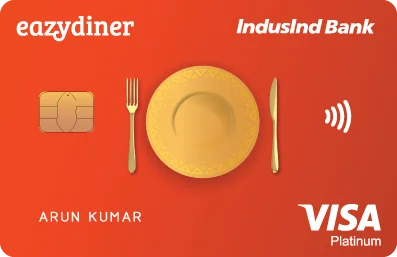
Which is why points per ₹100 is not, on its own, a comparable number. The EazyDiner IndusInd Bank Credit Card pays 4 reward points per ₹100 of ordinary spend. SBI Card Miles pays 0.5 Travel Credits per ₹100, one eighth as many, and hands back more money. An EazyDiner point is recorded at ₹0.10, so 4 points on ₹100 is 40 paise, a return of 0.4%. A Travel Credit is recorded at ₹1.00, so half a credit on ₹100 is 50 paise, a return of 0.5%. Eight times the points, less money.
Of those 61 records, 58 carry a non-zero value, and they run the whole distance from ₹0.01 to ₹1.00. The remaining 25 active cards pay in rupees and record no point value at all, which accounts for the full 86-card active catalogue.
What a credit card reward point value in India actually is
A point value is not a promise. Each card record carries one figure for its reward currency, and that figure is an indicative redemption value: what a single point has been worth on the redemption route most holders of that card use in practice. No issuer publishes it as a guaranteed rate, and we do not present it as one. Change the route and the realised number changes with it. Points transferred to an airline programme, points spent in a bank's own voucher catalogue and points taken against a statement rarely settle at the same paise per point, and several routes carry a conversion fee or a minimum transfer block.
So where does the recorded figure come from, and why trust it? Because it reproduces the issuer's own published value-back percentages when the multiplication is run backwards. Fuel cards make that test easy, because issuers tend to publish a value-back percentage right next to the earn rate.
The IndianOil Axis Bank Credit Card earns 20 EDGE Reward Points per ₹100 at IndianOil pumps, a tier Axis Bank describes as 4% value back. At the recorded ₹0.20 per EDGE point, 20 points on ₹100 is ₹4.00, which is 4% exactly. BPCL SBI Card Octane earns 25 Reward Points per ₹100 on BPCL fuel and is described as 7.25% value back including the 1% fuel surcharge waiver. At ₹0.25 a point, 25 points on ₹100 is ₹6.25; add the 1% waiver and the arithmetic lands on 7.25%. The RBL Bank IndianOil Xtra Credit Card earns 15 Fuel Points per ₹100 and is described as 7.5% value back. At ₹0.50 a Fuel Point, that is ₹7.50 on ₹100.
Separate issuer statements, matching arithmetic in every case. That is the basis for the number used for every effective reward rate on this page. Rate times value, divided by 100. Nothing else.
Reward points to rupees: the full spread in one table
Here is the range, sampled across every value tier the catalogue records. Every earn rate below is stated per ₹100 by the card's own record, so no rebasing is needed to read the rows against each other. The final column is the base return on ordinary spend, before any accelerated category and before fees.
| Card | Base points per ₹100 | Value per point | Base return |
|---|---|---|---|
| BOBCARD Uni GoldX Credit Card | 100 Uni Coins | ₹0.01 | 1.0% |
| EazyDiner IndusInd Bank Credit Card | 4 | ₹0.10 | 0.4% |
| Axis Rewards Credit Card | 1.6 EDGE points | ₹0.20 | 0.32% |
| Axis Bank Magnus Credit Card | 6 EDGE points | ₹0.20 | 1.2% |
| SBI Card PRIME | 2 | ₹0.25 | 0.5% |
| IDFC FIRST Mayura Credit Card | 5 | ₹0.25 | 1.25% |
| American Express Platinum Charge Card | 2.5 MR points | ₹0.35 | 0.88% |
| IndusInd Bank Platinum Aura Edge Credit Card | 0.5 | ₹0.40 | 0.2% |
| HDFC Regalia Gold Credit Card | 2.5 | ₹0.50 | 1.25% |
| BOBCARD Etihad Guest Premium | 2 Etihad Guest Miles | ₹0.70 | 1.4% |
| IndianOil HDFC Bank Credit Card | 1 Fuel Point | ₹0.96 | 0.96% |
| SBI Card Miles | 0.5 Travel Credits | ₹1.00 | 0.5% |
| HSBC TravelOne Credit Card | 2 | ₹1.00 | 2.0% |
Read the second column and the fourth column together and the pattern breaks immediately. Highest points per ₹100 in the table, 100 Uni Coins, returns 1.0%. Lowest points per ₹100, half a point, returns 0.2%. But 2 points per ₹100 on the HSBC TravelOne Credit Card returns 2.0%, ten times the Aura Edge, on four times the points.
Value clustering matters too. Of the 61 records, 21 sit at ₹0.25 and 11 sit at ₹0.20, so 32 cards share just two values. Only six records reach ₹1.00: the Axis Horizon Credit Card, the YES BANK POP-CLUB Credit Card, SBI Card Miles, the Kotak Air Credit Card, the Kotak Air+ Credit Card and the HSBC TravelOne Credit Card. A single record sits at ₹0.96 and a single record at ₹0.01.
Where the earn rate and the point value point in opposite directions
Several pairs in the catalogue reverse themselves once the multiplication runs, and they are worth naming, because that is exactly where a rate sheet misleads.
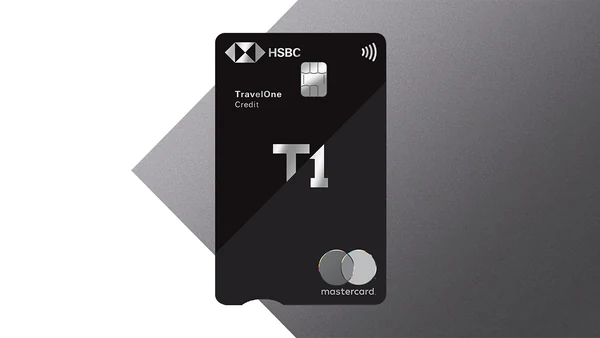
The Axis Bank Magnus Credit Card earns 6 EDGE points per ₹100 on general spend. The HSBC TravelOne Credit Card earns 2. Magnus advertises three times the points. At ₹0.20 per EDGE point, Magnus returns ₹1.20 on ₹100, a rate of 1.2%. At ₹1.00 per point, TravelOne returns ₹2.00 on ₹100, a rate of 2.0%. Magnus carries a ₹12,500 joining fee and TravelOne ₹4,999, so the card with a third of the headline rate delivers a two-thirds higher effective reward rate for under half the entry cost.
Then the widest gap in the catalogue. The BOBCARD Uni GoldX Credit Card earns 100 Uni Coins per ₹100, the largest earn rate any card here publishes and twenty times what the IDFC FIRST Mayura Credit Card pays at 5 points per ₹100. A Uni Coin is recorded at ₹0.01 and a Mayura point at ₹0.25. Multiply: Uni GoldX returns ₹1.00 on ₹100 and Mayura returns ₹1.25. Twenty times the units, a fifth less money. Uni GoldX is a no-fee card and Mayura charges ₹5,999 a year plus GST, which is a genuine argument in the first card's favour, but that argument has nothing to do with the 100.
And the pair from the opening. SBI Card Miles earns 0.5 Travel Credits per ₹100, which ties for the fourth-lowest base earn rate among the 61 active records. Three records sit below it at zero: the Federal Bank Scapia Credit Card, the BookMyShow RBL Bank Play Credit Card and the SBI Flipkart Credit Card, none of which issues a point currency at all. The IndusInd Bank Platinum Aura Edge Credit Card matches SBI Card Miles at 0.5 rather than sitting under it. Even so, SBI Card Miles out-returns the EazyDiner IndusInd Bank Credit Card on base spend, 0.5% against 0.4%, because a Travel Credit is recorded at ten times an EazyDiner point.
The multiplication cuts the other way as well. A high point value rescues nothing if the rate is thin. IndusInd Bank Platinum Aura Edge records ₹0.40 a point, double the value on any Axis EDGE card, and still produces the lowest base return in the table at 0.2%, because half a point per ₹100 is almost nothing to multiply.
The denominator problem: per ₹100, per ₹150, per ₹200
Everything above assumes a common denominator. Issuers do not use one. Axis Bank quotes Magnus at 12 EDGE Points per ₹200 up to ₹1,50,000 of monthly spend, which is the 6 per ₹100 used in the table. Kotak Mahindra Bank and HDFC Bank quote several cards per ₹150. A rate on a different denominator is not comparable until it is rebased, and rebasing is the step most rate-sheet comparisons skip.
The Kotak League Platinum Credit Card is where our own catalogue disagrees with itself. Its structured record carries a base rate of 2.67 per ₹100, which is 4 Reward Points per ₹150. Its free-text feature line says 8 reward points per ₹150 on all spends, double that. The record's accelerated tier settles it: 8 Reward Points on air carriers, travel agencies and departmental stores is labelled 2X, and 2X of an 8-point base would be 16. Structured field wins, feature line is stale, and the base return is 2.67 times ₹0.25, or 0.67% on ordinary spend rather than the 1.33% the stale line implies.
The HDFC Marriott Bonvoy Credit Card leaves the question open. Its record states a base rate of 2 with no unit attached, while every rate that record does state a unit for is quoted per ₹150: 8 Marriott Bonvoy Points per ₹150 at Marriott properties, 4 per ₹150 on travel, dining and entertainment, and a trailing note that spend above the ₹5,00,000 monthly threshold in that tier earns 2 points. Read per ₹100, the base return is 1.4%. Read per ₹150, it is 1.33 points per ₹100 and a return of 0.93%. Nothing in the record decides between them, so we do not print a single figure for it, and it is not in the table above. Three other records also state a base rate without a unit, the HDFC Regalia Gold Credit Card at 2.5, SBI Card PRIME at 2 and the IndianOil HDFC Bank Credit Card at 1, but in all three the record's own accelerated tiers are quoted per ₹100, which fixes the base on the same denominator.
What the accelerated tiers do to the point redemption value
Base rates are where the reversals live, but most people buy a card for one accelerated category, and the same arithmetic applies there with one extra term: the monthly cap, converted into rupees.
The HDFC Regalia Gold Credit Card earns 25 points per ₹100 on hotels booked through HDFC SmartBuy. At ₹0.50 a point that is ₹12.50 on ₹100, a point redemption value of 12.5% on that channel. The bonus is capped at 4,000 bonus points a month, and the bonus runs at 22.5 points per ₹100 once the 2.5-point base is taken out, so the cap arrives at ₹17,778 of monthly SmartBuy hotel spend. Those 4,000 bonus points are worth ₹2,000 at the recorded rate. Spend past ₹17,778 and only the 1.25% base keeps running.
The IndianOil HDFC Bank Credit Card shows the same shape more sharply. It earns 5 Fuel Points per ₹100 at IndianOil outlets, and at ₹0.96 a Fuel Point that is ₹4.80 on ₹100, or 4.8%. The cap is 250 Fuel Points a month for the first six months and 150 a month afterwards, so the steady-state ceiling is ₹144 of value, hit at ₹3,000 of monthly fuel spend. A 4.8% rate that stops at ₹144 a month is worth ₹1,728 a year, and the card's ₹500 annual fee plus GST is waived at ₹50,000 of annual spend.
Compare that with the IndianOil Axis Bank Credit Card, whose accelerated fuel tier pays 20 EDGE points per ₹100 at ₹0.20 a point, also 4%, but caps accelerated earning at ₹5,000 of monthly fuel spend. That ceiling is 1,000 points, or ₹200 a month. Two fuel cards, near-identical headline percentages, ceilings of ₹144 and ₹200 a month.
At the top end, the Axis Bank Magnus Credit Card pays 17.5 EDGE points per ₹100 on monthly spend above ₹1,50,000, which at ₹0.20 is ₹3.50 on ₹100, a rate of 3.5%. The BOBCARD Uni GoldX Credit Card pays up to 500 Uni Coins per ₹100 on Uni Store voucher purchases, which at ₹0.01 is ₹5.00 on ₹100, a rate of 5%. Both numbers only exist after the multiplication.
One caution on all of the above: a recorded value is a snapshot of a redemption route, and routes get repriced. Several Indian issuers cut earn rates or redemption values during 2026, which we tracked card by card in our record of the year's devaluations. A point value that held last year is not evidence about next year.
Why a cashback card carries no point value at all
Twenty-five of the 86 active cards in the catalogue pay in rupees and carry no point value at all. That is not a gap in the data. Those cards pay in rupees, and a rupee is worth one rupee by definition, so there is no second number to record and nothing to multiply.
Cashback vs reward points is therefore a legibility question before it is a value question. A card advertising 5% cashback returns 5%. A card advertising 5 points per ₹100 returns somewhere between 0.05% and 5% depending on a figure printed nowhere on the marketing page. Three further records carry a points block with both a zero earn rate and a zero point value, the Federal Bank Scapia Credit Card, the BookMyShow RBL Bank Play Credit Card and the SBI Flipkart Credit Card, which is how a card that pays only in app coins, free tickets or merchant cashback reads in structured data.
Cashback caps are legible in the same way, because they are already denominated in money. The Axis Samsung Signature Credit Card is a useful hybrid here: it pays 10% cashback on Samsung purchases, capped at ₹2,500 a month and ₹10,000 a year, and the record notes that this is credited as direct cashback rather than EDGE Reward Points. Its general spend earns 5 EDGE points per ₹100 at ₹0.20, which is 1.0%. One card, two currencies, and only one of them needs converting before it can be compared with anything.
None of this makes cashback structurally better. The HSBC TravelOne Credit Card's 2.0% base return beats most cashback rates on general spend, and the Axis Horizon Credit Card matches it at 2 EDGE Miles per ₹100 at ₹1.00. A points card wins on the arithmetic or it does not win. It just cannot win on the headline.
How to read a rate sheet after this
Five steps, in order, and none of them takes longer than a minute.
- Normalise the earn rate to points per ₹100. A card quoted per ₹150 or per ₹200 is not comparable until it is rebased: the Kotak League Platinum Credit Card's 4 Reward Points per ₹150 is 2.67 per ₹100, and the HDFC Marriott Bonvoy Credit Card's 8 Bonvoy Points per ₹150 on hotel stays is 5.33 per ₹100. Where a record states a rate with no denominator, check what its other tiers use before assuming ₹100.
- Find the value per point and the route that produces it. The recorded figure is indicative, not contractual, so check which redemption path it assumes. A value built on an airline transfer does not survive a holder who only redeems for vouchers.
- Multiply, then divide by 100. Rate times value is the effective reward rate in percent. This is the only number worth comparing across two cards, and it is the number in the table above.
- Redo the multiplication for each accelerated tier, then convert the cap to rupees. A 12.5% tier capped at 4,000 bonus points a month on the HDFC Regalia Gold Credit Card stops at ₹17,778 of monthly SmartBuy spend, and a 4.8% tier capped at 150 Fuel Points a month on the IndianOil HDFC Bank Credit Card stops at ₹3,000 of monthly fuel. The percentage gives the slope; the cap gives the point where the line goes flat.
- Subtract the fee, grossed at the 18% GST that applies to credit card fees. SBI Card Miles returns 0.5% on base spend and charges ₹1,499, which is ₹1,769 with tax, so base spend has to reach ₹3,53,800 before the card pays for itself. The HSBC TravelOne Credit Card returns 2.0% and charges ₹4,999, or ₹5,899 with tax, and breaks even at ₹2,94,950. Four times the return moves the break-even point ₹58,850 earlier, and a ₹3,00,000 spender sits just under water on the first card and just above it on the second. Fee waivers change the picture again where they are reachable: ₹6,00,000 of annual spend on SBI Card Miles, above ₹8,00,000 on the HSBC TravelOne Credit Card.
Run those five and the hundredfold spread stops being a trap. It becomes the single most useful fact about a rate sheet, which is that the big number on the front is only ever half of a multiplication.
Sources
- PickMyCard card catalogue, base earn rates, recorded point values, accelerated tiers, caps, joining fees and annual fee waiver conditions for the 61 active cards that record a reward value and the 25 active cards that pay in rupees. Figures verified against issuer Most Important Terms and Conditions documents on the dates recorded per card; the cards named in this post carry verification dates of 11 June 2026 (IndianOil Axis Bank, IndianOil HDFC Bank, RBL Bank IndianOil Xtra), 2 July 2026 (BPCL SBI Card Octane, Axis Bank Magnus, IDFC FIRST Mayura, IndusInd Platinum Aura Edge, Kotak League Platinum, HDFC Marriott Bonvoy, BookMyShow RBL Bank Play, SBI Flipkart, Axis Rewards), 3 June 2026 (EazyDiner IndusInd Bank), 5 May 2026 (Axis Samsung Signature, SBI Card PRIME), 10 May 2026 (Axis Horizon), 14 May 2026 (SBI Card Miles), 27 May 2026 (BOBCARD Etihad Guest Premium), 29 May 2026 (HDFC Regalia Gold), 23 July 2026 (American Express Platinum Charge), 1 August 2026 (BOBCARD Uni GoldX), 6 August 2026 (HSBC TravelOne) and 8 August 2026 (Federal Bank Scapia). Checked 14 September 2026.
- IndianOil Axis Bank Credit Card, official product page, source of the 20 EDGE Reward Points per ₹100 fuel tier and its 4% value-back statement. https://www.axis.bank.in/cards/credit-card/indianoil-axis-bank-credit-card. Checked 14 September 2026.
- BPCL SBI Card Octane, official product page, source of the 25 Reward Points per ₹100 BPCL fuel tier and its 7.25% value-back statement. https://www.sbicard.com/en/personal/credit-cards/bpcl-sbi-card-octane.html. Checked 14 September 2026.
- SBI Card Miles, official product page, source of the Travel Credit earn rates, the ₹1,499 annual fee and the ₹6,00,000 fee reversal threshold. https://www.sbicard.com/en/personal/credit-cards/travel/sbi-card-miles.page. Checked 14 September 2026.
- RBL Bank IndianOil Xtra Credit Card, official product page, source of the 15 Fuel Points per ₹100 tier and its 7.5% value-back statement. https://www.rbl.bank.in/personal-banking/cards/credit-cards/indianoil-rbl-bank-xtra-credit-card. Checked 14 September 2026.
- HDFC Regalia Gold Credit Card, official product page, source of the SmartBuy 10X hotel tier and its 4,000 bonus point monthly cap. https://www.hdfcbank.com/personal/pay/cards/credit-cards/regalia-gold-credit-card. Checked 14 September 2026.
- IndianOil HDFC Bank Credit Card, official product page, source of the 5 Fuel Points per ₹100 fuel tier, the 250 and 150 Fuel Point monthly caps and the ₹0.96 Fuel Point redemption value. https://www.hdfc.bank.in/credit-cards/indianoil-hdfc-bank-credit-card. Checked 14 September 2026.
- HDFC Marriott Bonvoy Credit Card, official product page, source of the per ₹150 Marriott Bonvoy Point earn tiers. The page does not state a denominator for the base rate, so no single base return is published here. https://www.hdfc.bank.in/credit-cards/marriott-bonvoy-credit-card. Checked 14 September 2026.
- Kotak League Platinum Credit Card, official product page, source of the Reward Point earn structure against which the catalogue's conflicting feature line was checked. https://www.kotak.bank.in/en/personal-banking/cards/credit-cards/league-platinum-card.html. Checked 14 September 2026.
- HSBC TravelOne Credit Card, official product page, source of the 2 reward points per ₹100 base rate, the ₹4,999 annual fee and the ₹8,00,000 fee waiver threshold. https://www.hsbc.co.in/credit-cards/products/travelone/. Checked 14 September 2026.
Disclosure: this post contains affiliate links. If you apply through them we may earn a commission, at no extra cost to you. Our editorial view is independent of that. #ad

Frequently asked
How much is one credit card reward point worth in India?
It depends entirely on the card. Across the 61 active cards in our catalogue that record a value for their reward currency, the figure runs from ₹0.01 to ₹1.00, a hundredfold spread. The recorded value is indicative, drawn from the redemption route most holders use, and the amount realised shifts with the route.
How do I convert credit card reward points to rupees?
Multiply the number of points by the value per point recorded for that card's currency. A card paying 5 points per ₹100 at ₹0.20 a point returns ₹1.00 on ₹100, or 1%. The same 5 points at ₹1.00 would return ₹5.00 on ₹100, five times as much.
Why do some cards give points per ₹150 instead of per ₹100?
Issuers pick their own denominator, and it changes the comparison. The Kotak League Platinum Credit Card records 4 Reward Points per ₹150, which is 2.67 per ₹100. Rebase every card to per ₹100 before multiplying by the point value, or a per ₹150 card will look richer than it is.
Is cashback better than reward points on an Indian credit card?
Cashback is easier to price, not automatically richer. A rupee of cashback is worth exactly one rupee, so the advertised rate is the return. Twenty-five of the 86 active cards in our catalogue pay this way and carry no point value. A points card can beat them, but only after you multiply rate by value.
Why do two cards with the same points per ₹100 give different returns?
Because the points are different currencies. The Axis Bank Magnus Credit Card and the HSBC TravelOne Credit Card both publish earn rates in points per ₹100, but a Magnus EDGE point is recorded at ₹0.20 and a TravelOne point at ₹1.00. Same unit name, five times the value.
Card devaluations, reward maths, and rate changes the day they land.
Follow on X
Reader comments
No comments yet. Share your experience with this card below — the first useful comment helps every reader after you.
Comments are moderated before they appear. Share your real experience with a card — what worked, what didn't, what the bank told you. We don't publish promotional content, referral links, or personal financial details. Keep it useful for other readers.