Ranking cards for train travel by reward rate produces the wrong answer, because on an IRCTC booking the reward rate is rarely the largest number moving. A rail ticket is priced in layers: a fare set by Indian Railways that no card alters, a convenience fee added per ticket at checkout, and whatever the payment mode chosen on that screen carries with it. Only after all three have settled does any card programme get a look at the transaction, and a surprising number of them decline it.
That narrows the field faster than a category this size suggests. Our catalogue holds exactly one co-branded rail card, a handful of others carrying a railway benefit worth naming, and a long tail of otherwise excellent cards that treat railways as an excluded category.
What a train ticket costs, layer by layer
The fare is the same on every payment instrument. IRCTC then adds a convenience fee per ticket at checkout, and that fee is set by the booking platform rather than by the card issuer, so no reward rate cancels it and no cashback percentage reaches it. Our card record for the HDFC IRCTC Credit Card notes the booking convenience fee being waived on the co-brand, which is a channel benefit rather than a rewards one, and it is worth confirming on the payment screen before assuming it.
Readers who followed our income tax card guide will recognise the shape of the problem. A platform fee sits between the spender and the merchant, the fee is indifferent to the card in the wallet, and the only genuine variable left is whether the card's programme recognises the category at all.
The cards our catalogue supports for rail, ranked
Ranking here is by what a train traveller actually collects, which puts the station benefit ahead of the earn rate on all but the top row. The earn column is the rate each record publishes, not a promise about rail specifically, which matters more than it sounds.
| # | Card | Joining / annual fee | Base / headline earn rate | Railway lounge visits | Annual fee waiver |
|---|---|---|---|---|---|
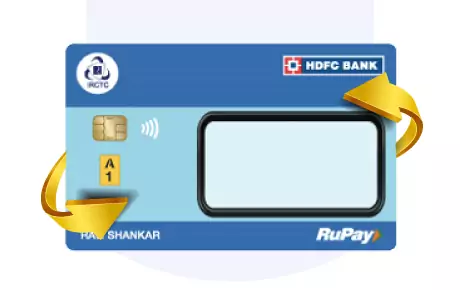
| 1 | HDFC IRCTC Credit Card | ₹500 / ₹500 | 5 reward points per ₹100, an effective 1.25% at ₹0.25 a point | 8 a year, IRCTC Executive Lounges | ₹1,50,000 annual spend |
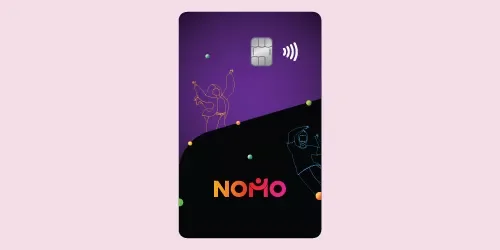
| 2 | AU NoMo Credit Card | ₹199 / nil | 2 reward points per ₹100 on retail, 0.5% at ₹0.25 a point; the record does not classify railway spend | 8 a year, no spend gate | No annual fee to waive |
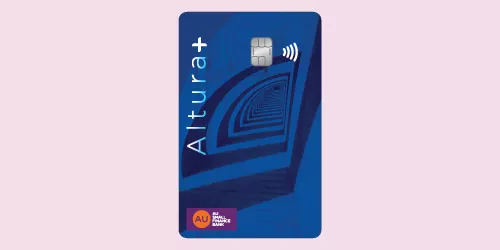
| 3 | AU Bank Altura Plus | ₹499 / ₹499 | 2 reward points per ₹100 online, 0.5% at ₹0.25 a point | 2 a quarter, five named stations | ₹80,000 retail spend, year 2 onward |
| 4 | AU Spont Credit Card | ₹299 / ₹299 | 1% cashback, capped at ₹500 a billing cycle across all spend | 2 a quarter, unconditional | None published |
| 5 | ICICI Coral Credit Card | ₹500 / ₹500 | 2 reward points per ₹100, 0.5% at ₹0.25 a point; the record does not classify railway spend | 1 a quarter | ₹1,50,000 annual spend |
The HDFC IRCTC card leads because it is the only record in the catalogue where rail spend has its own accelerated rate. Five points per ₹100 against a base of one point per ₹100 is a five-fold difference on tickets, and both rates are valued at ₹0.25 a point, so the arithmetic is unusually clean. Eligibility starts at ₹3,00,000 of income, and the card runs on RuPay, so it links to UPI apps, though UPI spends earn the base rate rather than the rail rate.
Second place goes to a card nobody markets as a travel product. The AU NoMo is a secured card issued against a fixed deposit, with a ₹199 joining fee and no annual fee, and its railway lounge allowance carries no spend gate at all. Its airport lounge visits do carry one, at ₹50,000 of spend in the preceding calendar quarter, but the railway half is unconditional. For a traveller whose rail spend is modest and whose station waits are long, that is a better trade than a higher earn rate.
The AU Bank Altura Plus sits third on a narrower benefit: its two visits a quarter run on the Visa railway lounge programme, which our record limits to New Delhi, Kolkata Sealdah, Ahmedabad, Jaipur and Agra. Useful on those routes, dead weight elsewhere.
Why the cashback card already in your wallet pays nothing here
This is the part that catches people out, and it is worth stating plainly. The SBI Cashback Credit Card pays 5% on eligible online spends, capped at ₹2,000 a statement cycle, and railways sit on its exclusion list alongside wallet loading, rent, utility, insurance and education. A rail booking made on it does not earn the headline rate.
Others handle it in their own ways, none of them generous:
- The Kotak 811 #DreamDifferent Credit Card awards no reward points on railway transactions, alongside cash withdrawals and fuel.
- The IDFC FIRST WOW! Credit Card drops railway bookings to a reduced tier of 1 point per ₹150, roughly 0.17%, against 4X on ordinary retail.
- The BookMyShow RBL Bank Play Credit Card strips railways out of the spend count that qualifies for its monthly threshold, so rail tickets do not move a cardholder toward the milestone.
Set that against 1.25% on the co-brand and the gap is not a matter of a few basis points. It is the difference between a category that earns and a category that does not exist as far as the programme is concerned.
Railway lounges are the benefit almost nobody prices
Station lounges are where this category quietly repays a fee, and they are also where a widely repeated claim about the co-brand goes wrong. Our own verification note on the HDFC IRCTC record corrects it: the eight complimentary visits are IRCTC Executive Railway Lounge visits, not domestic airport lounge visits. Anyone buying the card expecting airport access is buying the wrong product, and should read our airport lounge access roundup instead.
Beyond that, the AU Spont carries two unconditional railway lounge visits a quarter on a ₹299 fee, and the ICICI Coral carries one a quarter as a rider on a card built for dining and entertainment. The AU Bank Zenith+ lists IRCTC lounge access among its features without a visit count, which is why we have kept it out of the ranked table rather than guess at one.
A fuel surcharge waiver stops at the pump
Rail travellers reasonably assume the surcharge waivers on their cards travel with them. They do not. A fuel surcharge waiver refunds the roughly 1% a petrol pump adds on a card swipe, and it is keyed to fuel merchant categories, so it has no bearing on a ticket bought through IRCTC. The HDFC IRCTC card's own waiver, on transactions between ₹400 and ₹5,000, is a useful perk that has nothing to do with trains. Our fuel card roundup covers where those waivers genuinely earn their keep.
There is a rail-specific equivalent, and exactly one card in the catalogue carries it: the Kotak League Platinum Credit Card, which lists a railway surcharge waiver. It is the only reason that card appears in a rail guide at all, which is why it sits here rather than in the ranked table above: it has no railway lounge benefit and no accelerated rail earn rate. Our record does not carry a verified cap for the waiver, so ask Kotak what it is worth before you count on it.
How to pick, if you take more than two trains a year
Start with the station rather than the spend. If your regular waits happen at hubs with an IRCTC Executive Lounge, the co-brand's eight visits do more for you in a year than any reward rate in this category, and the ₹500 fee waives at ₹1,50,000 of spend across all categories rather than rail spend alone. If your rail travel is occasional and your credit file is thin, the AU NoMo delivers the same number of unconditional railway lounge visits with no annual fee to recover.
Below that, the plain answer is that no card in the catalogue makes light rail spend worth optimising. A few thousand rupees of tickets a year is a difference of tens of rupees between the best card and an average one, which does not justify a credit enquiry or a card slot. What justifies a card here is time spent at stations, not money spent on fares, and the two are not the same reader.
Sources
- HDFC Bank: IRCTC Credit Card
- HDFC Bank: IRCTC Credit Card terms and conditions (PDF)
- AU Small Finance Bank: NoMo Credit Card
- AU Small Finance Bank: Altura Plus Credit Card
- Kotak Mahindra Bank: League Platinum Credit Card
Disclosure: this post contains affiliate links. If you apply through them we may earn a commission, at no extra cost to you. Our editorial view is independent of that. #ad
Frequently asked
Which is the best credit card for IRCTC booking in India?
The HDFC IRCTC Credit Card is the only co-branded rail card in our catalogue. It earns 5 reward points per ₹100 on IRCTC ticket bookings, an effective 1.25% at its ₹0.25 per point valuation, against a base rate of 1 point per ₹100. It costs ₹500 to join and ₹500 a year, waived on annual spend of ₹1,50,000, and adds 8 complimentary IRCTC Executive Railway Lounge visits a year.
Do cashback credit cards give cashback on IRCTC train tickets?
Often not. The SBI Cashback Credit Card lists railways among the exclusions from its 5% online cashback category, alongside wallet loading, rent, utility, insurance and education. The Kotak 811 #DreamDifferent card awards no reward points on railway transactions at all, and the IDFC FIRST WOW! card drops railway bookings to a reduced tier of 1 point per ₹150, roughly 0.17%. A card's headline online rate is not a safe guide to what a rail booking earns.
Which credit cards give railway lounge access in India?
Five cards in our catalogue carry a quantified railway lounge benefit. The HDFC IRCTC Credit Card gives 8 IRCTC Executive Railway Lounge visits a year. The AU NoMo gives 8 railway lounge visits a year with no spend gate. The AU Bank Altura Plus and AU Spont each give 2 visits a quarter, and the ICICI Coral gives 1 a quarter. The Altura Plus benefit runs on the Visa railway lounge programme and covers New Delhi, Kolkata Sealdah, Ahmedabad, Jaipur and Agra.
Does a fuel surcharge waiver apply to IRCTC bookings?
No. A fuel surcharge waiver is keyed to fuel merchant categories and refunds the roughly 1% surcharge a petrol pump adds. It does nothing on a rail ticket. The rail equivalent is a railway surcharge waiver, and only the Kotak League Platinum Credit Card carries one in our catalogue. Our record does not carry a verified value for it, so treat it as a benefit to confirm with the issuer rather than a number to budget around.
Is the HDFC IRCTC card worth ₹500 a year for occasional train travel?
Only if the station benefits get used. The reward advantage over an ordinary card is around one rupee per hundred spent on tickets, so a household booking a few thousand rupees of rail travel a year recovers very little from points alone. The 8 railway lounge visits are what carry the fee, and the annual fee itself waives at ₹1,50,000 of spend across all categories, not rail spend alone.
Card devaluations, reward maths, and rate changes the day they land.
Follow on X
Reader comments
No comments yet. Share your experience with this card below — the first useful comment helps every reader after you.
Comments are moderated before they appear. Share your real experience with a card — what worked, what didn't, what the bank told you. We don't publish promotional content, referral links, or personal financial details. Keep it useful for other readers.