₹500 a month.
That is the whole accelerated cashback ceiling recorded against the Axis ACE Credit Card, and it settles what the card pays far more firmly than the 5% printed next to it. At 5% on bill payments made through Google Pay, ₹500 arrives after ₹10,000 of spend. The next rupee earns the 1.5% base rate. Every credit card cashback monthly cap India's banks publish behaves on this pattern: a rate that is genuinely true, and a ceiling that ends it without announcement.
Two forces set what a cashback card returns, and only one of them is advertised. The rate is the multiplier. The ceiling is the divisor. Issuers print the first in large type and file the second in a footnote, which is how a card with 10% on its cover pays 2% across a year.
The credit card cashback monthly cap India's product pages bury
The arithmetic is one division. Ceiling divided by accelerated rate gives the monthly spend at which the headline number stops describing anything.
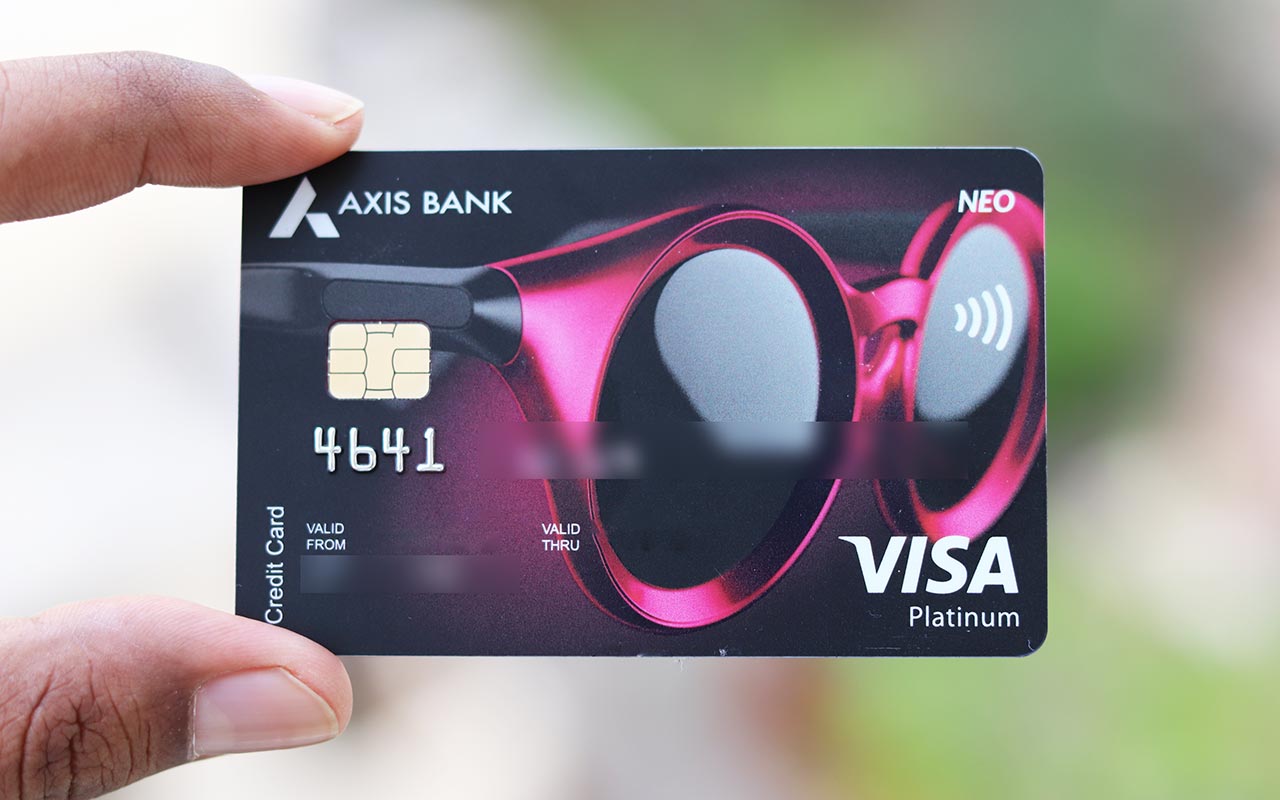
Take the Axis Neo RuPay Credit Card, which shows that division at its simplest and carries two warnings in the same record. It is lifetime free, its structured rate field records 10% on online shopping and 1% on everything else, and its cashback limit is ₹500 a month. ₹500 divided by 10% is ₹5,000. A pair of running shoes and one large grocery order finish the accelerated rate for the month, and across a year that ceiling is worth ₹6,000 whether the cardholder puts ₹5,000 or ₹50,000 a month through it. Now the warnings. That same rate entry describes itself as "10% off on Blinkit, BookMyShow, Myntra", a three-merchant discount rather than cashback across a category, so the structured field and the free text in one record disagree about scope. And the whole accelerated block carries a catalogue verification note: the rates and the merchant list could not be confirmed from the Axis Bank product page, which renders entirely in JavaScript, and were carried forward from an earlier entry. The ₹5,000 is sound arithmetic on a rate nobody has confirmed.
Compare the AU Bank Altura Plus Credit Card, where the ceiling bounds only part of what the card pays. Its cashback rate is 1.5% on POS retail, capped at ₹100 per statement cycle, and ₹100 divided by 1.5% is ₹6,667 of retail spend. Twelve of those is ₹1,200 of cashback a year. That is where the cashback stream stops, and it is not where the card stops: the same record pays 2 Reward Points per ₹100 on online retail with no cap on accumulation, 1 Reward Point per ₹100 on POS spend once the cashback ceiling is reached, and 500 bonus Reward Points in any calendar month carrying ₹20,000 of retail spend. At AU Bank's ₹0.25 a point, that milestone alone is ₹125 a month and ₹1,500 a year, more than the entire cashback ceiling sitting beside it. Set the cashback figure against the fee waiver, which wants ₹80,000 of retail spend in the previous anniversary year to clear a ₹499 annual fee: ₹6,667 a month across twelve months is ₹80,004, so the cashback ceiling fills at almost exactly the spend the waiver demands.
Not every ceiling binds. The Stable Money Suryoday Bank Credit Card pays 0.5% with a ₹3,000 monthly ceiling. Reaching it takes ₹6,00,000 of spend inside one month. For anyone outside that bracket the cap is decorative, and the 0.5% is simply the rate. We have written separately on how credit card cashback works in India, including how the credit actually lands on a statement. This piece is about the number that stops it.
Your cashback cap per statement cycle is not a monthly cap
Issuers run more than one clock, and the clocks are not interchangeable.
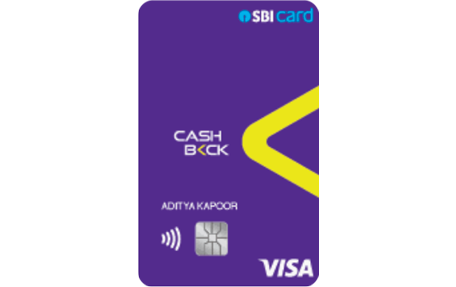
The SBI Cashback Credit Card is explicit in its terms: ₹2,000 on 5% online spends and ₹2,000 on 1% offline spends, each per statement cycle, with a combined ₹4,000 per statement cycle. Statement cycle, not calendar month. HDFC Millennia runs the other clock, capping 1,000 CashPoints on its ten named merchants and 1,000 CashPoints on all other spends per calendar month, 2,000 combined. The HDFC Bank MoneyBack+ Credit Card also runs on the calendar, with 2,500 CashPoints a month across its 10X and 5X EMI buckets. Kiwi resets on the 1st.
That difference is not cosmetic. A ₹40,000 online order split across 29 September and 2 October lands in two separate calendar-month buckets on HDFC Millennia. On the SBI Cashback Credit Card, with a statement that closes mid-month, both halves can fall inside a single cycle and compete for one ₹2,000 ceiling.
Kotak pools its clocks. The Kotak Cashback Plus Credit Card sets a single 750 Reward Point ceiling per statement cycle covering both its 5% online grocery and food delivery rate and its 3% fuel rate. ₹15,000 of qualifying online spend fills it on its own. So does ₹25,000 of fuel. A cardholder who does both in the same cycle gets neither category to its stated saturation point.
Then there is the quarter. The Axis Flipkart Credit Card caps its 7.5% Myntra rate, its 5% Flipkart rate and its 5% Cleartrip rate at ₹4,000 each per statement quarter. The SBI Flipkart Credit Card uses the same ₹4,000 quarterly shape across Myntra, Flipkart, Cleartrip and its 4% partner merchants. ₹4,000 at 7.5% saturates at ₹53,333 of Myntra spend, and the quarterly clock means that entire ₹53,333 can be spent in one week of one month. A quarterly ceiling rewards lumpy spending; a monthly one punishes it.
When the accelerated category cap is not a fixed number
Several 2026 structures replaced the fixed rupee ceiling with something that moves.
The Airtel Axis Bank Credit Card is the clearest case. Since 12 April 2026 its 25% cashback on Airtel mobile, broadband, WiFi and DTH bills paid through the Airtel Thanks App is capped at twice the base cashback earned in the same statement month, where base means the 1% paid on other non-Airtel, non-utility spends. The old fixed ₹250 cap is gone. Work it backwards: a ₹2,000 Airtel bill at 25% is ₹500 of cashback, which needs a ₹500 ceiling, which needs ₹250 of base cashback, which needs ₹25,000 of other spend in that same statement month. The 10% utility rate on the same app is capped at one times base, so it needs ₹50,000 of other spend to pay ₹500. An accelerated category cap of this shape is a function of unrelated spending.
Kiwi moves the goalpost differently. The Kiwi RuPay Credit Card ties its ceiling to 1% of the card's credit limit, resetting on the 1st, with milestone rewards excluded. A cardholder on a starter limit and a cardholder on a large one hold the same product with different ceilings. Redemption adds a second floor: 1 Kiwi is worth ₹0.25 and the minimum redemption is 500 Kiwis.
The Jupiter Edge+ CSB Bank RuPay Credit Card denominates its caps in Jewels rather than rupees, a change effective 1 June 2026. Online shopping earns 50% Jewels, capped at 10,000 Jewels per billing cycle, 3,000 Jewels per merchant and 1,000 Jewels per transaction. A Jewel is worth ₹0.20 against vouchers, digital gold, Jupiter Flights or the Jupiter Store, and ₹0.14 against statement credit. The identical 10,000-Jewel ceiling is therefore ₹2,000 or ₹1,400, decided months later at redemption.
Two more variants are worth naming. The Axis Samsung Signature Credit Card stacks ceilings: 10% on Samsung purchases capped at ₹2,500 a month and ₹10,000 a year, so the annual limit is four full months and the other eight are worth nothing on that category. The IndianOil HDFC Bank Credit Card changes its own ceiling with age, allowing 250 Fuel Points a month for the first six months and 150 a month afterwards. At 5 Fuel Points per ₹100 that is ₹5,000 of monthly fuel falling to ₹3,000, and at ₹0.96 per Fuel Point the steady-state ceiling is ₹144 a month, ₹1,728 a year.
One issuer caps the input instead of the output. The IndianOil Axis Bank Credit Card pays 20 EDGE Reward Points per ₹100 at IndianOil pumps, worth 4%, with accelerated earning capped at ₹5,000 of monthly fuel spend, which is ₹200 a month.
Where the headline rate stops and the effective cashback rate begins
The Axis Bank Cashback Credit Card rewards the arithmetic more than any other card here, because its online rate is tiered: 2% on the first ₹5,000, 5% from ₹5,001 to ₹40,000, and 7% above ₹40,000, all under a single ₹4,000 monthly online ceiling.
Run it. The first ₹5,000 pays ₹100. The next ₹35,000 at 5% pays ₹1,750, so ₹40,000 of online spend has produced ₹1,850. Headroom to the ceiling is ₹2,150, and 7% covers ₹2,150 in ₹30,714 of further spend. The cap therefore binds at ₹70,714 of online spend in a month. At exactly that point the effective cashback rate is ₹4,000 divided by ₹70,714, or 5.66%. Push online spend to ₹1,00,000 and the cashback is still ₹4,000, an effective rate of 4.00%. At ₹2,00,000 it is 2.00%. The 7% is a marginal rate on one band of spend and is never the rate on a month.
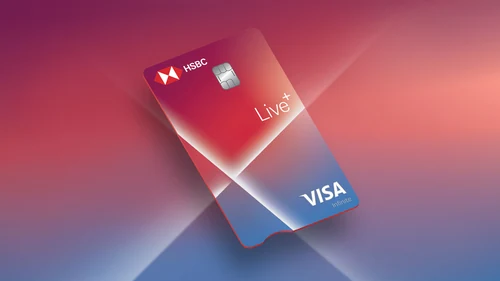
The HSBC Live+ Credit Card shows the same shape with a softer landing, because its base rate survives the ceiling. Its 10% covers dining, food delivery, grocery, shopping and utility under one combined ₹1,200 monthly ceiling, saturating at ₹12,000 of accelerated spend, while the 1.5% base rate is uncapped. At ₹25,000 of category spend the month pays ₹1,200 plus 1.5% of the remaining ₹13,000, which is ₹1,395, an effective rate of 5.58%. At ₹40,000 it pays ₹1,620, or 4.05%. Amazon, Flipkart and Myntra sit outside the 10% list and earn 1.5% from the first rupee.
The SBI Cashback Credit Card inverts the usual complaint. Its ₹2,000 online ceiling per statement cycle needs ₹40,000 of online spend to fill, while its ₹2,000 offline ceiling at 1% needs ₹2,00,000 of offline spend and will almost never bind. Its ₹999 annual fee is waived at ₹2,00,000 of annual spend, which is ₹16,667 a month, comfortably below the online saturation point. On that card the fee waiver arrives well before the ceiling does.
One more pattern is worth separating out, because it changes what a ceiling means. On the HDFC Bank MoneyBack+ Credit Card the 2,500 CashPoint monthly ceiling is denominated in points worth ₹0.25 each, so the ceiling is ₹625 a month. At 20 CashPoints per ₹150 on Amazon, Flipkart, BigBasket, Swiggy and Reliance Smart SuperStore, that ceiling fills at ₹18,750 of spend, and ₹625 on ₹18,750 is 3.33%. A point ceiling and a rupee ceiling describe the same limit, but only one of them can be compared against another card without conversion.
Here is where each headline rate stops being a description of the card. The last column counts one named ceiling only, not every bucket the card runs and not any uncapped rate beneath it.
| Card | Headline rate | Ceiling and reset period | Category spend that fills it | Most that one ceiling pays in a year |
|---|---|---|---|---|
| HSBC Live+ Credit Card | 10% on five categories | ₹1,200, monthly, combined | ₹12,000 | ₹14,400 |
| SBI Cashback Credit Card | 5% online | ₹2,000, statement cycle | ₹40,000 | ₹24,000 |
| HDFC Millennia | 5% on ten named merchants | 1,000 CashPoints, calendar month | ₹20,000 | ₹12,000 |
| HDFC Swiggy BLCK Credit Card | 10% on Swiggy app | ₹1,500, monthly | ₹15,000 | ₹18,000 |
| Kotak Cashback Plus Credit Card | 5% online grocery and food delivery | 750 Reward Points, statement cycle | ₹15,000 | about ₹9,000 |
| Axis Flipkart Credit Card | 7.5% on Myntra | ₹4,000, statement quarter | ₹53,333 per quarter | ₹16,000 |
| Axis Neo RuPay Credit Card | 10% on online shopping, unconfirmed | ₹500 a month, period unstated | ₹5,000 | ₹6,000 |
| AU Bank Altura Plus Credit Card | 1.5% on POS retail | ₹100, statement cycle | ₹6,667 | ₹1,200 |
One row carries a period the catalogue does not specify, and that gap is itself the finding. The Axis Neo RuPay record fixes its ceiling at ₹500 and never says whether it follows the statement or the calendar, so a cardholder cannot know which purchases share a bucket. Every other ceiling above names its clock, the AU Bank Altura Plus at ₹100 per statement cycle included.
What the cap actually leaves you
The number worth writing down for any cashback card is not its rate. It is the ceiling multiplied by twelve, or by four for a quarterly structure, minus the annual fee. That figure is the most the cashback stream can ever hand back, and it is knowable before application. It is not always the most the card hands back: where an uncapped base rate runs underneath, or a points programme runs alongside, the ceiling bounds one stream and not the account.
By that measure the SBI Cashback Credit Card's 5% online bucket tops out at ₹2,000 a statement cycle, which is ₹24,000 across twelve cycles, and its 1% offline bucket adds a second ₹2,000 a cycle for a combined ₹48,000 a year, against a ₹999 fee waived at ₹2,00,000 of spend. The HDFC Swiggy BLCK Credit Card has the same combined shape, built from ₹1,500 a month on Swiggy, ₹1,500 on select online merchants and ₹1,000 on everything else: ₹18,000 a year on the Swiggy bucket alone, ₹48,000 across all three.
Our catalogue disagrees with itself on that third bucket. Its structured cap fields carry ₹1,000 a month and a ₹4,000 combined ceiling, while the same record's feature list writes the bucket as ₹500 a month, which would put the combined figure at ₹3,500 a month and ₹42,000 a year. We follow the structured fields, and the annual fee of ₹1,000 is waived at ₹2,00,000 of spend on either reading.
The HSBC Live+ Credit Card allows ₹14,400 of accelerated cashback a year plus an uncapped 1.5% underneath, against a ₹999 annual fee reversed above ₹2,00,000 of anniversary-year spend and a ₹999 joining fee that is not waivable at all. At the far end of the same scale, the AU Bank Altura Plus Credit Card allows ₹1,200 of cashback a year, with its Reward Points running separately and without a ceiling.
Ranked by ceiling, the order of these cards has almost nothing to do with the order of their advertised rates. A 10% card with a ₹500 month sits below a 5% card with a ₹2,000 cycle, and both sit below a 1% base rate with no ceiling once spend runs high enough. The rate decides how fast the bucket fills. The ceiling decides how large the bucket was, and for most cardholders in most months that second number is the one doing the work.
Full fee, cap and category detail for the cards above sits on their pages: SBI Cashback Credit Card, HSBC Live+ Credit Card, Axis Neo RuPay Credit Card and Axis ACE Credit Card.
Sources
- PickMyCard card catalogue, verified against issuer Most Important Terms and Conditions documents. Source of all rate, ceiling, fee and waiver figures in this post. Catalogue
verifiedAtdates for the cards cited range from 2026-05-05 (Axis ACE Credit Card, Axis Bank Cashback Credit Card) through 2026-07-13 (HDFC Millennia, SBI Cashback Credit Card, Kiwi RuPay Credit Card) to 2026-08-06 (HSBC Live+ Credit Card). Checked 14 September 2026. - SBI Card, Cashback SBI Card product page and Key Fact Statement, https://www.sbicard.com/en/personal/credit-cards/cashback-sbi-card.html and https://www.sbicard.com/sbi-card-en/assets/docs/pdf/key-fact-statement.pdf. Source of the ₹2,000 per statement cycle online and offline caps and the ₹999 fee waiver threshold. Checked 14 September 2026.
- HSBC India, Live+ Credit Card product page and services guide, https://www.hsbc.co.in/credit-cards/products/live-plus/ and https://www.hsbc.co.in/content/dam/hsbc/in/documents/credit-cards/live-plus-credit-card-services-guide.pdf. Source of the combined ₹1,200 monthly accelerated ceiling, the uncapped 1.5% base rate and the Amazon, Flipkart and Myntra exclusion. Checked 14 September 2026.
- HDFC Bank, Millennia Credit Card terms PDF, https://www.hdfc.bank.in/content/dam/hdfcbankpws/in/en/personal-banking/discover-products/cards/credit-cards/millennia-credit-card/hdfc-bank-millennia-credit-card.pdf. Source of the 1,000 CashPoints per calendar month caps and the 1 CashPoint equals ₹1 statement-credit value. Checked 14 September 2026.
- Axis Bank, Cashback Credit Card page and credit card MITC, https://www.axis.bank.in/cards/credit-card/cashback-credit-card and https://www.axis.bank.in/docs/default-source/default-document-library/mitc-credit-cards.pdf. Source of the tiered 2%, 5% and 7% online bands and the ₹4,000 monthly online cap. Checked 14 September 2026.
- Axis Bank, ACE Credit Card page, https://www.axisbank.com/retail/cards/credit-card/axis-bank-ace-credit-card, and Neo RuPay Credit Card page, https://www.axisbank.com/retail/cards/credit-card/axis-bank-neo-credit-card. Source of the 5% Google Pay bill payment rate, the 1.5% base rate and the ₹500 monthly ceilings. The Neo RuPay accelerated rate and merchant list carry a catalogue verification note recording that neither could be read from this page, which renders in JavaScript; the figures are carried from an earlier catalogue entry and are flagged as unconfirmed in the body above. Checked 14 September 2026.
- PickMyCard card catalogue record for the Jupiter Edge+ CSB Bank RuPay Credit Card,
verifiedAt2026-07-13. Source of the 10,000 Jewels per billing cycle ceiling, the 3,000 per merchant and 1,000 per transaction sub-caps, and the ₹0.20 and ₹0.14 Jewel values effective 1 June 2026. No issuer URL is cited: the card is issued by CSB Bank, and the only source URLs the catalogue carries for it belong to Jupiter, the fintech partner rather than the bank. Checked 14 September 2026. - AU Small Finance Bank, Altura Plus Credit Card page and credit card MITC, https://www.au.bank.in/personal-banking/credit-cards/altura-plus-credit-card and https://www.au.bank.in/credit-cards/mitc%28with-schedule-of-charges%29.pdf. Source of the ₹100 per statement cycle cashback ceiling, the uncapped 2 Reward Points per ₹100 online rate, the 500-point monthly milestone, the ₹499 annual fee and the ₹80,000 retail spend waiver condition. The catalogue notes that the product page is Cloudflare-protected and that these values were read from official-page search snippets rather than a direct fetch. Checked 14 September 2026.
- HDFC Bank, Swiggy BLCK Credit Card page and terms PDF, https://www.hdfc.bank.in/credit-cards/swiggy-blck-hdfc-bank-credit-card and https://www.hdfc.bank.in/content/dam/hdfcbankpws/in/en/personal-banking/discover-products/cards/credit-cards/swiggy-blck-hdfc-bank-credit-card/pdf/t-and-cs-swiggy-blck-hdfc-bank-credit-card-04-03-2026.pdf. Source of the ₹1,500, ₹1,500 and ₹1,000 monthly component caps and the ₹4,000 combined ceiling. Checked 14 September 2026.
Disclosure: this post contains affiliate links. If you apply through them we may earn a commission, at no extra cost to you. Our editorial view is independent of that. #ad
Frequently asked
What is a monthly cap on a cashback credit card?
It is the maximum cashback the card will credit in one month or one statement cycle, regardless of spend. The HSBC Live+ Credit Card stops at ₹1,200 a month across its accelerated categories. Once that ceiling is reached, further category spend earns only the base rate.
Is the cashback cap per statement cycle or per calendar month?
It varies by issuer and both exist. The SBI Cashback Credit Card caps ₹2,000 per statement cycle. HDFC Millennia caps 1,000 CashPoints per calendar month. The Axis Flipkart Credit Card caps ₹4,000 per statement quarter, so it refills only four times a year.
How do you calculate the effective cashback rate after the cap?
Divide the monthly ceiling by your actual category spend for that month. At ₹1,00,000 of online spend on the Axis Bank Cashback Credit Card, the ₹4,000 monthly online cap works out to 4%, not the 7% top tier printed on the product page.
Which cashback cards in India have no monthly cap?
Nine of the 29 active cards in our catalogue that carry a cashback block record no monthly cap, roughly a third of the segment. Two of those nine, the Axis Flipkart Credit Card and the SBI Flipkart Credit Card, cap quarterly at ₹4,000 instead. The HSBC Live+ base rate of 1.5% is uncapped.
Card devaluations, reward maths, and rate changes the day they land.
Follow on X
Reader comments
No comments yet. Share your experience with this card below — the first useful comment helps every reader after you.
Comments are moderated before they appear. Share your real experience with a card — what worked, what didn't, what the bank told you. We don't publish promotional content, referral links, or personal financial details. Keep it useful for other readers.