RBL Bank sells the World Safari on one line of copy: zero markup on foreign currency. We are going to refuse that framing before the first figure, because a markup waiver that costs ₹3,540 a year is not a waiver. It is a prepayment. This RBL World Safari credit card review starts from the number that prepayment implies, ₹85,714, which is the annual foreign spend at which the card stops costing money and begins saving it.
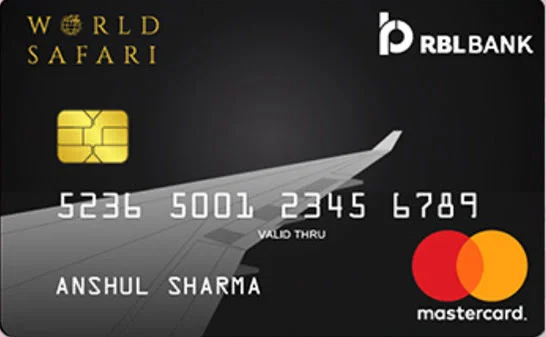
Nothing in the specification is hidden. The RBL Bank World Safari Credit Card charges ₹3,000 to join and ₹3,000 to renew, pays 2 reward points per ₹100 on general spend and 5 per ₹100 on travel, and our catalogue prices those points at roughly ₹0.25 each. Multiply it out and the earn rate is 0.5% and 1.25%. Those are not premium numbers at a premium fee. The case for this card therefore has to be carried by something other than earning, and the rest of this review is an attempt to find out whether it holds.
Start this RBL World Safari credit card review with the fee, not the forex line
Joining costs ₹3,000 and renewal costs ₹3,000, billed at about ₹3,540 once GST is added. No spend-linked waiver appears in the card's published terms, which is worth stating plainly rather than leaving in a footnote: a travel credit card annual fee with no escape hatch is charged whether the card works hard or sits in a drawer.
So the first thing the card has to survive is a subtraction, and both sides of that subtraction have to carry tax or the comparison cheats. Our fee is ₹3,000 plus 18% GST, ₹3,540. A rival's 3.5% forex markup attracts the same 18%, so it bills 4.13% of every converted transaction. Set the two against each other and the crossing point is ₹85,714 of foreign-currency spend in a year: ₹3,540 against a 4.13% effective markup, or ₹3,000 against the 3.5% headline, the same number arrived at either way. Below it, the zero markup is costing its holder money. Above it, the saving is real and grows in a straight line. Against a 3% markup the crossing sits at ₹1,00,000, and against 2% it sits at ₹1,50,000. Push ₹2,00,000 of foreign spend through in a year and a 3.5% card bills ₹8,260 in markup and tax while the World Safari bills nothing, a ₹4,720 gain after the fee is paid. All three break-evens count markup alone. None of them includes the reward points a rival card would still pay on that same foreign spend, which pushes the true crossing point higher again.
Two conclusions follow, and they point in opposite directions. A 0% markup at a ₹3,000 fee is genuinely uncommon, since most cards in this band still skim 2% or more, and it is the strongest single line on the card. Yet ₹85,714 is not a casual bar. It works out to roughly ₹7,143 every month in foreign currency, which describes someone paying for overseas travel and foreign-billed software all year, not someone taking one holiday abroad. We worked through the wider version of that trade-off in our piece on zero forex markup versus lounge access, and the conclusion survives contact with this card.
One softener applies in year one only. Activation pays a ₹3,000 MakeMyTrip voucher, which cancels the joining fee almost exactly and makes the first twelve months close to free. It does not repeat.
What 2 points per ₹100 is actually worth
At ₹0.25 a point, 2 points per ₹100 returns 50 paise per ₹100, or 0.5%. Travel spend at 5 points per ₹100 returns ₹1.25 per ₹100, or 1.25%, and only where the merchant codes as travel. Flights and hotels booked directly or through the large travel portals qualify. A coffee bought inside the terminal generally will not. Travel coding changes the shape only slightly. At 1.25%, ₹2,00,000 of flights and hotels booked on the card returns ₹2,500, still short of a single year's renewal on its own.
Now push ₹7,50,000 of general spend through the card across a full year. Base earning comes to 15,000 points, worth ₹3,750. Set the ₹3,540 renewal against it and the surplus is ₹210. An entire year of heavy billing, and the points rate on its own has barely paid for the privilege of holding the card.
That is the card's real weakness, and it compounds from two directions at once: the multiplier is low, and the point is worth ₹0.25. Statement-credit redemption dilutes that ₹0.25 further, so vouchers are the sensible exit from RBL's catalogue rather than cash. Anyone parking groceries, utility bills or rent here is buying 0.5% when a flat cashback card sells more. The World Safari is not a one-card setup, and its own benefit design never pretends otherwise.
The milestone ladder is doing the work the points rate cannot
Three annual spend milestones sit on top of the base rate, and they stack rather than replace each other. At ₹2,50,000 of annual spend RBL credits 10,000 bonus reward points. At ₹5,00,000 it credits 15,000 more. At ₹7,50,000 it hands over a ₹10,000 gift voucher redeemable across Taj Experiences, Amazon, Croma, Myntra and MakeMyTrip.
Priced at ₹0.25, those milestone bonus points are worth ₹2,500 and ₹3,750. Add the voucher at face value and a cardholder who clears ₹7,50,000 collects ₹16,250 in milestones on top of ₹3,750 in base points. Total return ₹20,000, less the ₹3,540 fee, so ₹16,460 net on ₹7,50,000 of spend. Call it 2.19% all in, which is a completely different card from the 0.5% one described a section ago.
Shape matters more than the total here, and this is the second thing the card has to survive. The first ₹2,50,000 earns ₹1,250 in base points plus ₹2,500 in bonus, ₹3,750 in all, which clears the fee by ₹210 and nothing more. A second ₹2,50,000 adds ₹1,250 plus ₹3,750, a 2% marginal return. The final stretch from ₹5,00,000 to ₹7,50,000 adds ₹1,250 in points and a ₹10,000 voucher, so ₹11,250 on ₹2,50,000 of spend, a 4.5% marginal rate. Nothing else on this card returns 4.5%.
Because no spend-based fee waiver exists, that ladder is the only mechanism making renewal pay from year two onward, and every rung is all or nothing. A holder who finishes the year at ₹7,00,000 has done 93% of the required spending and collected none of the ₹10,000 voucher. Front-loading large travel bookings early in the year, and pooling family spend onto one account through add-on cards, are the two practical ways to keep that from happening.
Five other zero-markup cards, and what the free ones give up
A waived forex markup no longer commands a premium by itself. Of the 86 active cards in our catalogue, six carry a 0% forex markup, which leaves five rivals to this one, and three of those five cost nothing at all to hold.
| Card | Annual fee | Forex markup | Base earn value | Lounge visits a year |
|---|---|---|---|---|
| RBL Bank World Safari | ₹3,000 | 0% | 0.5% (2 points per ₹100 at ₹0.25) | 8 domestic, 2 international |
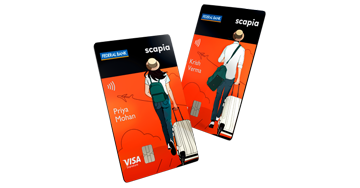
| Federal Bank Scapia | ₹0 | 0% | 2% on Visa-variant spends, nothing on international spends | Unlimited domestic above a ₹20,000 monthly spend gate, none international |
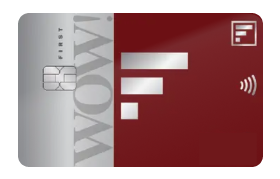
| IDFC FIRST WOW! | ₹0 | 0% | 1.0% (4 points per ₹100 at ₹0.25) | None |
| BOBCARD Uni GoldX | ₹0 | 0% | 1.0% (100 Uni Coins per ₹100) | None |
| IDFC FIRST Mayura | ₹5,999 | 0% | 1.25% (5 points per ₹100 at ₹0.25) | 16 domestic, 16 international |
| BOBCARD Etihad Guest Premium | ₹5,000, waived at ₹5,00,000 spend | 0% | 1.4% (2 miles per ₹100 at ₹0.70) | 12 domestic, 8 international |
Two qualifiers belong under that table before it is used, and both land on free rows. The BOBCARD Uni GoldX waives the markup but pays no gold reward on international spends at all, so its 1% is a domestic-only number. The Federal Bank Scapia does the same thing in a different currency: our record's 8 August 2026 verification note states that all international spends earn no Scapia Coins, even though the card charges no markup on them. So the most attractive free row in the table is lifetime free, zero markup, and completely blank on the exact transactions this review is about. It saves the 4.13%. It pays nothing on top of the saving, and its Coins redeem only inside the Scapia app for travel.
The row the World Safari really has to survive is the IDFC FIRST WOW! Credit Card. It waives forex markup exactly as completely, costs ₹0 a year, and its catalogue record carries 4 reward points per ₹100 at the same ₹0.25 valuation, so 1% back against the World Safari's 0.5%. Our record disagrees with itself on that rate, and the disagreement is worth stating rather than hiding: the structured earn field reads 4 points per ₹100, while the written analysis on the same record describes 4 points per ₹150, which would be 0.67%. We use the structured field throughout, the reading generous to the free card, so that the World Safari is judged against the stronger version of its rival.
One further fact has to enter before any crossover is drawn. Effective 18 June 2026, the FIRST WOW! earns reward points only on spends up to the cardholder's assigned credit limit in each billing cycle, and spend beyond that inside the same cycle earns nothing. It is a secured card, and the limit is set at 100% of the fixed deposit behind it, with a floor of ₹20,000. A holder at that floor therefore earns on at most ₹20,000 a month, ₹2,40,000 across a year, however much more goes through the card. Running the comparison at ₹5,00,000 or ₹7,50,000 against a ₹20,000 deposit is not a comparison at all, because the free card stopped earning less than halfway up.
So run both at the spend the free card can actually reach on its minimum deposit. At ₹2,40,000 of annual billing the IDFC FIRST WOW! Credit Card returns 9,600 points, ₹2,400, and costs nothing. The World Safari returns ₹1,200 in base points, clears no milestone rung, and charges ₹3,540, finishing ₹2,340 down. A gap of ₹4,740 in the free card's favour.
Raise the spend and it is the milestone rungs, not the earn rate, that close that gap. At ₹2,50,000 the first rung pays 10,000 points and the World Safari finishes ₹210 in the black, still ₹2,190 behind the capped ₹2,400. At ₹4,00,000 it finishes ₹960 up, ₹1,440 behind. Closure arrives at the ₹5,00,000 rung and arrives abruptly: 15,000 more points, ₹3,750, take the World Safari to ₹5,210 net while the capped free card sits at ₹2,400 still. A ₹2,810 swing at one spend level, and that is the crossover.
None of it is fixed, because the cap moves with the deposit. Earning points on ₹5,00,000 a year needs a credit limit near ₹41,667 a month, and so a fixed deposit of about the same. ₹7,50,000 a year needs roughly ₹62,500 locked up. A holder willing to park ₹62,500 gets the free card back to ₹7,500 a year, against ₹16,460 net on the World Safari at that spend, ₹8,960 the other way. What the arithmetic offers is therefore not free card against paid card. It is an annual fee against locked capital, and the World Safari wins that trade only once annual billing clears ₹5,00,000. Its rival's other limits are unchanged by any of this: no lounge access whatsoever, and a cut to 1 point per ₹100 on utilities, railways, FASTag and insurance.
Priority Pass, golf rounds and the quarterly gate
Priority Pass lounge access is the second reason people apply for this card, and the membership is genuinely complimentary across 1,400-plus international lounges. The entitlement is narrower than the membership sounds. International visits run to two per calendar year, plus one extra per quarter after ₹50,000 of spend in that quarter. Domestic access runs two visits a quarter, eight a year at most, and each quarter's pair is released only after ₹35,000 of spend in the previous calendar quarter. Two international visits a year is one return trip through one lounge, and that is worth stating rather than leaving implied beneath the 1,400-lounge headline.
That retrospective gate is the third weakness worth flagging. A cardholder billing ₹25,000 a month, ₹75,000 a quarter, clears it without thinking about it. Someone using the World Safari strictly for foreign transactions and travel bookings can spend nothing in a quiet quarter and reach the airport in the next one with zero domestic visits available. The benefit exists. Its trigger is easy to miss because it was set three months earlier.
The remainder of the bundle is conventional for the price: four complimentary golf rounds a year, a 24/7 concierge, travel insurance, and a 1% fuel surcharge waiver on transactions between ₹500 and ₹4,000, capped at ₹250 a month. That fuel cap is worth ₹3,000 a year at absolute maximum, and reaching it requires ₹25,000 of monthly fuel spend on this card, which contradicts every other thing this review has said about where the card belongs.
Where this card stops making sense
Eligibility is not the constraint. RBL sets a ₹3,00,000 minimum annual income and an age band of 21 to 65, and accepts salaried and self-employed applicants alike, so approval arrives well before the spending profile that justifies the fee does.
Every stop signal here is arithmetic rather than taste. Annual foreign spend under ₹85,714 means the zero markup fails to cover ₹3,540 against a 3.5% card once GST is applied to both sides, and under ₹1,50,000 it fails against a 2% card. Total annual billing under ₹5,00,000 means a lifetime-free zero-markup card returns more once the fee is subtracted, and that holds even after the FIRST WOW!'s credit-limit cap is applied against it. Quarterly spend under ₹35,000 means the eight domestic lounge visits stay theoretical, quarter after quarter. One more signal sits outside the fee maths: where the foreign spend is real but domestic billing is thin, the Federal Bank Scapia removes the markup for ₹0, as long as nothing is expected back in rewards on those foreign transactions.
Where it holds together is narrow and specific: an international traveller moving ₹1,50,000 to ₹2,00,000 a year through the card in foreign currency, routing household and travel spending through the same account to reach ₹7,50,000, and treating the ₹10,000 voucher as the renewal payment rather than a windfall. That profile collects ₹8,260 of avoided markup and tax at 3.5%, ₹16,250 of milestone value and eight lounge visits, for ₹3,540. We rate the card 3.6 out of 5. The forex line and the top milestone rung are excellent, and the 0.5% base rate, the missing fee waiver and three free rivals that waive the same markup are what keep the score where it is.
Full fee schedule and benefit conditions sit on our RBL Bank World Safari card page, and the free comparison runs through the IDFC FIRST WOW! page.
Sources
- RBL Bank, World Safari Credit Card product page, https://www.rbl.bank.in/personal-banking/cards/credit-cards/world-safari-credit-card, source of the ₹3,000 joining and annual fee, the 0% forex markup, the 2 and 5 reward points per ₹100 rates, the three-tier milestone structure, the ₹3,000 MakeMyTrip welcome voucher, the Priority Pass entitlement and its ₹35,000 and ₹50,000 spend gates, the golf and concierge benefits, and the fuel surcharge waiver terms. Checked 14 September 2026.
- IDFC FIRST Bank, FIRST WOW! Credit Card pages, https://www.idfcfirst.bank.in/credit-card/wow and https://www.idfcfirst.bank.in/credit-card/benefits/rewards-points, source of the lifetime-free fee, the zero forex markup, the ₹20,000 minimum fixed deposit, the 4 points per ₹100 rate, and the reduced 1X rate on utilities, railways, FASTag and insurance. The 18 June 2026 restriction limiting point earning to spends up to the assigned credit limit per billing cycle is recorded in our catalogue's 2 July 2026 verification note on this card; we could not confirm it on a standalone issuer notice page, and the note is what we cite it to. The same record's internal disagreement over 4 points per ₹100 against 4 points per ₹150 is noted in the body. Checked 14 September 2026.
- Scapia, Coins and Airport Privileges pages, https://www.scapia.cards/product/blog/scapia-coins and https://www.scapia.cards/product/blog/scapia-s-airport-privileges, source of the Federal Bank Scapia earn rates and the 5:1 Coins-to-rupee conversion behind the 2% figure. That international spends earn no Coins comes from our catalogue's 8 August 2026 verification note on the card. Checked 14 September 2026.
- IDFC FIRST Bank, FIRST Mayura Credit Card page, https://www.idfcfirst.bank.in/credit-card/metal-credit-card/mayura, source of the ₹5,999 fee, the zero forex markup, the 5 points per ₹100 base rate and the quarterly lounge entitlement. Checked 14 September 2026.
- BOBCARD, Etihad Guest Premium page, https://www.bobcard.co.in/credit-card-types/bobcard-etihad-guest-premium, source of the ₹5,000 fee and its ₹5,00,000 annual spend waiver, the 2 Etihad Guest Miles per ₹100 base rate, and the 12 domestic and 8 international lounge visits. Checked 14 September 2026.
- BOBCARD, Uni GoldX page, https://www.bobcard.co.in/credit-card-types/bobcard-uni-goldx, source of the lifetime-free structure, the 1% back as 24K digital gold at 100 Uni Coins to ₹1, and the exclusion of international transactions from rewards. Checked 14 September 2026.
- pickmycard.in catalogue, card-level figures verified against issuer Most Important Terms and Conditions documents, and the source of the ₹0.25 per reward point and ₹0.70 per mile valuations used in every calculation above, and of the count of six active cards at 0% forex markup across 86 active records. Record verification dates: World Safari, FIRST WOW! and FIRST Mayura 2026-07-02; Etihad Guest Premium 2026-05-27; Uni GoldX 2026-08-01; Federal Bank Scapia 2026-08-08. Checked 14 September 2026.
Disclosure: this post contains affiliate links. If you apply through them we may earn a commission, at no extra cost to you. Our editorial view is independent of that. #ad
Frequently asked
How much do I need to spend abroad for the RBL World Safari to pay for itself?
About ₹85,714 a year. The card bills ₹3,000 plus GST, roughly ₹3,540, and a rival's 3.5% markup carries GST too, so it bills 4.13% and takes ₹3,540 on ₹85,714 of foreign spend. Against a 2% markup card the break-even moves to ₹1,50,000, markup alone.
What are the RBL World Safari milestone bonus points worth in rupees?
₹16,250 if all three rungs are cleared. The 10,000 points at ₹2,50,000 of annual spend are worth ₹2,500 at a ₹0.25 catalogue value, the 15,000 points at ₹5,00,000 add ₹3,750, and the ₹7,50,000 rung pays a ₹10,000 gift voucher at face value rather than in points.
Does the RBL World Safari annual fee get waived on spend?
No waiver condition appears in the card's published terms, so the ₹3,540 renewal is charged regardless of spend. A ₹3,000 MakeMyTrip voucher on activation covers year one almost exactly, and from year two the ₹10,000 milestone voucher at ₹7,50,000 of annual spend is what offsets the renewal.
How does the RBL World Safari Priority Pass lounge access work?
Complimentary Priority Pass membership covers 1,400-plus international lounges, with two international visits a year plus one more per quarter after ₹50,000 of spend. Domestic access runs two visits a quarter, eight a year at most, and each quarter's pair needs ₹35,000 of spend in the quarter before.
Card devaluations, reward maths, and rate changes the day they land.
Follow on X
Reader comments
No comments yet. Share your experience with this card below — the first useful comment helps every reader after you.
Comments are moderated before they appear. Share your real experience with a card — what worked, what didn't, what the bank told you. We don't publish promotional content, referral links, or personal financial details. Keep it useful for other readers.