A ₹10,000 hotel bill settled in a foreign currency on a card carrying a 3.5% markup arrives on the statement at ₹10,413. Of that, ₹350 is the markup and ₹63 is GST, charged at 18% on the markup itself. The printed rate is 3.5%. The billed rate is 4.13%. Six of the 86 active cards in our catalogue charge nothing at all on that same transaction, which is what makes the lowest forex markup credit cards in India worth 4.13 paise in every rupee sent abroad, before a single reward point is counted.
That gap is the whole subject of this guide. It is also more interesting than it first looks, because the six cards at 0% are not uniformly free, two of them pay nothing whatsoever on a foreign transaction, and the cheapest markup in the market is not automatically the cheapest card to own.
What the lowest forex markup credit cards actually save
The mechanic is worth stating precisely, because the international transaction fee issuers levy is not an exchange-rate spread in the usual sense. Visa, Mastercard or American Express convert the foreign-currency amount at the network rate applicable on the settlement date. Your issuer then adds its own percentage on top of that converted rupee figure. ICICI Bank describes exactly this on its international transactions page: the network rate on settlement date, increased by a currency conversion factor of 3.50%.
GST then applies to the markup as a fee. AU Small Finance Bank's schedule of charges states the position plainly: "Goods and Services Tax (GST) 18% applicable on all fees, interest & charges." Multiply 3.5% by 1.18 and the effective rate is 4.13%. A 1.99% markup bills at roughly 2.35%. A 0.99% markup bills at roughly 1.17%.
Scale that across a year of cross-border spend and the numbers stop being rounding errors:
- ₹1,00,000 of foreign spend on a 3.5% card: ₹3,500 markup plus ₹630 GST, or ₹4,130.
- ₹3,00,000 of foreign spend: ₹10,500 plus ₹1,890, or ₹12,390.
- ₹5,00,000 of foreign spend: ₹17,500 plus ₹3,150, or ₹20,650.
On a 0% card, every one of those three figures is zero. A family holiday, a semester's tuition instalment, one long work trip billed to a personal card: any of these can put ₹3,00,000 through a card in a year without the spend feeling extravagant, and ₹12,390 is a real amount of money to hand over for nothing in return.
Forex markup charges across the 86-card catalogue
Our catalogue tracks 86 active cards, and 70 of them record a forex markup figure. Forty-two of those 70, three in every five, sit at exactly 3.5%. That is also the highest markup recorded anywhere in the catalogue. Nothing we track charges more, which means 3.5% functions as the market's default rather than its penalty rate.
Below that default the distribution thins out, and it thins out in an odd shape. Five cards sit within a tenth of a point of the default without matching it: four at 3.49% and one at 3.4%, the YES BANK POP-CLUB Credit Card. All four of the 3.49% cards are AU Small Finance Bank products, the AU Spont, AU Bank InstaPay, AU Bank Altura Plus and AU LIT cards. Undercutting the market default by 0.01 of a percentage point saves ₹1.18 including GST on a ₹10,000 foreign transaction, which is a price-list gesture rather than a benefit.
Two cards occupy the band between there and 2%: the Kredit.Pe Yes Bank ACE Credit Card at 2.75% and the IndiGo Axis Bank Premium Credit Card at 2.5%. Five cards sit at exactly 2%, four at 1.99%, two at 1.8%, one at 1.75% and one at 1.49%. Eight cards sit at 1.00% or lower. Six of those eight are at zero, the AU NoMo Credit Card is at 0.99% with a one-time joining fee of ₹199 and no annual fee thereafter, and the BOBCARD Etihad Guest sits at exactly 1.00% for a ₹2,500 annual fee waived on annual spend of ₹3,00,000 or more. Those groups account for all 70 cards: 42 plus 5 plus 2 plus 5 plus 4 plus 2 plus 1 plus 1 plus 8.
One conflict in that ranking needs naming rather than resolving. AU Small Finance Bank's Most Important Terms and Conditions, the same document we cite for the NoMo card's 0.99%, gives the AU Bank Zenith+ Credit Card a markup of 0.99% as well. Our catalogue records 1.99% for Zenith+ and we have used the catalogue figure in the counts above, because the structured record is what the rest of the site reads from. Readers should know the record disagrees with the issuer document it was built from. If AU's published schedule is the accurate one, nine cards rather than eight sit at 1.00% or lower, and the 1.99% group holds three rather than four.
A second caveat cuts against the tidiness of the whole ranking. Sixteen further active cards in our catalogue carry no recorded forex markup figure at all, which is why the denominator above is 70 and not 86. The field is absent, not zero. Those sixteen are the HDFC Millennia, HDFC IRCTC, HDFC Swiggy BLCK, HDFC Swiggy ORNGE, HDFC Marriott Bonvoy, Shoppers Stop HDFC Bank, IndianOil HDFC Bank, RBL IndianOil, RBL Bank IndianOil Xtra, BookMyShow RBL Bank Play, Kotak 811 #DreamDifferent, Kotak Air, Kiwi RuPay, Equitas Selfe, Stable Money Suryoday Bank and HSBC Visa Platinum cards. Read that list as unverified rather than favourable. Several of those issuers charge 3.5% on their other products, and the absence of a catalogue entry is a gap in our verification, not a benefit on the card. Check the issuer's own Most Important Terms and Conditions before treating any of them as cheap abroad.
Dynamic currency conversion is the charge no markup rate covers
A 0% card eliminates the issuer's markup. It does nothing about the second charge, which is applied before your bank ever sees the transaction.
Dynamic currency conversion is what happens when a terminal in Bangkok or Lisbon reads a card and offers to bill in rupees instead of the local currency. AU Small Finance Bank describes the mechanic on its own site: the terminal identifies the home currency from the card's BIN, and the DCC provider applies its own exchange rate on the spot rather than passing the transaction to the issuer for conversion. That rate is set by the merchant or terminal provider, and the bank states it typically carries a 2% to 4% markup, added on top of whatever the card already charges.
Work through what that means on a zero-markup card. Put ₹50,000 of foreign spend through it, accept the rupee option every time at the middle of that stated range, and the conversion costs roughly ₹1,500 on a card marketed as costing nothing abroad. At the top of the range, 4%, ₹50,000 costs ₹2,000, which is within touching distance of the ₹2,065 the same spend would have cost at 4.13% on an ordinary 3.5% card. A card chosen for its zero markup can be made to behave almost exactly like the card it was meant to replace.
This is the one charge in the chain a traveller controls outright. The network rate is fixed, the issuer's markup is fixed the day the card is approved, and GST is fixed by statute. Whether the terminal bills in rupees or in the local currency is a button someone presses at the counter. Always take the local currency. On a card with no markup, declining DCC is the difference between paying nothing and paying 2% to 4%, and there is no circumstance in which the rupee option is the cheaper one.
Two habits follow. Watch for a rupee amount on the terminal screen before approving, since some merchants apply DCC by default rather than asking. And on hotel bills, where the conversion happens at checkout rather than at booking, say it at the desk before the card goes in.
Where a zero-markup annual fee pays for itself
Here is the calculation that decides whether a fee-charging zero-markup card makes sense, and it simplifies more neatly than most people expect.
GST applies at 18% to the annual fee and at 18% to the markup. Both sides of the comparison get multiplied by the same 1.18, so the tax cancels out entirely. Break-even foreign spend is just the annual fee divided by the markup rate being escaped. No GST arithmetic required.
Against a 3.5% card, that gives:
- RBL Bank World Safari, ₹3,000 ÷ 0.035 = roughly ₹85,700 of annual foreign spend.
- BOBCARD Etihad Guest Premium, ₹5,000 ÷ 0.035 = roughly ₹1,42,900.
- IDFC FIRST Mayura, ₹5,999 ÷ 0.035 = exactly ₹1,71,400.
Sanity-check the middle one. At ₹1,42,900 of foreign spend, a 3.5% card bills ₹5,001 of markup plus ₹900 of GST, or ₹5,901. The Etihad Guest Premium's ₹5,000 fee plus ₹900 of GST is ₹5,900. The two land within a rupee of each other, which is what a break-even is supposed to look like.
Now change the comparison. If the card otherwise carried abroad sits at 1.99% rather than 3.5%, only 1.51 percentage points are being escaped, and the thresholds roughly double: ₹1,98,700 for the World Safari, ₹3,31,100 for the Etihad Guest Premium, ₹3,97,300 for the Mayura. Fee-charging zero-markup cards are therefore a proposition for people replacing a 3.5% default, which is most people, and a much weaker one for anyone already holding something in the 2% band.
Two adjustments belong on top of that clean number. The Etihad Guest Premium waives its ₹5,000 fee on annual spend of ₹5,00,000 or more, and that threshold counts total spend rather than foreign spend, so a household routing its regular bills through the card can reach it without leaving the country. Rewards paid on foreign spend push the break-even lower still, though only where a card actually pays them: at 2 Etihad Guest Miles per ₹100 and the ₹0.70 per mile our catalogue records as a conservative floor estimate rather than a published Etihad figure, the Etihad Guest Premium earns about ₹2,000 on ₹1,42,900 of cross-border spend, which covers a third of the fee again. Whether that fee is better directed at a card bought for lounge access instead is a separate question, and we have worked it through in zero forex markup vs lounge access.
For the three lifetime-free cards, none of this applies. Break-even is zero rupees, and the only cost of holding one is the credit line it occupies, or in the WOW! card's case the ₹20,000 sitting in a pledged deposit.
The six zero-markup cards and what they cost to hold
Three of the six are lifetime free. Three charge a real annual fee, and one of those is ₹5,999 before tax.
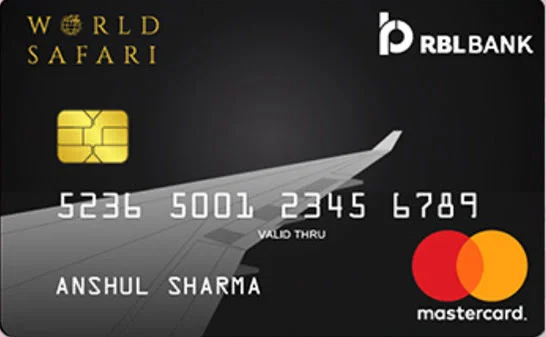
What the fee buys differs sharply. The RBL Bank World Safari Credit Card pays 5 reward points per ₹100 on travel spends, and our catalogue values its points at ₹0.25 each, which is ₹1.25 back per ₹100 of travel. The BOBCARD Etihad Guest Premium earns 2 Etihad Guest Miles per ₹100 on domestic and cross-border spends alike, and at ₹0.70 per mile, a conservative floor our catalogue records because Etihad does not publish a redemption value, that is ₹1.40 per ₹100. Fee arithmetic barely matters for the IDFC FIRST Mayura Credit Card, which sets an income floor of ₹25,00,000 a year and rules itself out for most applicants before the comparison begins.
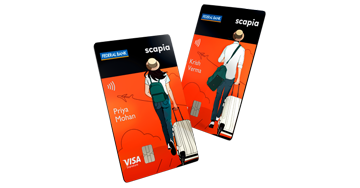
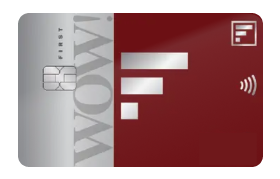
Nor are the free three equivalent, and the difference between them is larger than a comparison of fees suggests. The BOBCARD Uni GoldX Credit Card carries a zero markup, but its own terms exclude international transactions from earning any reward, so the card is free abroad and blank abroad. So, on the corrected record, is the Federal Bank Scapia Credit Card: our 8 August 2026 verification of its terms established that fuel, rent, wallet loads, education, utilities, insurance, EMI, gift cards, government spends and all international spends earn no Scapia Coins. Scapia's zero markup is real and its domestic Coins are real, but on a foreign transaction it sits in exactly the position Uni GoldX does. That leaves the IDFC FIRST WOW! Credit Card as the only lifetime-free card of the three that pays anything on a foreign swipe: 4 reward points per ₹150 at ₹0.25 a point, or 0.67% on international retail spend. One restriction rides with it. From 18 June 2026, points accrue only on spend up to the assigned credit limit within a billing cycle, and because the limit mirrors the pledged deposit, a ₹20,000 fixed deposit caps the earning at ₹20,000 of spend per cycle.
Here is what each of the six costs to keep, with the tax added where a fee applies:
| Card | Forex markup | Joining fee | Annual fee (plus 18% GST) | Annual fee waiver |
|---|---|---|---|---|
| Federal Bank Scapia Credit Card | 0% | ₹0 | ₹0 | Lifetime free |
| IDFC FIRST WOW! Credit Card | 0% | ₹0 | ₹0 | Lifetime free, secured against a ₹20,000 minimum fixed deposit |
| BOBCARD Uni GoldX Credit Card | 0% | ₹0 | ₹0 | Lifetime free |
| RBL Bank World Safari Credit Card | 0% | ₹3,000 | ₹3,000 (₹3,540) | No waiver recorded |
| BOBCARD Etihad Guest Premium | 0% | ₹5,000 | ₹5,000 (₹5,900) | Waived on annual spend of ₹5,00,000 or more |
| IDFC FIRST Mayura Credit Card | 0% | ₹5,999 | ₹5,999 (roughly ₹7,079) | No waiver recorded |
Which of the six to actually hold
Start with the number nobody bothers to look up: how much foreign currency actually went through your cards last year. Statements will tell you in ten minutes. Below roughly ₹85,700, no annual fee on this list clears its own break-even against a 3.5% card, and the decision collapses to which of the three lifetime-free cards is available.
Approval route is the next filter, and it is binding rather than advisory. The Mayura's ₹25,00,000 income floor removes it from most shortlists outright. At the other end, the WOW! card asks for no income proof and no credit history, needs a ₹20,000 fixed deposit, and accepts applicants from age 18, which makes it the one card here available to a student or a first-time borrower heading abroad. Scapia and Uni GoldX both sit at a ₹3,00,000 minimum income.
Then look at what each card does with the spend, because zero markup is a discount, not a return. Uni GoldX and Scapia both pay nothing on international transactions by their own terms, which means the entire case for either one abroad is the 4.13% not charged. Scapia's remaining pull is domestic: unlimited domestic airport lounge access on a lifetime-free card, gated at ₹20,000 of spend in the preceding calendar month since 27 February 2026. The WOW! card earns 0.67% on international retail spends within its credit-limit cap. Among the fee-charging three, the Etihad Guest Premium is the only one whose foreign-spend earn rate our catalogue states per ₹100, at 2 miles worth an estimated ₹1.40.
The last consideration is the one most likely to be got wrong, and it is behavioural rather than financial. A zero-markup card only saves money on the transactions it is actually used for, which means it has to be the card that comes out of the wallet abroad every single time, including for the ₹400 coffee. Carrying one as a backup while defaulting to a 3.5% card out of habit converts the whole exercise into an annual fee with nothing attached. Pair that with declining dynamic currency conversion at every terminal, and the 4.13% simply stops existing.
One recommendation to act on, on the corrected facts: take the IDFC FIRST WOW! Credit Card if the ₹20,000 fixed deposit is money that can sit still, because it is the only free card on this list that is both 0% abroad and earning abroad. If that deposit is not available, Scapia and Uni GoldX still cost nothing to hold and still save the full 4.13%, and Scapia is the better of the two for anyone who will use the domestic lounge access. Add the World Safari only once your own statements show foreign spend clearing ₹85,700 a year, and the Etihad Guest Premium only if ₹5,00,000 of total annual spend was heading through a single card anyway.
Sources
- PickMyCard card catalogue, card-level fees, forex markup figures, reward rates and lounge terms, verified against issuer Most Important Terms and Conditions documents. Entries used here carry
verifiedAtdates of 2026-08-08 (Federal Bank Scapia), 2026-07-02 (IDFC FIRST WOW!, IDFC FIRST Mayura, RBL Bank World Safari, AU NoMo, AU Bank Zenith+), 2026-08-01 (BOBCARD Uni GoldX) and 2026-05-27 (BOBCARD Etihad Guest Premium). Also the source of the 86 active-card count, the 70 cards carrying a forex markup figure and the distribution across them. Checked 14 September 2026. - PickMyCard catalogue record for the Federal Bank Scapia Credit Card, verification note dated 8 August 2026, source of the finding that fuel, rent, wallet loads, education, utilities, insurance, EMI, gift-card, government and all international spends earn no Scapia Coins, and of the ₹20,000 preceding-month spend gate on domestic lounge access effective 27 February 2026. No issuer URL is cited because the governing programme terms sit on the card programme's own site rather than on Federal Bank's. Checked 14 September 2026.
- AU Small Finance Bank, Most Important Terms and Conditions with Schedule of Charges, https://www.au.bank.in/credit-cards/mitc%28with-schedule-of-charges%29.pdf, source of the 18% GST rate applied to all credit card fees and charges, of the 0.99% foreign currency markup on the AU NoMo card, and of the 0.99% figure for the AU Bank Zenith+ card that our catalogue's 1.99% record contradicts. Checked 14 September 2026.
- AU Small Finance Bank, "What is Dynamic Currency Conversion (DCC)?", https://www.au.bank.in/blogs/what-is-dynamic-currency-conversion, source of the DCC mechanic, the 2% to 4% typical DCC margin, and the statement that it is applied on top of the card's own forex markup. Checked 14 September 2026.
- ICICI Bank, international transactions on credit cards, https://www.icici.bank.in/personal-banking/cards/credit-card/travel-easy/international-transactions, source of the conversion mechanic (network rate on settlement date plus a currency conversion factor) and the 3.50% factor. Checked 14 September 2026.
- RBL Bank, World Safari Credit Card product page, https://www.rbl.bank.in/personal-banking/cards/credit-cards/world-safari-credit-card, source of the 0% foreign currency markup, the ₹3,000 plus GST annual membership fee and the 5 reward points per ₹100 on travel spends. Checked 14 September 2026.
- Bank of Baroda, BOBCARD Etihad Guest Premium product page, https://www.bobcard.co.in/credit-card-types/bobcard-etihad-guest-premium, source of the 0% markup, the ₹5,000 fee, its ₹5,00,000 annual spend waiver and the 2 Etihad Guest Miles per ₹100 earn rate. The ₹0.70 per mile used here is our catalogue's conservative floor estimate, not a value Etihad publishes. Checked 14 September 2026.
- Bank of Baroda, BOBCARD Uni GoldX product page, https://www.bobcard.co.in/credit-card-types/bobcard-uni-goldx, source of the lifetime-free fee structure and the nil forex markup. The reward exclusion covering international transactions comes from our catalogue record verified 1 August 2026 against the card's Most Important Terms and Conditions. Checked 14 September 2026.
- IDFC FIRST Bank, WOW! Credit Card product page, https://www.idfcfirst.bank.in/credit-card/wow, source of the zero forex markup, the ₹20,000 minimum fixed deposit and the 4 reward points per ₹150 on retail spends. The restriction of point accrual to spend within the assigned credit limit per billing cycle, effective 18 June 2026, comes from our catalogue verification note dated 2 July 2026; we could not confirm it on an IDFC FIRST Bank page. Checked 14 September 2026.
Disclosure: this post contains affiliate links. If you apply through them we may earn a commission, at no extra cost to you. Our editorial view is independent of that. #ad
Frequently asked
Which credit cards in India have zero forex markup?
Six of the 86 active cards in our catalogue record a 0% foreign currency markup: the Federal Bank Scapia Credit Card, the IDFC FIRST WOW! Credit Card, the BOBCARD Uni GoldX Credit Card, the RBL Bank World Safari Credit Card, the BOBCARD Etihad Guest Premium and the IDFC FIRST Mayura Credit Card. Three are lifetime free.
How much is forex markup plus GST on a credit card?
GST applies at 18% on the markup itself, so a 3.5% markup bills at 4.13% of the transaction. On a ₹10,000 foreign-currency purchase that is ₹350 of markup plus ₹63 of GST, or ₹413 in total. A 1.99% markup works out to roughly 2.35% all-in.
Do zero forex markup credit cards earn rewards on foreign spends?
Not all of them. The BOBCARD Uni GoldX and the Federal Bank Scapia card both exclude international transactions from earning anything, so they are free abroad and blank abroad. The IDFC FIRST WOW! card earns 4 reward points per ₹150 on international retail spends, worth about 0.67%.
Is dynamic currency conversion the same as forex markup?
No. Forex markup is your issuer's charge on a foreign-currency transaction. Dynamic currency conversion is the terminal offering to bill you in rupees at a rate set by the merchant or terminal provider, typically carrying a 2% to 4% margin. AU Small Finance Bank states that margin sits on top of the card's own markup.
Is a zero forex markup credit card worth its annual fee?
It depends entirely on annual foreign spend. Because GST applies at 18% to both the fee and the markup, the break-even is simply the annual fee divided by the markup rate being escaped. Against a 3.5% card, a ₹3,000 fee pays for itself at roughly ₹85,700 of foreign spend.
Card devaluations, reward maths, and rate changes the day they land.
Follow on X
Reader comments
No comments yet. Share your experience with this card below — the first useful comment helps every reader after you.
Comments are moderated before they appear. Share your real experience with a card — what worked, what didn't, what the bank told you. We don't publish promotional content, referral links, or personal financial details. Keep it useful for other readers.