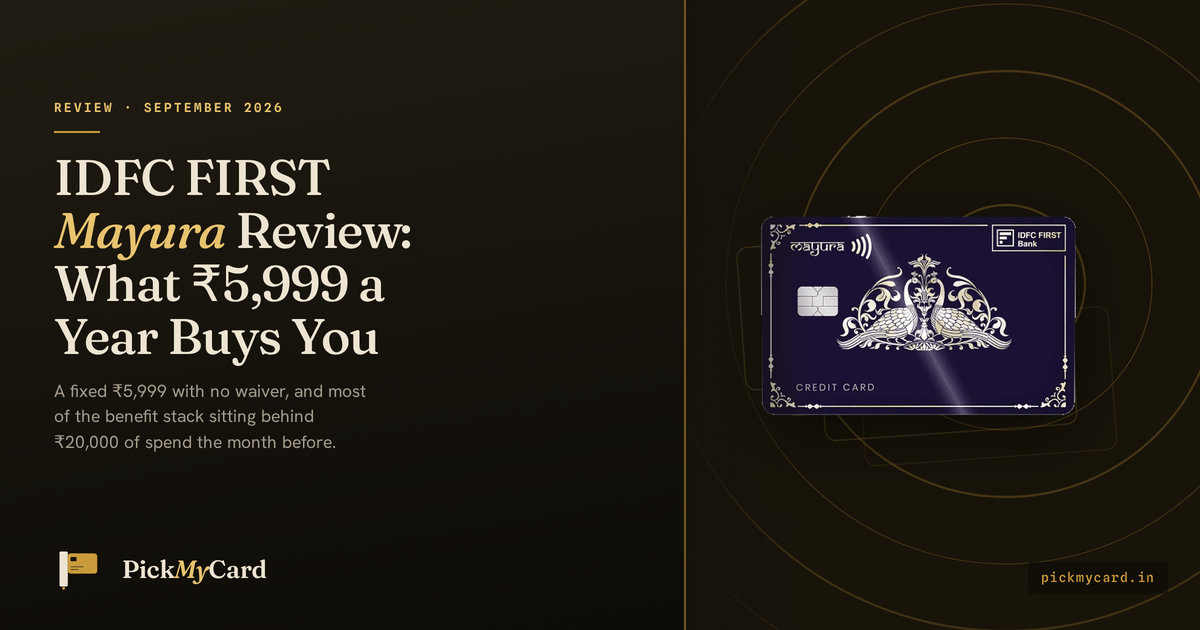
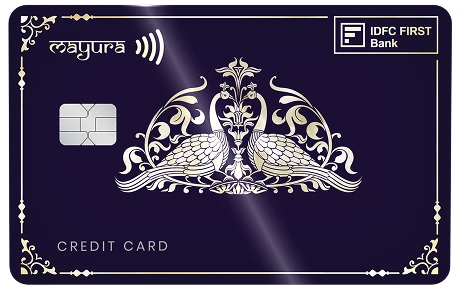
The IDFC FIRST Mayura charges ₹5,999 to join and ₹5,999 every year after, and no amount of spending removes either figure. Most Indian premium cards let a cardholder earn the renewal back at a milestone; there is none here, which makes the accounting unusually clean. The cost is fixed at roughly ₹7,079 with GST, and the benefits either cover it or they do not. What complicates that is how little comes with ownership alone: almost every headline benefit is released by spending, on a gate that resets monthly.
What the IDFC FIRST Mayura gives you for holding it
The unconditional list is the true floor of the product, and it is short.
- Zero forex markup on all international transactions, against the 3.5% most Indian issuers charge
- Air Accident Cover of ₹1 crore
- Trip cancellation insurance up to ₹50,000 on non-refundable bookings
- Interest-free cash withdrawals for 45 days, in India and abroad, which almost no peer extends
- A 1% fuel surcharge waiver between ₹200 and ₹5,000, capped at ₹300 a statement cycle
Year one adds a ₹4,000 welcome cashback, ₹1,000 back on each of four transactions of ₹1,000 or more within 60 days of issuance. That is a real offset against the joining fee, and it does not repeat. Eligibility sets the audience at ₹25 lakh of annual income, ages 21 to 65.
The earn ladder runs from 60X down to 1X
Base earn is 5X reward points, stepping to 10X above ₹20,000 in a statement cycle and on birthdays. Hotel and flight bookings inside the IDFC FIRST Bank app carry the headline rate of up to 60X. Rent, government services, wallet loads and education sit at 3X; insurance and utilities fall to 1X.
A point redeems at ₹0.25 normally and ₹0.50 against hotel and flight bookings through the app's First Rewards Gallery, so spending points inside the bank's own booking flow doubles every one of them.
Our card data records a demotion ladder rather than a list of zero-earning categories, and the bank's terms are where to confirm what earns nothing at all. Rent and utilities, the largest recurring amounts in most households, sit at the bottom of that ladder, close to where an exclusion list would land.
Everything else is gated at ₹20,000 a month
Lounge access reads well on the spec sheet: 16 domestic and 16 international visits a year, four of each per quarter, one complimentary domestic guest per quarter, domestic entry through EliteAssist and international through Dreamfolks. None of it is granted on ownership: access in any month requires ₹20,000 or more of spend during the month before, so a quiet November closes the lounge in December.
Golf adds a rung: up to two rounds or lessons a month, the first at ₹20,000 of prior-month spend and the second at ₹40,000, each usable within 60 days. The buy-one-get-one movie benefit, up to ₹500 off the second ticket twice a month through District by Zomato, moved onto the same ₹20,000 condition on 18 June 2026, enforced from 1 August.
The 10X earn tier uses the same ₹20,000 figure on a different clock. Lounge, golf and movies key off spend in the previous calendar month, releasing a benefit for the month after; 10X applies to incremental spend above ₹20,000 inside a statement cycle and pays within that cycle.
Keeping the gates open all twelve months means ₹2.4 lakh a year through the card, on top of the ₹7,079 already paid, before a lounge visit counts as a benefit rather than a purchase. It is the same spend-gating pattern that swept the entry-level cards earlier in 2026, at ten times the fee.
What the June revision took back on forex spends
Effective 18 June 2026, international and forex spends earn 5X reward points, down from 10X, while the markup stayed at 0%. Cardholders who bought the card for overseas spending kept the saving and lost half the earn.
That saving is where the fee is recovered, and it lands just short more often than the pitch admits. At ₹2 lakh of annual foreign-currency spend the gap between 0% and the 3.5% standard markup is ₹7,000, or ₹79 less than the ₹7,079 the card costs with GST. Break-even on forex alone sits at about ₹2.02 lakh a year, a PickMyCard calculation dividing ₹7,078.82 by 3.5%. Our wider comparison of forex markup against lounge programmes works through why that line usually outweighs the benefits it funds.
Milestones close the last stretch: 7,500 bonus points at ₹8 lakh of annual spend and 15,000 at ₹15 lakh, worth ₹3,750 and ₹7,500 at travel redemption, but both credit only on payment of the next annual fee, making them a renewal incentive rather than a reward for the year just finished.
The profile this fee is priced for
Clear ₹2 lakh a year in foreign currency, book travel inside the IDFC FIRST Mayura app rather than on an OTA, run ₹20,000 a month without thinking about it, and the surplus over ₹7,079 is real and repeating. That profile is narrow, and it is the one this card was built for.
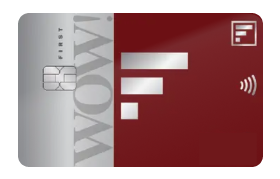
Everyone else is buying a premium frame around a 5X base rate. Zero forex does not require a fee: the IDFC FIRST WOW carries the same 0% markup at zero joining and zero annual fee, though it is a secured card needing a fixed deposit of at least ₹20,000 as collateral. Our shortlist of structurally free cards covers that tier.
Our 3.9 out of 5 sits there because the card does what it claims for its target profile and little for anyone outside it. Read the spend gates before the reward multipliers.
Sources
- IDFC FIRST Bank: Mayura Metal Credit Card, issuer product page. The ₹5,999 joining and annual fee, zero forex markup, the earn ladder from 60X down to 1X, and the lounge, golf and movie benefits. Checked 7 September 2026.
- IDFC FIRST Bank: Mayura product details and code of conduct (PDF), issuer document. The ₹20,000 prior-calendar-month spend condition on lounge access, the ₹20,000 and ₹40,000 golf gates, the 60-day usage window, the ₹4,000 welcome cashback terms, the fuel surcharge waiver band, and the milestone credits payable on renewal. Checked 7 September 2026.
Disclosure: this post contains affiliate links. If you apply through them we may earn a commission, at no extra cost to you. Our editorial view is independent of that. #ad
Frequently asked
Is the IDFC FIRST Mayura a lifetime free credit card?
No. The Mayura carries a ₹5,999 joining fee and a ₹5,999 annual fee, and the annual fee has no waiver threshold at any spend level. It is a fixed yearly cost that applies regardless of how much or how little the card is used.
What is the annual fee on the IDFC FIRST Mayura?
₹5,999 plus 18% GST, which brings the effective yearly cost to roughly ₹7,079. Joining and renewal are charged at the same figure, and there is no spend milestone that removes either one. A ₹4,000 welcome cashback offsets part of the first year only.
Does the IDFC FIRST Mayura give unconditional lounge access?
No. Lounge access in any calendar month requires ₹20,000 or more of spend in the previous calendar month, so a low-spend month closes the benefit for the next one. The allowance is four domestic and four international visits per quarter, plus one complimentary domestic guest per quarter, with domestic entry through EliteAssist and international through Dreamfolks.
How much does the IDFC FIRST Mayura earn on international spends?
International and forex transactions earn 5X reward points, reduced from 10X effective 18 June 2026. The forex markup itself remains 0%, so the currency-conversion saving survived the revision while the reward rate on the same spend was halved. The base earn on domestic retail is also 5X.
Is the IDFC FIRST Mayura worth ₹5,999 a year?
Close, but not quite, on forex alone. At ₹2 lakh of annual foreign-currency spend the zero markup saves ₹7,000 against a 3.5% default, ₹79 short of the ₹7,079 the card costs with GST. On our calculation the forex saving covers the fee outright from about ₹2.02 lakh of foreign-currency spend a year. For a domestic-primary wallet earning the 5X base rate, the fee is hard to recover.
Card devaluations, reward maths, and rate changes the day they land.
Follow on X
Reader comments
No comments yet. Share your experience with this card below — the first useful comment helps every reader after you.
Comments are moderated before they appear. Share your real experience with a card — what worked, what didn't, what the bank told you. We don't publish promotional content, referral links, or personal financial details. Keep it useful for other readers.